How to Use Cooking as a Learning Activity for Preschoolers
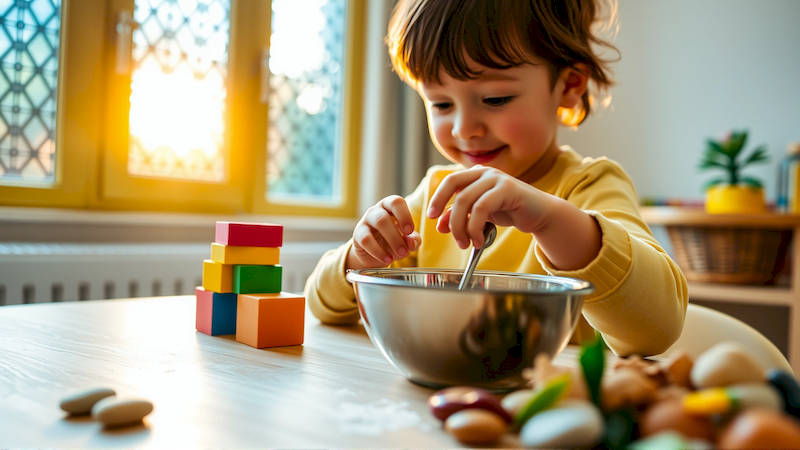
Cooking with preschoolers often feels chaotic – flour everywhere, sticky fingers, and a lot of tasting! But beyond the mess lies a powerful opportunity for learning and development. Engaging children in the kitchen isn't simply about creating future chefs; it's a fantastic way to nurture essential skills encompassing math, science, language, and social-emotional growth. It fosters a sense of accomplishment, encourages healthy eating habits, and builds lasting memories. In a world increasingly focused on screen time, the kitchen offers a refreshingly tactile and engaging learning environment.
The benefits extend far beyond academic skills. Cooking together creates quality bonding time, encouraging communication and collaboration. It allows children to take ownership of a task, boosting their confidence, and teaches them about responsibility as they learn to contribute to a shared goal. It provides a natural context to teach important life skills – from understanding where food comes from to practicing safe handling of utensils. This article will explore how to harness the potential of cooking to create meaningful learning experiences for your preschooler, offering practical ideas and insights for maximizing the educational benefits.
- The Mathematical Kitchen: Measuring, Counting, and Comparing
- Science in the Making: Exploration Through Mixing and Transformations
- Language Development: Recipes as Stories and Vocabulary Builders
- Fine Motor Skills & Sensory Exploration: Developing Dexterity and Coordination
- Fostering Social-Emotional Growth: Cooperation, Patience, and Responsibility
- Adapting Recipes for Little Hands & Ensuring Safety
- Conclusion: Savoring the Sweetness of Learning Through Cooking
The Mathematical Kitchen: Measuring, Counting, and Comparing
The kitchen is a surprisingly rich environment for mathematical exploration. Every recipe presents a chance to practice counting, measuring, and understanding concepts like more and less. Instead of simply handing your child pre-measured ingredients, involve them in the process. Have them count out the number of apples needed for a pie, or assist in scooping and leveling ingredients into measuring cups and spoons. This hands-on experience solidifies understanding in a way that worksheets simply can't.
Furthermore, cooking offers opportunities to explore shapes and patterns. While cutting vegetables, point out the different shapes that emerge. Talk about how many slices you need to make to share equally. When baking, discuss the different sizes of cookies or muffins. A simple activity like sorting candies or sprinkles by color can serve as an introduction to classification and data organization. "We have 5 red sprinkles, 3 blue sprinkles, and 2 yellow sprinkles – which color do we have the most of?" These seemingly simple questions introduce fundamental mathematical concepts in a playful and relatable way.
As your child becomes more confident, you can introduce more complex concepts like fractions. "We need half a cup of flour – that means we’re taking one out of two equal parts." Using visual aids like cutting apples or pizzas into halves and quarters can make fractions easier to grasp. Consider also comparing weights and volumes; “Which is heavier, a cup of flour or a cup of feathers?” Encourage estimation and prediction before weighing or measuring, and then verify the answers together.
Science in the Making: Exploration Through Mixing and Transformations
Cooking is essentially applied science! Every recipe is a chemical experiment, as ingredients interact and transform when mixed, heated, or cooled. Talk about what happens when you mix baking soda and vinegar – the fizzing reaction is a great introduction to acids and bases. Discuss why certain ingredients change color or texture when heated, and explore concepts like dissolving and melting. Asking "what do you think will happen if..." fosters critical thinking and encourages children to make predictions based on observation.
Exploring the states of matter is particularly well-suited to the kitchen. Explain how water can exist as a solid (ice), a liquid (water), and a gas (steam). Demonstrate how heating or cooling affects these changes. When making jelly, discuss how the liquid juice transforms into a solid through the addition of gelatin. This isn’t just about memorizing scientific terms; it’s about fostering a curiosity about how the world works.
Additionally, the kitchen provides a natural opportunity to discuss food sources and plant life cycles. Talk about where fruits and vegetables come from, and how they grow. This can lead to discussions about the importance of healthy eating and the role of farmers. Going beyond the recipe and discussing the origins of ingredients transforms cooking into a broader science lesson, connecting children to the natural world around them.
Language Development: Recipes as Stories and Vocabulary Builders
Cooking provides a wealth of opportunities to enhance language skills. Begin by treating the recipe as a story. Read through it together, pointing out the sequence of steps and describing the ingredients. Encourage your child to narrate what you’re doing as you cook, and to ask questions. Don’t be afraid to introduce new vocabulary – words like “whisk,” “sift,” “knead,” and “simmer.”
Furthermore, cooking offers a context for practicing descriptive language. Encourage your child to describe the taste, texture, and smell of different ingredients. "How would you describe the apple? Is it crunchy or soft? Sweet or tart?" This not only expands their vocabulary but also strengthens their ability to articulate their thoughts and observations. Introduce comparative adjectives; “The bananas are more ripe than the apples.”
Beyond the technical language of cooking, you can use the activity to foster storytelling and imagination. Have your child invent a story about the ingredients or the dish you’re making. "Let’s imagine these carrots are tiny spaceships on a mission to deliver vitamins!" This combines creativity with language development, making learning fun and engaging. Recipes also present opportunities to practice the skill of following directions, a crucial pre-reading skill.
Fine Motor Skills & Sensory Exploration: Developing Dexterity and Coordination
Preschoolers are still developing their fine motor skills, and the kitchen offers a fantastic playground for practice. Activities like stirring, pouring, kneading, and sprinkling all require precise movements that strengthen hand-eye coordination and improve dexterity. Even simple tasks like peeling bananas or tearing lettuce leaves can be beneficial. Adjust the complexity of the task to your child's developmental level, always prioritizing safety.
Sensory exploration is also a key component of learning through cooking. Encourage your child to touch, smell, and (safely) taste the ingredients. Discuss the different textures – the smoothness of yogurt, the crunchiness of celery, the stickiness of honey. This sensory experience not only enhances their understanding of the world around them but also stimulates their brains and supports cognitive development.
Using different tools – rolling pins, cookie cutters, and even child-safe knives – also helps children develop their hand strength and coordination. Supervise closely, of course, but allow them to take ownership of these tools and practice using them safely. Consider activities like using cookie cutters to create shapes in dough or decorating cookies with sprinkles to encourage creative expression and further refine their fine motor skills.
Fostering Social-Emotional Growth: Cooperation, Patience, and Responsibility
Cooking is rarely a solitary activity, and it provides ample opportunities to foster social-emotional growth. Working together on a recipe encourages cooperation and teamwork. Children learn to share tasks, take turns, and communicate effectively. Discussing how to handle frustrations – like a broken cookie or a spilled ingredient – teaches valuable coping skills.
Patience is another important virtue that is nurtured through cooking. Recipes often require waiting – for dough to rise, for cookies to bake, for ingredients to chill. This teaches children to understand the concept of delayed gratification and to appreciate the value of perseverance. Celebrating small successes – like successfully cracking an egg or perfectly stirring a sauce – builds confidence and fosters a sense of accomplishment.
Finally, cooking provides an opportunity to teach children about responsibility. Assigning them simple tasks – like setting the table or clearing their plate – helps them understand their contribution to the family meal. Allowing them to help prepare a dish for a family gathering instills a sense of pride and ownership.
Adapting Recipes for Little Hands & Ensuring Safety
Adapting recipes to suit preschoolers is crucial. Simplify the instructions, break down tasks into smaller steps, and focus on activities they can manage independently. Instead of asking them to chop vegetables, have them tear lettuce or snap green beans. Use pre-measured ingredients for complex recipes, or involve them in measuring only the simpler components. Remember, the goal is to engage them in the process, not to create a perfect culinary outcome.
Safety is paramount. Always supervise your child closely in the kitchen, and emphasize the importance of safety rules. Keep sharp objects out of reach, and teach them how to handle hot surfaces safely. Discuss the dangers of electricity and appliances. Invest in child-safe tools, such as blunt knives and oven mitts. Furthermore, be mindful of allergies and dietary restrictions, and ensure all ingredients are safe for your child. A designated "cooking zone" can help contain the mess and provide a safe and controlled environment for exploration.
Conclusion: Savoring the Sweetness of Learning Through Cooking
Cooking with preschoolers is more than just a fun activity; it's a powerful learning experience that nurtures a wide range of skills. From mastering mathematical concepts to exploring scientific principles, from expanding their vocabulary to developing fine motor skills, the kitchen provides a rich and engaging learning environment. By adapting recipes to suit their abilities, prioritizing safety, and fostering a sense of collaboration, you can create lasting memories and instill a lifelong love of learning.
The key takeaways are simple: embrace the mess, prioritize process over product, and remember that the journey is just as important as the destination. The next time you’re in the kitchen, don’t hesitate to invite your preschooler to join you – you might be surprised at how much they can learn, and how much joy you’ll both experience. Start small, choose age-appropriate tasks, and most importantly, have fun! Your little chef-in-training will thank you for it.
Deja una respuesta