
How to Measure and Support Cognitive Processing Speed in Preschool-Aged Kids
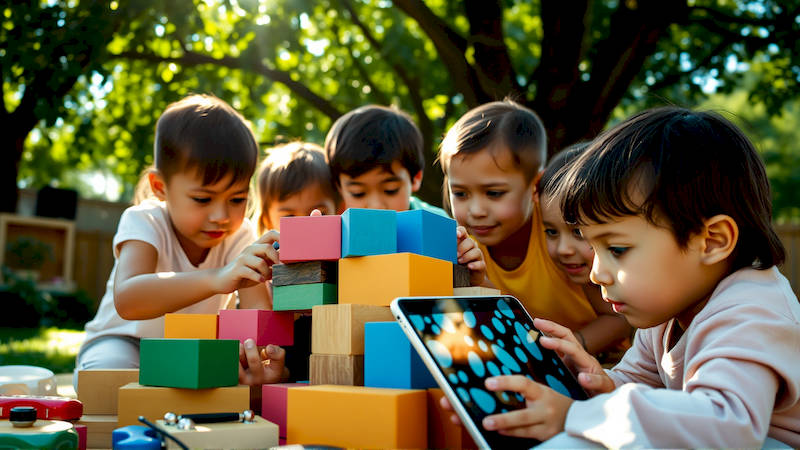
The preschool years are a period of remarkable brain development, laying the foundation for future learning and success. While we often focus on knowledge acquisition – recognizing letters, counting numbers – a critical, often overlooked component is cognitive processing speed. This refers to how quickly and efficiently children can take in information, analyze it, and react. A strong processing speed isn't about being “smarter” in terms of knowing more facts; it's about the efficiency of thinking, impacting everything from following instructions to problem-solving and academic performance. Understanding and nurturing this skill in preschoolers is vital, as delays can manifest as difficulties in school and beyond.
This article will delve into the world of cognitive processing speed in young children, offering a comprehensive guide for parents and educators. We'll explore ways to identify potential areas for support, practical activities to improve speed, and when to seek professional guidance. Ignoring processing speed can create subtle yet significant barriers to a child’s potential; by proactively addressing it, we empower them to learn, grow, and thrive. Recognizing that every child develops at their own pace remains paramount, but understanding typical benchmarks and intervention strategies is key.
- Understanding Cognitive Processing Speed in Preschoolers
- Informal Ways to Assess Processing Speed at Home
- Activities to Enhance Processing Speed Through Play
- The Role of a Supportive Environment
- When to Seek Professional Evaluation
- Connecting Processing Speed to Future Academic Success
- Conclusion: Nurturing a Quick and Curious Mind
Understanding Cognitive Processing Speed in Preschoolers
Cognitive processing speed isn’t a single skill, but rather a complex interplay of neurological functions. It encompasses several core abilities including attention, visual-spatial processing, working memory, and reaction time. For a four-year-old, this might look like quickly completing a simple puzzle, accurately following a three-step direction, or swiftly identifying a familiar object from a group. It's fundamentally about the brain’s ability to quickly and accurately execute mental tasks. Delays in this area can present in a variety of ways, such as a child seeming easily distracted, struggling to keep up with peers during group activities, needing repeated instructions, or demonstrating frustration with tasks that require quick thinking.
It’s crucial to understand the broad range of "normal" in preschool development. A three-year-old will naturally process information slower than a five-year-old. However, consistent struggles that significantly lag behind developmental expectations warrant attention. Factors influencing processing speed include genetics, nutrition, sleep, and environmental stimulation. A child who is chronically sleep-deprived, for instance, or lacks opportunities for engaging play, might exhibit slower processing speeds. According to research published in the Journal of Educational Psychology, early childhood interventions focusing on executive functions (which heavily influence processing speed) have demonstrated lasting positive effects on academic performance.
What often gets mistaken for disobedience or stubbornness can actually be a child struggling to process what is being asked of them. This highlights the importance of observation and understanding the root cause of behavioral challenges. Rather than immediately assuming a child is being deliberately difficult, consider whether their slowness is a sign of a cognitive processing difficulty needing support. Observing your child in various settings – playdates, story time, mealtime – can reveal patterns that may indicate a need for intervention.
Informal Ways to Assess Processing Speed at Home
Formal assessments of cognitive processing speed are best conducted by professionals, but parents can gather valuable insights through careful observation and simple, playful activities at home. Start by paying attention to how long it takes your child to complete common tasks. For example, how quickly can they respond to simple questions like, “Where is the ball?” or “What color is this?” Observe how they handle multi-step instructions–do they need frequent reminders, or do they grasp the sequence readily? Timing these tasks (even loosely) can give you a baseline understanding of their response time.
Another helpful approach is to present increasingly complex challenges. Begin with matching games involving colors or shapes, then introduce more intricate puzzles or building activities. Pay attention to their frustration levels, their ability to maintain focus, and how they adapt to challenges. Do they give up easily when faced with difficulty, or do they persist? A child with slower processing speed might take significantly longer to sort objects by categories, complete a jigsaw puzzle, or follow a story with multiple characters and events. Remember, the goal isn't to label your child, but to understand their strengths and areas for potential growth. Consider a 'Simon Says' game – can they follow the one-step commands easily, or do they struggle with two in a row?
Finally, observe their response to unexpected changes in routine. Children with good processing speed typically adapt quickly to minor disruptions, while those who struggle may become upset or overwhelmed. This observation can offer valuable insight into their cognitive flexibility, a component closely linked to processing speed.
Activities to Enhance Processing Speed Through Play
Fortunately, there's a wealth of playful activities that can gently but effectively boost cognitive processing speed in preschoolers. Games that require quick reactions, such as “Red Light, Green Light” or simple obstacle courses, encourage rapid decision-making. Engaging in activities involving sorting and categorizing – sorting toys by color, shape, or size – enhances visual processing speed. Building with blocks, especially timed challenges like “build the tallest tower in one minute,” can also stimulate faster thinking.
Rhyming games, like asking your child to think of words that rhyme with “cat,” help develop phonological processing speed, an important precursor to reading skills. Storytelling, particularly encouraging your child to retell stories in their own words, promotes information recall and sequencing skills. Dr. Adele Diamond, a leading researcher in executive function development, emphasizes the importance of “working memory” games, such as remembering a sequence of colors or numbers, to improve cognitive flexibility and processing efficiency. Remember to keep these activities short, engaging, and age-appropriate, focusing on fun rather than pressure.
Crucially, incorporate physical activity. Research suggests a strong link between physical exercise and cognitive function. Active play – running, jumping, dancing – increases blood flow to the brain, improving alertness and processing speed.
The Role of a Supportive Environment
Creating a supportive environment is just as important as specific activities. Minimize distractions during learning activities. A cluttered room or a noisy background can overload a child’s sensory system, making it harder for them to focus and process information. Break down complex tasks into smaller, manageable steps. Instead of asking, "Clean your room," try, "First, put all the blocks in the bin, then put the books on the shelf."
Provide clear and concise instructions, avoiding lengthy or complicated sentences. Use visual cues whenever possible, such as picture schedules or checklists. Patience and encouragement are paramount. Avoid criticizing or rushing your child; instead, focus on their efforts and celebrate their successes, no matter how small. As Dr. Laura Markham, author of Peaceful Parent, Happy Kids, advises, “Focus on building your child’s confidence and self-esteem. When they feel safe and supported, they are more likely to take risks and push themselves to learn.” A growth mindset – believing that abilities can be developed through dedication and hard work – is essential.
When to Seek Professional Evaluation
While many children benefit from the strategies outlined above, it’s important to recognize when professional evaluation is warranted. If you notice consistent delays in your child's cognitive development, particularly in areas related to processing speed, such as difficulty following instructions, struggles with attention, or frequent frustration with learning tasks, consult with your pediatrician.
A clinical psychologist or educational specialist can conduct a comprehensive assessment to identify potential underlying issues. This assessment may include standardized tests that measure various aspects of cognitive function, including processing speed, attention, and memory. Possible underlying issues could include attentional difficulties (ADHD), learning disabilities, or issues with sensory processing. Early identification and intervention are key. Interventions could range from targeted cognitive training exercises to occupational therapy designed to improve sensory integration. Remember, seeking professional guidance is not a sign of failure; it’s a proactive step to ensure your child receives the support they need to reach their full potential.
Connecting Processing Speed to Future Academic Success
Cognitive processing speed is a foundational skill that profoundly impacts academic performance. Children with efficient processing speeds tend to excel in reading, math, and problem-solving. They can quickly decode words, grasp mathematical concepts and apply their knowledge to new situations. Conversely, children with slower processing speeds may struggle to keep up with the demands of the classroom, requiring more time and effort to complete assignments. This can lead to frustration, decreased motivation and, ultimately, academic difficulties.
A study by National Institutes of Health (NIH) demonstrated a strong correlation between processing speed and reading fluency in elementary school children. The ability to quickly process visual information is particularly critical for decoding skills. Research also shows that processing speed is a significant predictor of success in standardized tests. By addressing processing speed challenges in the preschool years, we can lay a strong foundation for future academic success, fostering a lifelong love of learning.
Conclusion: Nurturing a Quick and Curious Mind
Cognitive processing speed is a vital but often-overlooked aspect of preschool development. Recognizing its importance and actively supporting its growth is an investment in your child’s future. By understanding the components of processing speed, engaging in playful activities, creating a supportive environment, and seeking professional guidance when needed, you can empower your child to become a confident, capable learner. Remember, every child develops at their own pace, and the goal is not to push them beyond their limits, but rather to provide them with the tools and support they need to thrive.
Key takeaways include: observe your child’s pace in daily activities, incorporate playful activities that challenge their thinking speed, minimize distractions, and seek professional evaluation if you have concerns. The early years are a window of opportunity for brain development. By nurturing your child’s processing speed now, you are setting them up for a bright and successful future. And always remember that patience, encouragement, and a loving environment are the greatest gifts you can give.
Deja una respuesta