
How to Encourage Inclusive Play Among Diverse Peer Groups
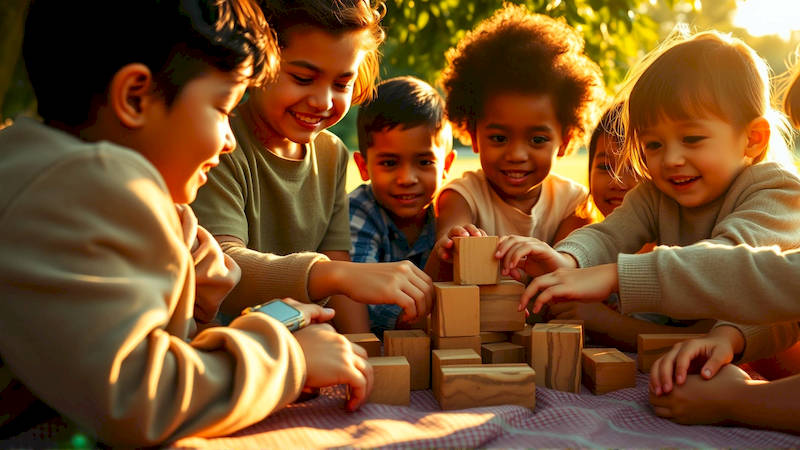
Inclusive play is more than just a feel-good practice; it's a cornerstone of healthy child development. In a world becoming increasingly interconnected, the ability to interact positively with individuals from diverse backgrounds is paramount. Play is the primary language of childhood, and it's through these early interactions that children begin to develop empathy, understanding, and a sense of belonging—qualities essential not just for personal well-being, but for building a more just and equitable society. This article will delve into practical strategies parents and caregivers can use to actively encourage inclusive play, navigating potential challenges and fostering genuine connections amongst children of all abilities, backgrounds, and identities.
The benefits extend far beyond simply learning to ‘get along’. Inclusive play lays the foundation for cognitive growth, emotional intelligence, and social competence. When children play with peers who are different from them, they're challenged to broaden their perspectives, problem-solve collaboratively, and develop a more nuanced understanding of the world. Conversely, exclusion can lead to feelings of isolation, low self-esteem, and even hinder social-emotional development. Creating opportunities for inclusive play is thus a proactive investment in a child's future success and overall happiness.
This article will provide a comprehensive guide, offering practical strategies grounded in child development principles, and empowering you to facilitate meaningful, inclusive play experiences for the children in your lives. We'll cover everything from modeling inclusive behavior to addressing exclusionary interactions, and creating play environments that celebrate diversity.
- Understanding the Barriers to Inclusive Play
- Modeling Inclusive Behavior – The Power of Example
- Creating Inclusive Play Environments
- Addressing Exclusionary Behavior – A Gentle but Firm Approach
- Facilitating Cooperative Games & Activities
- Partnering with Schools and Community Organizations
- Conclusion: Building a More Inclusive Future
Understanding the Barriers to Inclusive Play
Often, unintentional barriers prevent children from engaging in truly inclusive play. These aren’t necessarily malicious acts, but stem from ingrained societal biases, limited exposure, or simply a lack of understanding. One common obstacle is the tendency for children to gravitate toward peers who are similar to themselves – a phenomenon known as homophily. This isn’t inherently negative, but if it consistently leads to exclusion, it becomes problematic. Children may also unconsciously mimic adult behaviors, including subtle biases or exclusionary language they've overheard.
Another significant barrier is a lack of awareness about different abilities or needs. A child with autism, for example, might communicate or interact differently, and this can sometimes be misinterpreted by neurotypical peers, leading to avoidance or misunderstanding. Similarly, language barriers or cultural differences can create obstacles to connection. Without guidance and support, these differences can unintentionally become sources of exclusion. Furthermore, access to inclusive play spaces – playgrounds that are fully accessible to children with physical disabilities, for example – can be limited in many communities.
Finally, the adult response to conflict plays a critical role. A rushed attempt to "fix" a situation or simply tell children to "share" without addressing the underlying dynamics can actually hinder learning and perpetuate exclusionary behavior. Instead, facilitating a process of understanding and problem-solving is crucial.
Modeling Inclusive Behavior – The Power of Example
Children are astute observers, and they learn far more from what we do than what we say. As parents, caregivers, and educators, we must be conscious of modeling inclusive behavior in our own interactions. This means demonstrating respect for all individuals, actively listening to diverse perspectives, and challenging our own biases. For instance, when talking about people from different cultures, avoid generalizations and instead focus on individual qualities and experiences.
This modeling extends to the language we use. Avoid using stereotypes or making assumptions about others based on their appearance, background, or abilities. Show genuine curiosity and ask questions to learn more about different experiences. “Wow, Maria is telling me about a special celebration her family has; let’s ask her to tell us more!” is far more impactful than simply saying “Everyone celebrates holidays differently.” Also, be mindful of the adults you associate with and the messages you convey about inclusivity. Children pick up on subtle cues and unspoken attitudes.
Importantly, modeling inclusivity isn’t about pretending that differences don’t exist; it’s about acknowledging and celebrating them. It’s about actively seeking out and embracing diversity in all areas of life, and demonstrating to children that everyone deserves to be treated with respect and dignity, regardless of their background.
Creating Inclusive Play Environments
The physical and social environment plays a crucial role in shaping play interactions. Creating inclusive play spaces requires intentional design that accommodates children of all abilities. This includes ensuring accessibility – ramps, adapted playground equipment, and sensory-rich areas – but also fostering a welcoming and supportive atmosphere. For example, having a designated quiet corner for children who need a break from stimulation can be incredibly valuable.
Beyond the physical space, the toys and materials available should be representative of diverse cultures and abilities. Include dolls with different skin tones, books featuring diverse characters and families, and art supplies that allow for creative expression without limitations. Consider offering open-ended materials, such as blocks, fabrics, and natural objects, which encourage imaginative play and allow children to create their own games and scenarios. "Let’s build a city together! What kinds of buildings should we include to make sure everyone feels welcome?"
To further foster inclusivity, consider incorporating activities that explicitly celebrate diversity. This could involve reading books about different cultures, learning songs from around the world, or hosting a cultural potluck where families share dishes from their heritage. Remember, intention matters. The goal is to create a space where all children feel valued, respected, and empowered to participate fully.
Addressing Exclusionary Behavior – A Gentle but Firm Approach
Despite our best efforts, exclusionary behavior will inevitably occur. The key is to respond proactively and constructively, rather than simply punishing or shaming the child. Instead of saying, "That's not nice! You can't play with them because…", try to facilitate a conversation that helps the child understand the impact of their actions. “I noticed you didn’t invite Leo to join your game. How do you think Leo might feel if he's left out?”
When intervening, focus on the behavior, not the child’s character. For example, instead of saying “You’re being mean,” say “I noticed you said you didn't want Sarah to play because she plays differently. That might hurt her feelings.” Encourage empathy by asking questions like, "How would you feel if you were excluded?" or "What could you do differently next time?". A helpful technique is to narrate the situation, “I see you are building a tower and you said ‘This is only for fast builders.’ Is there a way everyone can help, even if they build a little slower?”
Remember to validate the feelings of both the child who was excluded and the child who did the excluding. Exclusion often stems from insecurity or a lack of social skills, so addressing the underlying emotions is crucial.
Facilitating Cooperative Games & Activities
Structure can be a powerful tool in promoting inclusive play. Cooperative games, where children work together towards a common goal rather than competing against each other, are particularly effective. These games emphasize collaboration, communication, and problem-solving, and they discourage ranking or comparison. Think building a giant fort together, creating a collaborative mural, or completing an obstacle course as a team.
Activities that require children to rely on each other’s unique strengths can also be very beneficial. For example, a game where children have to describe an object without using their hands requires strong communication skills and active listening. Activities that encourage role-playing and perspective-taking -- "Let's pretend to be explorers from a different country!" -- can foster empathy and understanding.
The key is to choose activities that are adaptable and allow for participation from children of all abilities. It's also important to explicitly encourage children to ask for help and offer assistance to their peers. “Remember, it’s okay to ask for a hand if you need it and it’s great to offer help to others!”
Partnering with Schools and Community Organizations
Creating a truly inclusive environment requires a collaborative effort. Partner with schools and community organizations to develop consistent messaging and provide opportunities for inclusive play both inside and outside the home. Attend school events, volunteer in classrooms, and advocate for inclusive policies.
Many organizations offer resources and training on fostering diversity and inclusion. Seek out workshops, webinars, or online courses to enhance your understanding and learn new strategies. Connect with other parents and caregivers to share ideas and support each other. Ultimately, creating a more inclusive world is a collective responsibility, and by working together, we can make a lasting difference in the lives of children.
Conclusion: Building a More Inclusive Future
Encouraging inclusive play isn’t merely about teaching children to be polite or tolerant; it’s about equipping them with the skills and values they need to thrive in a diverse and interconnected world. By modeling inclusive behavior, creating welcoming play environments, addressing exclusionary interactions with compassion, facilitating cooperative activities, and partnering with schools and communities, we can empower children to embrace diversity, celebrate differences, and build meaningful relationships with peers from all backgrounds.
The journey towards inclusivity isn’t always easy, but it’s profoundly rewarding. The benefits – increased empathy, enhanced social-emotional development, and a stronger sense of belonging – are immeasurable. Remember that every small step you take to foster inclusive play is an investment in a brighter, more equitable future. Start today by taking a moment to observe the interactions of the children in your life and identifying opportunities to promote inclusivity. Ask yourself: Am I modeling the behavior I want to see? Is my play environment truly welcoming to all? Am I prepared to address exclusionary behavior with compassion and understanding? The answers to these questions will guide you on the path towards building a more inclusive world, one playdate at a time.
Deja una respuesta