
Step-by-Step Guide to Teaching Basic Math Concepts to Young Children
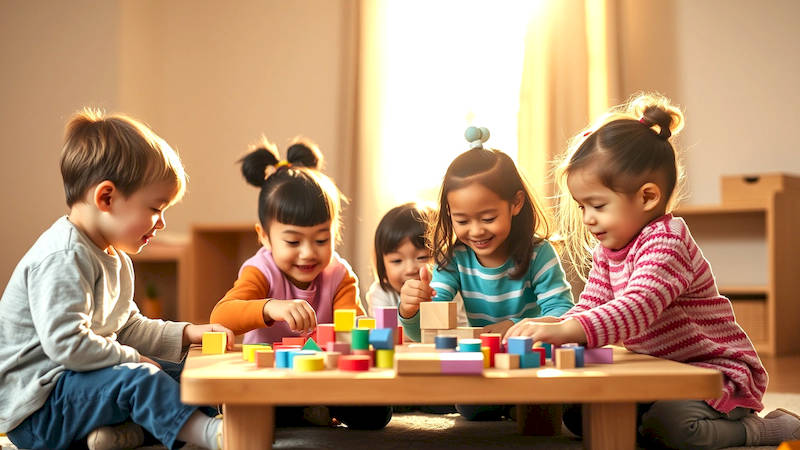
Learning math isn't about memorizing formulas; it's about developing a way of thinking – a logical, problem-solving mindset. For young children, this journey begins long before formal schooling. These early years are crucial for building a strong foundation in numeracy, setting the stage for future success in mathematics and beyond. Often, anxieties surrounding math stem from gaps in these fundamental concepts, making early intervention and a playful approach paramount. This guide will provide a detailed, step-by-step approach to introducing basic math concepts to young children, focusing on practical activities and fostering a positive attitude towards learning.
We often underestimate the mathematical capabilities of toddlers and preschoolers. They’re naturally curious and constantly engaging in mathematical thinking, even if they don’t realize it. Comparing sizes ("Mine is bigger!"), sorting toys by color, or recognizing patterns in their environment are all early forms of mathematical exploration. The key is to capitalize on this innate curiosity and build upon these pre-existing skills. Creating a math-rich environment, both at home and during playtime, is the first step in nurturing a love for numbers.
This isn’t about pushing flashcards and worksheets; it’s about embedding math into everyday routines and making it fun. Research consistently demonstrates that children learn best through play and hands-on experiences. Dr. Jo Boaler, a professor of mathematics education at Stanford University, emphasizes the importance of a ‘growth mindset’ in math, highlighting that believing in your ability to learn is as crucial as the concepts themselves. This guide will focus on fostering that mindset while equipping you with the tools to build a solid mathematical foundation for your child.
- Understanding Number Sense: The Cornerstone of Mathematical Thinking
- Introducing Counting & Cardinality: Beyond Rote Memorization
- Exploring Shapes and Spatial Reasoning: Building Geometric Foundations
- Diving into Measurement: Size, Length, and Capacity
- Problem-Solving and Math in Real-Life: Connecting Learning to the World
- Conclusion: Nurturing a Lifelong Love of Math
Understanding Number Sense: The Cornerstone of Mathematical Thinking
Number sense is far more than just reciting numbers. It's a deep understanding of what numbers represent, their relationships to each other, and how they relate to the world around us. This includes recognizing quantity, understanding the concept of "one more" or "one less," and being able to estimate. Without number sense, children struggle to grasp more complex mathematical concepts later on. Building this foundation involves focusing on quantity recognition and subitizing – the ability to instantly recognize the number of items in a small set without counting.
Start with concrete objects. Use toys, snacks, or everyday items like blocks and buttons. Spend time simply counting alongside your child, pointing to each object as you say the number. Avoid rapid-fire counting; allow time for them to process each number. Another effective technique is "number matching." Present a set of objects (e.g., 3 blocks) and ask your child to find the corresponding number card or write the numeral. Gradually increase the quantity as their confidence grows. For example, start with sets of 1-3, then move to 1-5, and so on.
As children develop a better understanding of quantity, introduce the concepts of "more," "less," and "equal." Present two groups of objects and ask which has more, less, or if they have the same number. Games like building towers with blocks and asking “Which tower has more blocks?” help solidify understanding. Remember to use consistent language and emphasize the connection between the physical quantity and the associated number.
Introducing Counting & Cardinality: Beyond Rote Memorization
Counting isn't just about saying numbers in order; it's about understanding that each number represents a quantity. Cardinality is the understanding that the last number counted represents the total number of items in a set. Many young children can recite numbers, but don’t understand the meaning behind them. This lack of understanding is where many initial difficulties in math stem from. Bridging the gap requires associating each number with a concrete quantity repeatedly.
Begin with one-to-one correspondence – pairing each object with a single count. Use activities like setting the table: "Let's put one plate for you, one plate for Mommy, one plate for Daddy." Point to each plate as you say “one.” Emphasize that each person receives one plate. As they become comfortable, introduce counting forward and backward. Using a number line (even a simple, homemade one) can visualize the sequence of numbers and the relationship between them. Avoid skipping numbers or counting too quickly; encourage a slow, deliberate pace.
A fun activity to reinforce cardinality is "treasure hunts." Hide a certain number of objects around the room and have your child count them as they find each one. Ask, “How many treasures did you find in total?” This helps them connect the counting process to a final, meaningful quantity. Another important aspect is correct finger counting. Ensure your child touches each finger while counting to reinforce one-to-one correspondence, rather than just stating the number.
Exploring Shapes and Spatial Reasoning: Building Geometric Foundations
Shapes aren't just visually interesting; they are fundamental to understanding spatial reasoning, geometry, and even reading and writing. Spatial reasoning – the ability to visualize and mentally manipulate objects – is a valuable skill that impacts various aspects of life. Identifying and classifying shapes helps children develop this understanding, and creating with shapes encourages creative problem-solving.
Start with basic shapes like circles, squares, triangles, and rectangles. Point out shapes in everyday objects – "The plate is a circle," "The window is a square." Use shape sorters, building blocks, and shape puzzles to provide hands-on practice. Introduce shape names gradually and consistently. Encourage them to draw shapes and identify shapes in books and magazines. This isn’t confined to formal learning; pointing out shapes during daily routines reinforces learning organically.
Spatial reasoning can be developed through activities like building with blocks, completing jigsaw puzzles, and playing with construction toys. Ask questions like "Where is the block under the table?" or "Can you build a tower taller than your head?" These activities encourage children to think about position, direction, and measurement. Activities like navigating an obstacle course provides great practice in spatial awareness.
Diving into Measurement: Size, Length, and Capacity
Measurement helps children understand the concepts of size, length, volume, and weight. It’s a practical skill that they use every day, from pouring cereal to building with blocks. Introducing measurement doesn’t require complex tools or abstract concepts; it can be done with simple, everyday items. The emphasis should be on comparing and contrasting, rather than precise numerical values at this stage.
Start by comparing sizes. Ask questions like "Which is bigger, the apple or the orange?" or “Which toy is taller, the bear or the doll?” Use non-standard units of measurement like blocks or shoes to measure length. “How many blocks long is the table?” or “How many shoe lengths is the room?” This introduces the concept of using a unit to measure, preparing them for future learning with standard measurements.
Introduce capacity by filling containers with water, sand, or rice. Ask questions like "Which container holds more?" or "Which container is almost empty?" Engaging in baking is another great way to integrate measurement. Even simple tasks like helping to measure ingredients (“Let’s put one cup of flour”) introduces mathematical concepts. Don’t worry about perfection; the goal is to foster an understanding of relative size and quantity.
Problem-Solving and Math in Real-Life: Connecting Learning to the World
The ultimate goal of early math education isn’t just to memorize facts; it’s to develop problem-solving skills and apply mathematical concepts to real-world situations. Children need to see math as a tool for understanding and interacting with their environment. This requires creating opportunities for them to use math skills in everyday activities.
Incorporate math into everyday routines. For example, when setting the table, ask "How many forks do we need?" or "Can you share the cookies equally between you and your brother?" When going to the grocery store, ask them to help estimate the cost of a few items. Encourage them to use math to solve problems. “We have 5 balloons, and 2 popped. How many balloons are left?”
Play board games that require counting, number recognition, or strategy. These games provide a fun and engaging way to practice math skills. Importantly, encourage them to explain their reasoning. Asking “How did you figure that out?” helps develop their problem-solving skills and demonstrates their understanding of the underlying concepts. Avoid immediately correcting errors; instead ask leading questions: “Can you show me how you counted that?"
Conclusion: Nurturing a Lifelong Love of Math
Teaching basic math concepts to young children is about more than just preparing them for school; it’s about nurturing a lifelong love of learning and empowering them with essential problem-solving skills. Remember to keep it playful, hands-on, and connected to their everyday experiences. Focus on building a strong foundation in number sense, counting, shapes, measurement, and problem-solving.
The key takeaways are to consistently integrate math into daily routines, use concrete objects to illustrate concepts, encourage exploration and experimentation, and foster a positive attitude towards math. Avoid pressure and focus on understanding rather than rote memorization. By creating a math-rich environment and making learning fun, you can help your child develop confidence and a genuine appreciation for the power of mathematics. Remember the growth mindset – emphasizing effort and perseverance over inherent ability – will set your child up for success not just in math, but in all areas of learning.
Deja una respuesta