Integrating Storytelling with STEM to Make Learning More Engaging for Children
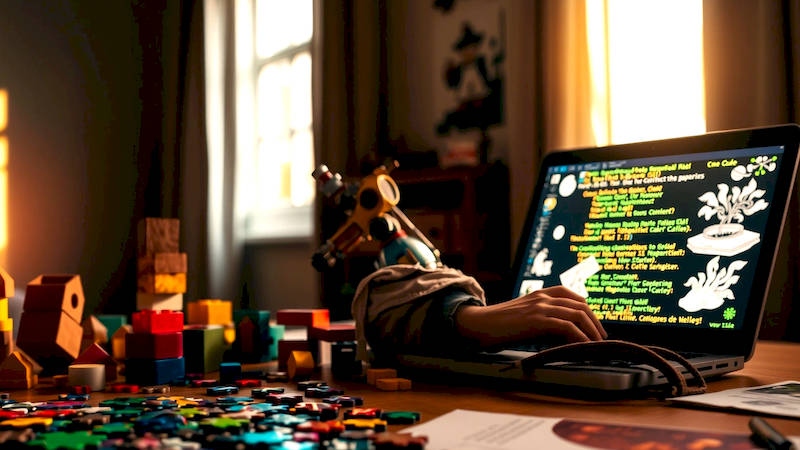
In an increasingly STEM-focused world, preparing children for future success often means emphasizing science, technology, engineering, and mathematics. However, a relentless focus on facts and formulas can sometimes stifle the very curiosity we aim to cultivate. Children learn best when they are engaged, and engagement thrives on connection – connection to the material, connection to themselves, and connection to the wider world. This is where the ancient art of storytelling steps in, offering a powerfully effective bridge between abstract STEM concepts and a child's innate desire to understand and explore. Integrating storytelling with STEM isn't just about making learning fun; it’s about making it meaningful, fostering a deeper understanding, and nurturing a lifelong love of learning.
The benefits of incorporating storytelling extend beyond simple engagement. Research consistently demonstrates that narratives boost memory retention, improve problem-solving skills, and enhance creativity. When information is presented within a compelling story, it becomes more relatable and memorable, moving beyond rote memorization to genuine comprehension. Furthermore, storytelling cultivates critical thinking by prompting children to analyze plot, understand character motivations, and predict outcomes – skills that are directly transferable to STEM fields. In a society demanding innovation, nurturing these skills is paramount to preparing our children to be the problem-solvers of tomorrow.
- The Neuroscience of Storytelling & STEM: Why It Works
- Crafting STEM Stories: Elements of Effective Narrative
- Practical Examples Across Age Groups: From Toddlers to Tweens
- Leveraging Existing Resources & Creating Your Own
- Overcoming Challenges: Addressing Common Concerns
- Assessing the Impact: Measuring Engagement and Understanding
- Conclusion: Weaving a Future of STEM Literacy
The Neuroscience of Storytelling & STEM: Why It Works
The power of storytelling isn't merely anecdotal; it's rooted in neuroscience. When we hear a story, our brains light up in remarkable ways. Neural coupling occurs, meaning the listener’s brain activity begins to mirror that of the storyteller. This synchronization isn’t just a passive reception of information; it’s an active process of empathy and understanding. Crucially, storytelling triggers the release of dopamine, a neurotransmitter associated with pleasure, motivation, and learning. This dopamine release amplifies attention and strengthens memory encoding, making the information within the story far more likely to be retained.
This neurological response is especially beneficial for STEM learning. Often, STEM concepts are abstract and require the formation of new neural pathways. Storytelling provides a familiar and engaging context for this process, making it easier for children to create these connections. The emotional connection fostered by stories also helps to overcome the anxiety and frustration that can sometimes accompany challenging STEM topics. For example, explaining the principles of physics through the narrative of a budding engineer designing a bridge builds a connection to the concept that simply presenting the equations might not achieve.
Ultimately, the brain evolved to process information through stories. Before the advent of textbooks and lectures, knowledge was passed down through oral traditions, carefully crafted narratives designed to ensure survival and understanding of the natural world. To ignore the power of storytelling in education is to work against the very way our brains are wired to learn.
Crafting STEM Stories: Elements of Effective Narrative
Not just any story will do. To effectively integrate STEM into a narrative, it requires a thoughtful approach. The core principle is to embed the STEM concept within the story, making it integral to the plot, character development, or resolution—and not simply tacking it on as an afterthought. Think about the problem the characters are trying to solve, and how STEM principles can be used to contribute to that solution. Consider incorporating elements that encourage curiosity and inquiry, leaving room for the child to ask questions and explore possibilities.
A strong STEM story usually follows a natural problem-solution structure. Introduce a challenge that requires scientific thinking, engineering ingenuity, or mathematical precision. The characters then explore different approaches, experiment, and ultimately utilize STEM principles to overcome the obstacle. It's also vital to make the applications relatable. Instead of focusing on complex theoretical applications, ground the STEM context in everyday experiences, like building a birdhouse (engineering), observing plant growth (biology), or calculating ingredients for a recipe (mathematics). Author and educator, Dr. Michio Kaku, argues that “The best way to understand science is to imagine it.” This emphasizes that storytelling gives the learner a chance to imagine possibilities, which aids in comprehension.
Practical Examples Across Age Groups: From Toddlers to Tweens
The approach to integrating storytelling with STEM will, naturally, evolve with the child’s age and cognitive development. For toddlers and preschoolers, focus on simple narratives that introduce basic concepts. A story about a squirrel collecting nuts can introduce counting and sorting skills. A tale of building a tower with blocks can illustrate the principles of stability and structure. These stories should be highly interactive, inviting the child to participate in the narrative and explore the concepts hands-on.
As children enter elementary school, you can introduce more complex narratives and introduce rudimentary engineering challenges. A story about a group of animals needing to cross a river can become an engineering design challenge: "How can we build a bridge strong enough for them?" For older children, middle school and early high school, the narratives can tackle more nuanced STEM issues, like environmental sustainability, the ethics of artificial intelligence, or the challenges of space exploration. Consider basing stories on real-world scientists and their discoveries, or prompting children to write their own STEM-focused stories, fostering both their creative writing and scientific understanding.
Leveraging Existing Resources & Creating Your Own
You don’t need to be a professional author to incorporate storytelling into STEM learning. A wealth of readily available resources exists, and the internet offers a growing collection of STEM-themed storybooks, animated videos, and interactive games. Resources like PBS Kids, National Geographic Kids, and Science Story Time provide engaging content that seamlessly blends narrative with scientific concepts. Utilizing these resources can serve as excellent jumping-off points for discussion and further exploration.
Beyond existing resources, the most powerful impact comes from creating your own stories tailored to your child’s interests. This could be as simple as adapting a familiar fairy tale to incorporate STEM principles. For example, “The Three Little Pigs” can become a lesson in structural engineering as the pigs experiment with different building materials. Alternatively, co-create a story with your child, asking them questions like, "What if a robot could...? What scientific challenges would it face?" This collaborative approach not only reinforces learning but also fosters a stronger connection and shared experience.
Overcoming Challenges: Addressing Common Concerns
One common concern is that incorporating storytelling will “dumb down” STEM concepts or sacrifice accuracy for the sake of entertainment. This is a valid concern, but it’s a misconception. Effective STEM storytelling doesn’t simplify the science; it contextualizes it. It uses narrative as a vehicle to deliver accurate information in a digestible and engaging way. Another potential challenge is time constraints. Parents are busy, and developing original stories can seem daunting. However, remember that storytelling doesn’t need to be elaborate or lengthy. Even a short, impromptu narrative can make a difference.
Finally, it’s essential to address the belief that STEM is primarily for “science-minded” kids. Storytelling can help to dismantle this stereotype by demonstrating that STEM is relevant to everyone, regardless of their individual interests. By framing STEM concepts within narratives that resonate with a child’s passions – be it art, music, sports, or social justice – you can show them that STEM is not a separate subject, but a tool for understanding and shaping the world around them.
Assessing the Impact: Measuring Engagement and Understanding
While the inherent benefits of storytelling seem clear, it’s useful to have a method to assess its impact on your child’s learning. Observe their level of engagement during and after the story - are they asking questions? Are they eager to explore the related STEM concepts further? Encourage them to explain the scientific principles in their own words, which demonstrates true understanding rather than rote memorization.
Consider incorporating small, informal “challenges” related to the story. For example, if the story involved building a bridge, ask your child to design their own bridge using readily available materials. Tracking their problem-solving process is more valuable than simply evaluating the final product. Finally, look for evidence of transfer – are they applying the STEM concepts learned in the story to other areas of their lives? This is the ultimate sign that the integration has been successful.
Conclusion: Weaving a Future of STEM Literacy
Integrating storytelling with STEM education is more than just a pedagogical trend; it’s a fundamental shift in how we approach learning. By leveraging the power of narrative, we can transform abstract concepts into relatable experiences, sparking curiosity, fostering engagement, and ultimately, nurturing a lifelong love of STEM. The key takeaways are simple: prioritize context, make it relatable, and encourage exploration. Take the time to observe your child's interests, adapt existing stories, or create your own.
The future demands a generation equipped with critical thinking skills, innovative problem-solving abilities, and a deep understanding of the scientific world. By weaving wonder through storytelling, we empower our children to not just learn STEM, but to live STEM – to see its relevance in everything they do and to embrace the challenges and opportunities of an increasingly complex world. Start small, be creative, and watch as the magic of storytelling unfolds, igniting your child’s passion for STEM and setting them on a path to a brighter, more innovative future.
Deja una respuesta