
Incorporating Sensory Play to Support Cognitive Growth Before School
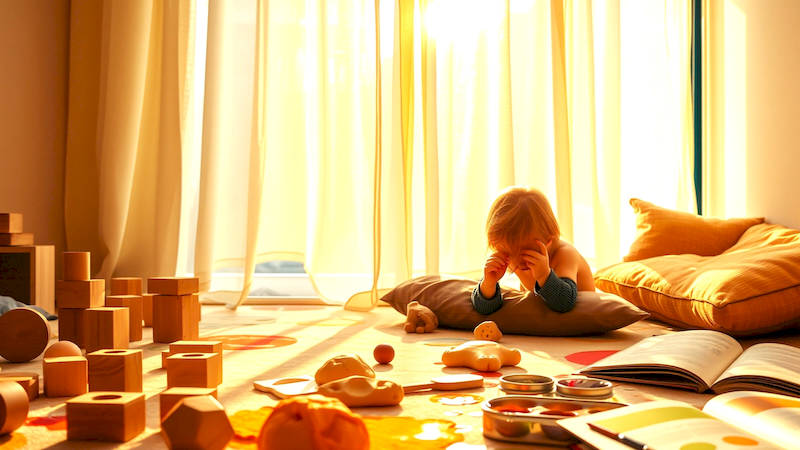
The transition to formal schooling is a significant milestone for both children and parents. While academic preparedness often takes center stage, a child's cognitive development is deeply rooted in experiences well before kindergarten. Increasingly, early childhood educators and developmental psychologists emphasize the critical role of sensory play – engaging children’s senses of touch, smell, taste, sight, and sound – in fostering this cognitive growth. This isn’t simply about filling time with enjoyable activities; it’s about laying the neurological foundation for learning, problem-solving, and emotional regulation. Ignoring these sensory foundations can leave children less prepared not just academically, but socially and emotionally too.
Sensory play provides opportunities for children to explore the world around them, experiment with different materials, and develop crucial skills that directly translate to school readiness. It's a natural, intuitive way for young children to learn, allowing them to make sense of their environment and solidify understanding through hands-on experience. The brain undergoes rapid development in the early years, and sensory input is the primary driver of this development, forging neural pathways crucial for future learning. Therefore, intentionally incorporating sensory experiences into a child's daily routine is an investment in their long-term success.
This article will delve into the various facets of sensory play, explaining how it supports cognitive development, providing practical ideas for implementation at home, addressing common concerns, and highlighting the importance of adapting these activities to different developmental stages. We'll also explore the connection between sensory processing and school readiness, empowering parents to proactively support their child's growth.
- Understanding the Link Between Sensory Play and Cognitive Development
- Types of Sensory Play & Their Cognitive Benefits
- Practical Sensory Play Activities for Home
- Addressing Common Concerns and Safety Considerations
- Adapting Sensory Play for Different Developmental Stages
- The Role of Sensory Play in School Readiness
- Conclusion: Nurturing the Senses, Building Bright Futures
Understanding the Link Between Sensory Play and Cognitive Development
At its core, cognitive development encompasses a child’s ability to think, learn, remember, and solve problems. Sensory play isn’t a distraction from these processes – it’s a catalyst for them. Each sense contributes uniquely. For example, tactile experiences (touch) help develop spatial reasoning and fine motor skills, crucial for tasks like writing and manipulating objects. Auditory experiences (sound) aid language development and auditory processing, which is essential for listening and following instructions in a classroom. Visual experiences (sight) obviously contribute to recognizing patterns, understanding concepts like size and shape, and visual discrimination skills, foundational for reading.
Researchers have observed a strong correlation between early sensory experiences and later cognitive abilities. Studies in neuroscience demonstrate that engaging multiple senses simultaneously creates stronger and more durable neural connections. This is often referred to as 'multisensory integration.' Furthermore, sensory play promotes divergent thinking, the ability to generate multiple solutions to a problem, a vital skill for creativity and innovation. It's about allowing a child to explore how things work, not just what they are – a key difference between rote memorization and true understanding. As Dr. Angela Duckworth, author of Grit, highlights, “Play is often dismissed as frivolous, but it is, in fact, brain-building.”
Finally, sensory play is deeply connected to executive functioning skills – cognitive processes like planning, organization, self-control, and working memory. Activities like building with blocks, pouring water, or creating art require children to plan their actions, regulate their impulses, and remember what they’ve done, strengthening these essential skills.
Types of Sensory Play & Their Cognitive Benefits
Sensory play isn’t limited to a specific set of activities. It encompasses a wide range of experiences that engage the senses. These can be broadly categorized into: tactile, visual, auditory, olfactory (smell), and gustatory (taste). Tactile activities – like playing with playdough, sand, water, or textured materials – are particularly beneficial for developing fine motor skills, hand-eye coordination, and sensory discrimination. Visual activities, like exploring light and shadow, using prisms, or creating colorful art, stimulate creativity and visual perception.
Auditory play, such as making music with instruments, listening to different sounds, or engaging in rhythmic activities, enhances auditory processing, language development, and memory. Exploring scents with essential oils, spices, or flowers (carefully and with supervision) develops olfactory discrimination and can evoke memories and emotions. While gustatory experiences can be part of sensory play, they require extra caution due to allergies and potential choking hazards. Activities could include comparing different flavors of fruits or exploring the texture of different foods. However, it is necessary to ensure that the environment is safe for such activities.
A particularly effective approach is to combine multiple sensory experiences. For instance, a water table with floating objects, measuring cups, and colored ice cubes stimulates tactile, visual, and even some auditory senses. This multisensory approach maximizes cognitive benefits as the brain processes information from multiple sources simultaneously.
Practical Sensory Play Activities for Home
Creating a sensory-rich environment doesn’t require expensive toys or elaborate setups. Many everyday materials can be transformed into engaging sensory experiences. One easy activity is creating a ‘sensory bin’ - a container filled with materials like rice, beans, pasta, or oats, along with scoops, cups, and small toys. This encourages exploration, imaginative play, and fine motor development. Another low-cost option is making homemade playdough, which provides excellent tactile stimulation and allows children to experiment with texture and shape.
For visual stimulation, introduce activities like painting with watercolors, creating collages with different materials, or building structures with blocks of various colors and sizes. Sound exploration can involve making music with pots and pans, creating a “sound scavenger hunt” where children listen for and identify different sounds, or simply singing songs together. Remember to tailor the activities to your child’s age and developmental level. A toddler might enjoy simply exploring the texture of playdough, while a preschooler can use it to create intricate sculptures. Supervising the play, especially with smaller objects, is paramount.
Addressing Common Concerns and Safety Considerations
Many parents worry about the mess associated with sensory play. While it’s true that some activities can be messy, the benefits far outweigh the inconvenience. Designating a specific area for sensory play, laying down a drop cloth, or choosing washable materials can minimize the mess. The mess itself can be a learning opportunity, teaching children about responsibility, cleanup, and problem-solving. Another concern is allergies. Always be mindful of potential allergens and avoid materials that could trigger a reaction.
Safety is paramount. Supervise children closely, especially when using small objects that could be choking hazards. Choose non-toxic materials, and avoid using food items if there are allergy concerns. Be aware of potential sensitivities to certain textures or smells, and adjust activities accordingly. For children with sensory processing sensitivities, introducing new sensory experiences gradually and allowing them to control the level of engagement can prevent overwhelm. For example, allowing them to wear gloves or start by observing an activity before participating.
Adapting Sensory Play for Different Developmental Stages
Sensory play needs to evolve alongside a child’s development. Infants benefit from simple sensory experiences like contrasting patterns, soft textures, and gentle sounds. As they grow, they'll enjoy exploring different materials with their hands and mouths (under constant supervision). Toddlers thrive on repetition and exploring sensory materials independently, while preschoolers are capable of more complex sensory play and imaginative scenarios.
Around the age of 5-6, children begin to develop more refined sensory preferences and may show interest in activities like creating slime, building elaborate structures, or experimenting with art materials. Its crucial to observe your child cue’s and adjust the complexity and type of play accordingly. If sensory play seems to cause stress or avoids activities, it may be a sign of sensory processing difficulty, and seeking guidance from an occupational therapist or pediatrician is highly recommended.
The Role of Sensory Play in School Readiness
Ultimately, the goal of incorporating sensory play is to prepare children for the demands of school. As stated by Maria Montessori, “Play is the work of the child.” Sensory experiences help children develop the foundational skills they need to succeed academically, socially, and emotionally. For example, a child who has had ample opportunities to explore different textures and manipulate objects is more likely to develop the fine motor skills needed for writing.
A child who has practiced listening and following instructions during sensory play is better prepared for classroom learning. And a child who has learned to regulate their emotions during sensory exploration is more likely to cope with the challenges of school. By prioritizing sensory play, parents can give their children a significant advantage as they embark on their educational journey.
Conclusion: Nurturing the Senses, Building Bright Futures
Incorporating sensory play into a child’s daily routine is a powerful way to support cognitive growth and prepare them for school success. It’s not about creating perfect, Pinterest-worthy activities; it’s about providing opportunities for children to explore, experiment, and learn through their senses. Remember that messy play is often the most beneficial, and that adapting activities to your child’s developmental stage is crucial. Prioritize safety and be mindful of potential allergies.
The key takeaways are: embrace the mess, observe your child’s preferences, and prioritize exploration. Start small, with simple activities like a sensory bin or homemade playdough. Gradually introduce new materials and experiences, and be open to your child’s lead. By nurturing their senses, you’re not just enriching their childhood; you’re building the foundation for a bright and successful future. Actively incorporating sensory play can genuinely empower your child's cognitive and emotional well-being as they prepare for the exciting world of learning.
Deja una respuesta