
How to Teach Social Skills and Cooperation Before Starting School
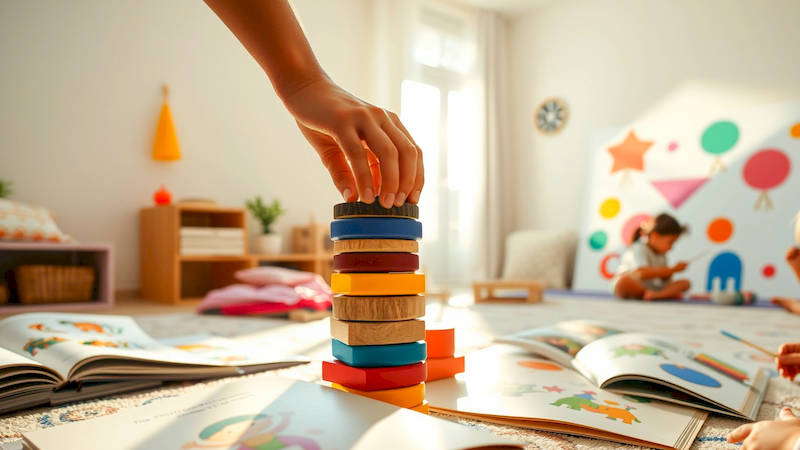
The transition to formal schooling is a significant milestone for both children and parents. While academic readiness often takes center stage, it's crucial to remember that a child's social-emotional development is equally, if not more, important for a successful and positive school experience. A child brimming with knowledge but lacking the ability to share, take turns, or navigate conflicts will likely struggle to thrive in a classroom setting. Teaching social skills and cooperation before kindergarten isn't just about preparing them for interactions with peers; it's about fostering emotional intelligence, resilience, and a positive self-image.
This pre-school foundation isn’t simply helpful; it’s demonstrably linked to later academic success. Research consistently shows that children with strong social-emotional skills are better able to focus, regulate their emotions, and build positive relationships with teachers and classmates—all critical components for learning. According to a study by the Collaborative for Academic, Social, and Emotional Learning (CASEL), students who participate in high-quality social-emotional learning programs demonstrate an 11 percentile point gain in academic achievement. Ignoring these vital skills leaves children vulnerable to feelings of isolation, anxiety, and behavioral challenges that can hinder their overall progress.
This article will provide a comprehensive guide to nurturing these crucial abilities, offering practical strategies and insights for parents to help their little ones develop the social competence needed to confidently and joyfully embark on their educational journey. We’ll explore methods to foster empathy, conflict resolution, sharing, and collaboration, looking beyond simple "please say thank you" directives to build genuine understanding and positive interaction patterns. It's about equipping children with the tools to not just be in a group, but to belong to one.
Understanding the Development of Social Skills in Early Childhood
Social skill development isn’t an overnight process; it unfolds in stages, closely tied to a child's cognitive and emotional maturation. Between the ages of 3 and 5, children move from parallel play (playing alongside each other without much interaction) to associative play (interacting more, often around a shared activity) and finally to cooperative play (engaging in structured, collaborative games with defined roles). Understanding these stages allows parents to tailor their approach to what’s developmentally appropriate. Forcing a three-year-old into complex cooperative games will likely lead to frustration for both child and parent.
A key aspect of this development is the growth of theory of mind – the ability to understand that others have their own thoughts, feelings, and perspectives that may differ from their own. This is crucial for empathy and perspective-taking. Activities that require children to anticipate another person’s reaction, like reading stories and discussing character motivations ("How do you think the bear felt when Goldilocks broke his chair?") can help foster this crucial skill. Interestingly, research shows that children with stronger theory of mind skills are more adept at navigating social situations and resolving conflicts effectively.
It's also important to recognize that temperament plays a role. Some children are naturally more outgoing and sociable, while others are more reserved and need more encouragement to engage. For shy children, creating small, supportive opportunities for interaction – playdates with one familiar friend, for example – can be less overwhelming than large group settings. Avoid labeling a child as “shy”, as this can become a self-fulfilling prophecy. Instead, focus on building their confidence in small steps.
Modeling Positive Social Behavior
Children are master imitators, learning far more from what we do than from what we say. Perhaps the most powerful tool a parent has in teaching social skills is to consistently model those skills themselves. This means demonstrating respectful communication, active listening, empathy, and fair play in all your interactions, not just with your child, but with everyone around you – your partner, family members, store clerks, and other parents.
Consider a scenario: your child witnesses you responding impatiently and dismissively to a frustrating phone call. This sends a powerful message that it's acceptable to react with negativity and disregard for another person’s feelings. Conversely, if they see you calmly and respectfully addressing a challenge, they’re far more likely to adopt a similar approach. Talking through your own feelings ("I'm feeling frustrated right now, so I'm going to take a deep breath before responding") models healthy emotional regulation.
Beyond direct interactions, be mindful of your language. Avoid gossip or negative talk about others, and instead focus on highlighting positive qualities and behaviors. Phrases like "Let's think about how that person might be feeling" or "That was a kind thing to do" can subtly reinforce the importance of social awareness and considerate behavior. According to Dr. Laura Markham, author of Peaceful Parent, Happy Kids, "Children learn social skills by observing and internalizing the behaviors of the adults they trust."
Creating Opportunities for Practice Through Play
Play is not just fun and games; it’s the primary way young children learn and practice social skills. Structured playdates, while sometimes requiring more parental involvement, are excellent opportunities for guided social interaction. Choose playdates with children who exhibit positive social behaviors themselves to provide good role models. Before the playdate, discuss potential scenarios and strategies with your child: “What if your friend wants to play with the same toy as you? What could you do?”
Don’t interfere unnecessarily, but be ready to step in and offer gentle guidance when needed. If a conflict arises, resist the urge to immediately solve it for them. Instead, facilitate a discussion: “What happened here? How are both of you feeling? What could you do to fix this?” Encourage them to use “I” statements (“I feel sad when you take my toy without asking”) and to brainstorm solutions together. Board games, even simple ones, provide opportunities to practice taking turns, following rules, and handling both winning and losing gracefully.
Remember to also prioritize unstructured play. A simple pile of blocks or art supplies can spark imaginative collaboration and negotiation. Encourage role-playing - pretending to be doctors, firefighters, or families - allows children to experiment with different social roles and practice communication and problem-solving skills in a safe and creative environment.
Teaching Emotional Literacy: Recognizing and Expressing Feelings
Social skills are deeply intertwined with emotional intelligence — the ability to understand and manage one's own emotions and recognize the emotions of others. Being able to identify and name feelings is the first step towards emotional regulation and empathetic connection. Start by labeling your own feelings (“I’m feeling happy because…” or “I’m feeling frustrated because…”). Then, help your child identify their own emotions.
Use feeling charts with pictures of different facial expressions and ask, "How do you think this person is feeling?". Read books that explore a range of emotions and discuss how the characters might be feeling and why. When your child is experiencing a strong emotion, validate their feelings ("I see you're really angry right now") before addressing the behavior. Avoid dismissing their emotions with phrases like "Don't be sad" or "You shouldn't feel that way". A more helpful approach is to say, "It's okay to feel sad, but it's not okay to hit."
Expanding their emotional vocabulary is also crucial. Instead of just "sad," teach them words like disappointed, frustrated, or lonely. The more nuanced their emotional vocabulary, the better they will be able to understand and communicate their own feelings and empathize with others. This foundation of emotional literacy is essential for building strong relationships and navigating the social complexities of school.
Fostering Cooperation and Sharing
Cooperation and sharing are often presented as moral imperatives (“You should share!”) but are more effectively taught as skills. Frame sharing as a way to build friendships and make others happy. “When you share your toys, it makes Leo happy, and then you can both have fun together!” Instead of demanding sharing, encourage turn-taking. "You can play with the car for five minutes, and then it will be Amelia's turn." Using a timer can help make this more concrete and fair.
To foster cooperation, involve your child in collaborative activities around the house, such as setting the table together or building a fort as a team. Assign them age-appropriate tasks and emphasize the positive outcome of working together. "When we work together, we can get everything done so much faster and have more time to play!" Point out examples of cooperation you see in everyday life – a group of people working together to build something, or teammates helping each other during a game.
Avoid turning sharing into a power struggle. If your child is particularly possessive, start with small steps – asking them to share a single block or crayon. Focus on praising their generosity, even if it’s a small gesture. Remember that it’s okay for a child to not want to share everything all the time. Respecting their boundaries while gently encouraging generosity is a balancing act.
Conclusion: Building Lifelong Social Competence
Teaching social skills and cooperation before starting school is an investment in your child’s future success, well-being, and happiness. It's not about forcing conformity but rather about equipping them with the tools to navigate social interactions confidently, build positive relationships, and thrive in a community. By proactively modeling positive behavior, creating opportunities for practice through play, fostering emotional literacy, and gently guiding them towards cooperation and sharing, you’re laying a foundation for lifelong social competence.
Remember that this is an ongoing process, not a checklist to complete before kindergarten. Continue to reinforce these skills throughout their childhood, providing support and encouragement as they encounter new social challenges. The key takeaways are to prioritize modeling over lecturing, facilitate rather than intervene, and focus on building emotional understanding alongside behavioral expectations. By nurturing your child’s social-emotional development, you’re not just preparing them for school; you’re preparing them for life. The small efforts made now will yield significant dividends in their ability to connect with others, build meaningful relationships, and navigate the world with confidence and empathy.
Deja una respuesta