
Developing Patience and Turn-Taking Skills for Younger Students
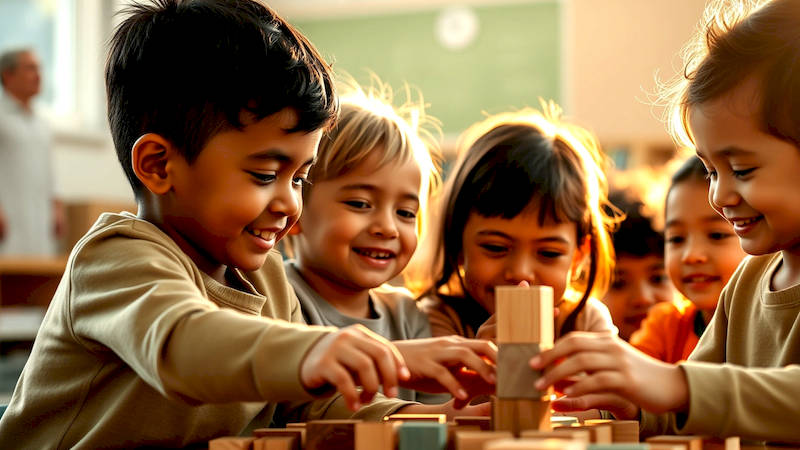
The early years of education are about far more than academics. While foundational literacy and numeracy are crucial, the development of essential social-emotional skills – like patience and the ability to take turns – lays the groundwork for a child's future success in school, relationships, and life. These skills aren't innate; they are learned behaviors that require explicit teaching, consistent modeling, and ample practice. When young students struggle with patience and turn-taking, it can manifest as frustration, outbursts, difficulty collaborating, and ultimately, a hindered learning experience for both themselves and their peers.
These challenges are increasingly prevalent in today’s fast-paced world, where instant gratification is often the norm. Children accustomed to immediate access to entertainment and desires may find the delays inherent in classroom activities particularly difficult. Therefore, proactively addressing these skills in the early years isn’t simply about managing classroom behavior; it's about equipping children with the tools they need to navigate the social complexities of life and fostering a positive learning environment for everyone. Ignoring these skills can lead to negative peer interactions, reduced engagement in group activities, and even the development of anxiety related to social situations.
Developing patience and turn-taking isn't a quick fix. It requires a holistic approach involving teachers, parents, and a consistent classroom environment. It demands understanding the developmental stages of young children and tailoring strategies accordingly. This article will delve into the underlying reasons for these challenges, explore practical strategies for fostering these essential skills, and offer insights into creating a classroom culture that champions cooperation and self-regulation. We will focus specifically on methods applicable to students in preschool through second grade, acknowledging the unique needs of this age group.
- Understanding the Developmental Roots of Impatience & Difficulty with Turn-Taking
- Explicitly Teaching the Concepts of Patience and Turn-Taking
- Strategies for Managing Impatience in the Moment
- The Power of Visual Supports and Timers
- Fostering a Classroom Culture of Cooperation and Respect
- Partnering with Parents for Consistency
- Conclusion
Understanding the Developmental Roots of Impatience & Difficulty with Turn-Taking
Young children, particularly those aged 3-7, are inherently egocentric. This isn’t a negative trait, but a natural byproduct of cognitive development. Jean Piaget’s work on cognitive stages emphasizes that children in the preoperational stage (roughly ages 2-7) struggle to see perspectives other than their own. This means understanding why someone else needs a turn, or the concept of delayed gratification, is genuinely difficult for them. Their brains are still developing the capacity for abstract thought and impulse control. Expecting a four-year-old to effortlessly share a coveted toy without any guidance is unrealistic and sets them up for failure.
Furthermore, emotional regulation is also under development during these formative years. A child’s ability to manage frustration, anger, and disappointment is directly linked to their capacity for patience. When a child wants something now and can’t have it, the emotional intensity can be overwhelming. This can result in tantrums, whining, or attempts to grab what they want. It’s vital to remember that these behaviors aren’t necessarily acts of defiance but often stem from an inability to cope with challenging feelings. Connecting the emotions to the situation ("I see you're feeling frustrated because you have to wait") can be a powerful first step.
Finally, individual temperament plays a significant role. Some children are naturally more impulsive and have a harder time waiting than others. Environmental factors, such as exposure to constant stimulation or inconsistent routines, can also exacerbate these tendencies. Recognizing these individual differences is paramount. What works for one child might not work for another, and tailoring strategies to meet each child’s specific needs is crucial for success. Therefore, a one-size-fits-all approach simply won't be effective.
Explicitly Teaching the Concepts of Patience and Turn-Taking
Instead of assuming children will naturally develop these skills, teachers need to explicitly teach them. This involves breaking down the concepts into simple, understandable terms and providing opportunities for practice in structured settings. For example, rather than simply saying "Be patient," explain what patience looks like: "Patience means waiting your turn calmly, even when you really want to go." Use visual aids like a timer or a “waiting chart” to make the concept of time more concrete. Explain that everyone gets a turn, and that taking turns makes things fair for everyone.
Focus on modeling desired behaviors. Children learn by observing, so teachers and aides must demonstrate patience and turn-taking themselves. This means taking turns speaking during circle time, demonstrating calmness when interrupted, and modeling respectful interactions with colleagues. Narrate your own thought process when you need to wait, saying things like, "I really want to start reading this book, but I need to finish helping Sarah first. It’s okay to wait." This provides a clear example for students to follow.
Create structured activities designed to promote turn-taking. Simple games like rolling a die to determine whose turn it is, passing an object around a circle, or building a tower with blocks where each child adds one block at a time can provide valuable practice. Start with very short turns and gradually increase the duration as children become more comfortable. Reinforce positive behavior with praise and encouragement: “I noticed how well you waited for your turn, Emily! That shows great patience.”
Strategies for Managing Impatience in the Moment
Even with explicit teaching, moments of impatience will inevitably arise. When a child is struggling, the key is to respond calmly and consistently. Avoid scolding or shaming, as this can escalate the situation. Instead, acknowledge the child's feelings (“I see you’re feeling frustrated because you want to go next”) and redirect their attention. Using a calm and soothing voice is critical during these times. Offer an alternative activity or a distraction if appropriate.
Utilize pre-established signals or cues. A simple hand signal or a pre-agreed-upon phrase (“Let’s take a deep breath”) can help a child regain control when they start to feel overwhelmed. Teach children how to self-regulate by practicing deep breathing exercises or counting to ten. Create a “calm down corner” in the classroom where children can go to de-escalate when they’re feeling overwhelmed. This corner should be equipped with calming tools like books, sensory toys, or coloring supplies.
Implementing a “first/then” strategy can be very effective. For example, “First we finish cleaning up the blocks, then we can go play with the cars.” This provides a clear expectation and helps the child understand that they will eventually get to do what they want, but only after completing the current task. This strategy builds a sense of predictability, which can be especially helpful for children who struggle with anxiety or impulsivity. Acknowledging that waiting is hard can also be surprisingly validating for a child.
The Power of Visual Supports and Timers
Young children often struggle with abstract concepts like time. Visual supports and timers can make time more concrete and help them understand how long they need to wait. A visual timer, where the amount of time remaining is visually represented, can be particularly effective. This allows children to see the time ticking down and provides a sense of control. Simple timers on phones or tablets can also be useful, but avoid using overly complicated or noisy timers that might be overwhelming.
Utilize visual schedules to illustrate the sequence of activities throughout the day. This helps children anticipate what’s coming and reduces anxiety about transitions. Include pictures or symbols to represent each activity. This empowers them to understand the structure of the day and begin to recognize that there will be a time for everything. Use a "waiting chart" where children can place their name or a token when they are waiting for their turn. This visual reminder helps them understand that their turn will come, and it gives them something to focus on other than their frustration.
Employing “now/next” boards can also be helpful. These boards visually depict what the child is doing “now” and what they will be doing “next.” This provides a clear sense of the immediate future and helps them manage their expectations. The visual reminder can alleviate anxiety and reduce impulsive requests. It’s also beneficial to regularly review the boards with the children, reinforcing their understanding of the schedule.
Fostering a Classroom Culture of Cooperation and Respect
Creating a classroom culture that values cooperation and respect is essential for developing patience and turn-taking skills. This involves explicitly teaching social skills like empathy, kindness, and active listening. Encourage children to consider the feelings of others and to understand how their actions affect those around them. Implement regular “class meetings” where students can discuss issues, share ideas, and practice problem-solving skills.
Establish clear classroom rules that promote respectful interactions. For example, "We listen when others are speaking," and "We take turns fairly," should be explicitly stated and consistently enforced. Use positive reinforcement to reward cooperative behavior. Catch children being kind and patient and acknowledge their efforts publicly. Acknowledge and praise specific behaviors (“I saw how you shared your crayons with Alex, that was very kind of you!”).
Read aloud stories that illustrate the importance of patience and turn-taking. These stories can provide opportunities for discussion and role-playing. Use puppets or drama activities to practice different scenarios involving sharing and waiting. Encourage children to create their own stories or drawings depicting positive social interactions. A classroom library filled with social-emotional learning books is a powerful tool.
Partnering with Parents for Consistency
Consistency is key to success. Teachers should communicate regularly with parents about the strategies being used in the classroom and encourage them to reinforce these strategies at home. Provide parents with tips and resources on how to foster patience and turn-taking skills during everyday routines. This creates a unified approach and maximizes the impact of these interventions. Share specific examples of a child's progress or challenges with parents to facilitate a collaborative approach.
Suggest activities that parents can do at home to practice these skills, such as playing board games, completing puzzles, or engaging in simple chores where turn-taking is required. Encourage parents to model patience and turn-taking themselves. Children are more likely to adopt these behaviors if they see their parents demonstrating them consistently. Offering workshops or informational sessions for parents focused on social-emotional learning can be incredibly valuable.
Ultimately, fostering patience and turn-taking skills requires a collaborative effort between teachers and parents. By working together, we can create a supportive environment where children feel safe to practice these essential skills and develop the emotional intelligence they need to thrive. “The most important lesson we can teach our children isn’t academics," says Dr. Michele Borba, educational psychologist and author of UnSelfie, “but empathy and self-control."
Conclusion
Developing patience and turn-taking skills is a foundational aspect of a child’s social-emotional growth, impacting their ability to form healthy relationships, navigate classroom dynamics, and succeed academically. It’s crucial to understand that these skills aren't inherent but learned through explicit instruction, consistent modeling, and practical application. By employing strategies such as visual aids, timers, positive reinforcement, and creating a supportive classroom culture, educators can significantly foster these abilities in younger students.
The key takeaways are to remember the developmental stage of the child, explicitly teach the concepts, be patient and consistent in responses, and actively partner with parents. Actionable next steps include implementing a visual schedule in your classroom, introducing a “first/then” strategy, and scheduling a parent-teacher conference to discuss collaborative approaches. Investing in these skills early on will yield significant long-term benefits, setting children on a path towards becoming confident, empathetic, and well-adjusted individuals.
Deja una respuesta