
Conducting a Family Science Fair: STEM Project Ideas for Kids and Parents
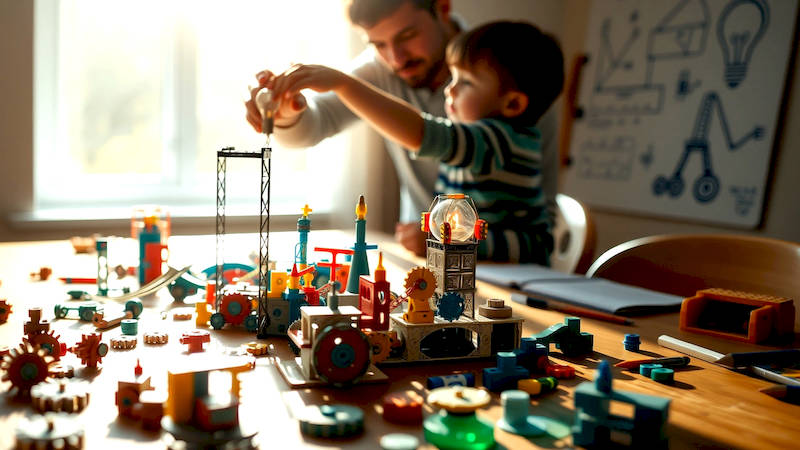
The world is increasingly driven by Science, Technology, Engineering, and Mathematics (STEM). Encouraging an early interest in these fields isn’t just about preparing children for future careers; it’s about fostering critical thinking, problem-solving skills, and a lifelong love of learning. A family science fair is a dynamic and engaging way to achieve this. It transforms learning from a passive activity to an exciting, collaborative exploration. More than just building volcanoes or lemon batteries, it’s a chance to dive deep into a topic, ask ‘what if?’ and ‘why?’ and experience the thrill of discovery as a family.
The benefits extend far beyond the excitement of the fair itself. These projects sharpen observation skills, boost confidence, and instill a methodical approach to investigation. In fact, according to the National Science Foundation, active participation in STEM activities during childhood significantly increases the likelihood of pursuing STEM careers later in life. This isn’t simply about reciting facts, it's about doing science, building, testing, failing, iterating, and ultimately understanding the world in a more profound way. Consider it a chance to build lasting memories alongside powerful learning experiences.
This guide provides everything you need to plan and execute a successful family science fair, complete with a diverse range of project ideas to spark curiosity for kids of all ages and interests. From the initial brainstorming phase to the final presentation, we’ll cover each step, ensuring a rewarding and educational experience for everyone involved.
- Brainstorming and Selecting a Project
- Simple STEM Project Ideas for Younger Children (Ages 5-8)
- Intermediate STEM Project Ideas (Ages 9-12)
- Designing the Science Fair Display Board
- Conducting the Science Fair and Giving a Presentation
- Moving Beyond the Fair: Continuing the STEM Journey
- Adapting the Fair for Different Learning Styles and Abilities
Brainstorming and Selecting a Project
The first step is choosing a project that genuinely interests your child. Avoid projects that feel like chores or are overly complicated. The goal is to foster enthusiasm, not frustration. Consider your child's existing passions. Are they fascinated by animals, space, building things, or cooking? Leverage these interests to brainstorm project ideas directly related to their curiosities. A child who loves animals might explore how different environmental factors affect plant growth, while a budding engineer could investigate the principles of bridge building.
Once you have a few initial ideas, research them together. Help your child understand the scientific method and how projects should aim to answer a specific question. For example, instead of “building a volcano,” frame it as “how does the amount of baking soda affect the height of a volcanic eruption?” This approach immediately introduces a testable variable. Resources like Science Buddies (sciencebuddies.org) offer a wealth of project ideas categorized by grade level and scientific discipline, along with detailed procedures and explanations.
Don't be afraid to scale the project according to your child's age and experience. Younger children might focus on simple observational experiments, while older children can tackle more complex investigations with data analysis and detailed reporting. The emphasis should be on the process of scientific inquiry, not necessarily achieving complex results.
Simple STEM Project Ideas for Younger Children (Ages 5-8)
For this age group, hands-on activities that demonstrate basic scientific principles are ideal. Projects should be visually engaging and encourage exploration. A classic example is creating a rainbow in a glass of water. This simple experiment uses a prism (or even a clear glass and sunlight) to demonstrate how light refracts and breaks into its component colors. Alternatively, explore density by creating a layered liquid column, using liquids of different densities such as honey, corn syrup, dish soap, water, and oil.
Another excellent option involves building structures with marshmallows and toothpicks. This activity introduces basic engineering concepts like structural integrity and design. Encourage your child to experiment with different shapes and configurations to see which structures are the most stable. To add a scientific element, you could challenge them to build a tower that can support a certain weight. Remember to emphasize observation and documentation. Even simple drawings or verbal descriptions of what your child observes are valuable data. "What happened when you added more marshmallows?" or "Which shape seemed to hold the weight best?".
Intermediate STEM Project Ideas (Ages 9-12)
This age group is capable of more complex investigations. Projects should introduce the concept of controlled variables and the importance of accurate data collection. An excellent project is building and testing different paper airplane designs. Your child can systematically modify aspects of the airplane (wing shape, weight distribution, size) and measure the distance flown for each design. This requires careful measurement and recording of data, followed by analysis to identify which design performs best.
Another engaging option is investigating the effects of different types of soil on plant growth. Your child could plant the same type of seeds in different soil samples (sand, clay, loam) and monitor their growth over time, measuring height, leaf size, and overall health. This project introduces the concepts of controlled variables, data collection, and the importance of consistent conditions. Encourage them to form a hypothesis before starting the experiment (“If I plant seeds in loam, they will grow taller than in sand”) and then analyze their results to determine whether their hypothesis was supported.
Designing the Science Fair Display Board
A well-organized and visually appealing display board is crucial for effectively communicating your child’s project. The board should clearly present the project's purpose, hypothesis, procedure, results, and conclusion. Use headings, subheadings, and bullet points to break up the information into manageable sections. Include photographs or illustrations to enhance the visual appeal and help explain the process. "Think of it like telling a story of your discovery," suggests Dr. Emily Carter, a STEM education specialist at the University of California, Berkeley.
Avoid cluttering the board with too much information. Focus on the most important findings and present them in a clear and concise manner. Ensure that all text is legible from a distance. One effective approach is to use a tri-fold display board, which provides ample space for presenting information in a logical and organized way. Integrate graphs and charts if data was collected – visual representations often convey information more effectively than raw numbers. Also, remember to include acknowledgements, thanking anyone who provided assistance with the project.
Conducting the Science Fair and Giving a Presentation
The science fair is an opportunity for your child to showcase their work and explain their findings to others. Encourage them to practice their presentation beforehand, ensuring they understand the key concepts and can articulate their process clearly. They should be prepared to answer questions about their project and demonstrate their understanding of the scientific method.
Emphasize that it's okay to be nervous and that the judges (or family members) are interested in learning about their work, not in testing them. Remind them to speak clearly, make eye contact, and use appropriate language. Encourage them to view the science fair as a celebration of their learning, not a competition. Focus on participation and the experience of scientific inquiry. Consider inviting friends and family to view the projects and provide positive feedback. This will help build your child's confidence and foster a continued interest in STEM.
Moving Beyond the Fair: Continuing the STEM Journey
The family science fair shouldn’t be a one-time event. Use it as a springboard for continued STEM exploration. Encourage your child to pursue their interests through books, online resources, museum visits, and extracurricular activities. Look for opportunities to incorporate STEM principles into everyday life. Cooking involves chemistry, building with LEGOs involves engineering, and navigating with a map involves geometry.
Consider joining a local science club or participating in STEM-related workshops. There are also numerous online resources available, such as Khan Academy and Code.org, that offer free educational content. The most important thing is to create a supportive and encouraging environment where your child feels empowered to ask questions, explore new ideas, and embrace the challenges of STEM learning. Continue to ask open-ended questions, like "What if we tried this differently?" or "What else did you notice?".
Adapting the Fair for Different Learning Styles and Abilities
It’s crucial to recognize that children learn in different ways. Some are visual learners, while others thrive through hands-on experiences or auditory explanations. Tailor the project and presentation to your child’s individual learning style. For example, a visual learner might benefit from creating detailed diagrams or videos, while a kinesthetic learner might prefer a more hands-on demonstration.
Furthermore, be mindful of any learning disabilities or special needs your child may have. Provide accommodations as necessary, such as allowing extra time for project completion or simplifying the instructions. The goal is to ensure that all children have the opportunity to participate and experience the joy of scientific discovery. A collaborative project that allows different family members to contribute based on their strengths can also be very effective.
In conclusion, a family science fair is a powerful tool for fostering a lifelong love of STEM. By embracing the scientific method, encouraging creativity, and celebrating the process of discovery, you can inspire your child to become a confident and capable problem-solver. Remember that the focus should be on learning and exploration, not just winning a prize. The memories created and the skills developed will last far beyond the day of the fair. Continue to support their curiosity, provide opportunities for experimentation, and nurture their passion for STEM – the future depends on it.
Deja una respuesta