Classroom Games That Improve Cooperative Teamwork Skills
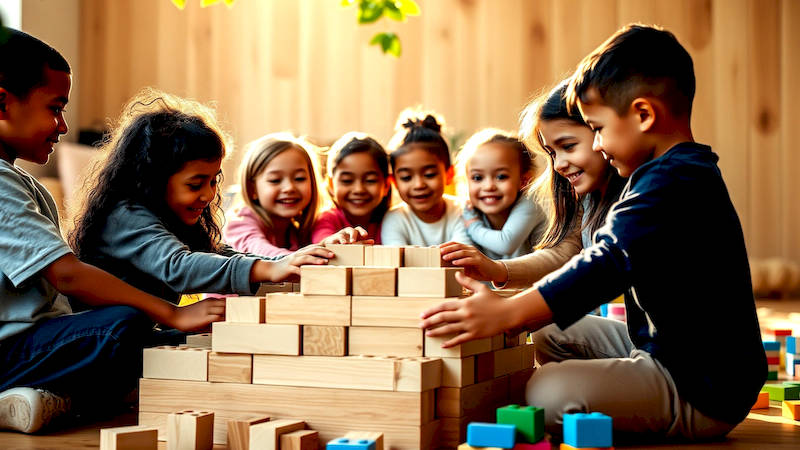
The ability to collaborate effectively is no longer simply a "nice-to-have" skill, but a fundamental requirement for success in the 21st century. While academic knowledge remains crucial, employers consistently cite teamwork and communication as highly sought-after qualities in prospective employees. More importantly, cooperative skills are vital for navigating social situations, building healthy relationships, and fostering a sense of community. The classroom provides an ideal environment to cultivate these skills, and leveraging the power of play through strategically chosen games can dramatically enhance a child’s capacity for teamwork.
Unfortunately, traditional classroom settings often prioritize individual achievement over collaborative efforts. This can lead to a competitive atmosphere that hinders the development of crucial social skills. Intentional integration of cooperative games provides a direct antidote to this, offering students opportunities to practice sharing, negotiation, conflict resolution, and mutual support. These aren't merely fun diversions; they are carefully constructed learning experiences that promote emotional intelligence and social competency.
This article will delve into a range of classroom games designed to foster cooperative teamwork, exploring the underlying principles that make them effective and providing practical guidance on implementation. We’ll examine how to adapt games to suit different age groups and learning environments, and address common challenges teachers might encounter when introducing collaborative activities. Ultimately, our goal is to equip educators and parents with the tools and knowledge to create a classroom culture where teamwork thrives.
- The Core Principles of Cooperative Teamwork Games
- Building Blocks: Simple Games for Younger Elementary Students (K-2)
- Stepping Up the Challenge: Games for Upper Elementary (Grades 3-5)
- Problem-Solving & Critical Thinking: Games for Middle School Students (Grades 6-8)
- Adapting Games for Diverse Learners & Inclusive Classrooms
- Assessing Teamwork: Beyond Winning and Losing
- Conclusion: Building a Culture of Collaboration
The Core Principles of Cooperative Teamwork Games
Cooperative games differ fundamentally from competitive games. The focus isn't on winning or losing against others, but on working with others to achieve a common goal. This shift in perspective is pivotal for developing teamwork skills. A key principle is shared accountability – every team member understands that their contribution is essential to the group's success. This fosters a sense of responsibility and encourages active participation from everyone, not just the most academically inclined or assertive students.
Beyond shared accountability, successful cooperative games emphasize positive interdependence. This concept, researched extensively by educational psychologists like David Johnson and Roger Johnson, highlights the idea that individuals are linked together in a way where each person’s outcome is affected by the actions of others. Games that require students to rely on each other's unique skills and perspectives promote appreciation for diversity and encourage mutual support. For example, a building challenge where one student provides instructions and another physically constructs the object based on those instructions necessitates reliance on both verbal communication and spatial reasoning.
Finally, effective cooperative games prioritize communication and social skills. Activities should be designed to facilitate open dialogue, active listening, and constructive feedback. Teachers can further reinforce these skills by modeling appropriate communication techniques and providing opportunities for students to reflect on their interactions. Consider a game where students must collectively solve a puzzle, requiring them to clearly articulate their reasoning, actively listen to their teammates’ ideas, and respectfully propose alternatives.
Building Blocks: Simple Games for Younger Elementary Students (K-2)
Younger students are still developing their initial understanding of social interaction, making simple, highly structured games ideal. “Human Knot” is a classic example. Students stand in a circle, reach across to grab the hands of two different people (who aren’t directly next to them), and then work together to untangle themselves into a circle without letting go. This game focuses on communication, problem-solving, and gentle physical interaction. The challenge is not about who untangles the knot, but about how the group navigates the challenge together.
Another engaging option is “Cooperative Storytelling.” Begin a story with a single sentence, then have each student add a sentence to continue the narrative. This activity fosters creativity, listening skills, and the ability to build upon others’ ideas. Teachers can guide the process by offering prompts or themes, ensuring the story remains cohesive and appropriate. A third excellent game is the "Group Juggle." Students stand in a circle and toss a soft ball or beanbag to each other, aiming to keep it in the air for as long as possible without dropping it. This requires focus, coordination, and encouraging each other.
These games aren’t about intricate rules or complex strategies; they’re about creating a low-pressure environment where young students can experience the joy of working together and build foundational social skills. The teacher's role is to facilitate, observe, and gently guide students towards more effective collaboration.
Stepping Up the Challenge: Games for Upper Elementary (Grades 3-5)
As students mature, they can handle games with more complexity and require more sophisticated teamwork skills. “Marshmallow Challenge” is a popular activity where teams are given spaghetti, tape, string, and a marshmallow, and challenged to build the tallest freestanding structure with the marshmallow on top within a set time limit. This game emphasizes rapid prototyping, problem-solving, and leadership, as teams must quickly experiment and adapt their designs. Often, surprisingly, children outperform business school students in this task!
"Blind Drawing" requires one student to describe an object or image while their teammate, blindfolded, attempts to draw it based solely on the verbal instructions. This activity reinforces clear communication, active listening, and the importance of asking clarifying questions. Teachers can provide increasingly complex images as students develop their skills. Another valuable game is "Human Web." Students form a circle, toss a ball of yarn to someone across the circle, holding onto a piece of the yarn. Continue until a complex web is created, demonstrating interconnectedness and interdependence.
These games demand more planning, strategy, and communication, preparing students for the collaborative demands of higher education and the workplace. Debriefing after these activities—asking questions like "What strategies were most effective?" and "How did you resolve disagreements?"—is crucial for consolidating learning.
Problem-Solving & Critical Thinking: Games for Middle School Students (Grades 6-8)
Middle school students benefit from games that necessitate higher-order thinking skills and complex problem-solving. “Escape Room in a Classroom” challenges can be readily adapted. Teachers can create a series of puzzles and riddles that students must solve collaboratively to "escape" a designated area of the classroom. This encourages critical thinking, logical reasoning, and effective time management.
“Lost at Sea” is a scenario-based activity where students are presented with a survival situation (e.g., stranded on a desert island). They are given a list of salvaged items and must collectively rank them in order of importance for survival. This activity forces students to negotiate, compromise, and justify their decisions based on critical analysis. A valuable variation is to have different groups compare their rankings and debate their reasoning, fostering respectful disagreement and collaborative problem-solving. A further suggestion would be “Bridge Building” where teams use limited materials to construct a bridge capable of supporting a certain weight. This task requires planning, design, construction and testing and encourages iterative improvements.
These games move beyond simple cooperation to require advanced strategic thinking and collaborative decision-making, equipping students with skills essential for tackling real-world challenges.
Adapting Games for Diverse Learners & Inclusive Classrooms
It’s imperative to adapt games to meet the needs of all learners, ensuring inclusivity and equal participation. For students with physical disabilities, modify the game's physical demands. For instance, in “Human Knot,” allow students to remain seated or adapt the game to use verbal instructions instead of physical entanglement. For students with learning disabilities, provide clear and concise instructions, break down complex tasks into smaller steps, and offer visual aids. Students with sensory processing issues might benefit from a quieter environment or the option to participate in a less physically stimulating role.
Providing students with “roles” within a team structure can also promote inclusivity. These roles could include a “recorder” to document ideas, a “facilitator” to ensure everyone has a chance to speak, or a “timekeeper” to manage the activity’s duration. For students who struggle with social interaction, pairing them with a supportive partner or providing pre-determined discussion prompts can encourage participation. Remember, the goal is not to force participation but to create a welcoming environment where every student feels valued and empowered to contribute.
Assessing Teamwork: Beyond Winning and Losing
Evaluating teamwork isn’t about scoring points or identifying a “winning” team. The focus should be on assessing students’ ability to collaborate effectively. This can be achieved through observation, self-assessment, and peer assessment. Teachers can create a simple rubric with criteria such as “active listening,” “contribution of ideas,” “respectful communication,” and "problem-solving skills".
Self-assessment prompts might include: “How effectively did you communicate your ideas to your teammates?” or “What could you have done differently to contribute more effectively to the group's success?”. Peer assessment allows students to provide constructive feedback to their classmates, fostering a sense of accountability and promoting mutual respect. Avoid tying teamwork assessment directly to grades, as this can undermine intrinsic motivation and create anxiety. Instead, focus on providing students with meaningful feedback and opportunities to reflect on their collaborative experiences.
Conclusion: Building a Culture of Collaboration
Integrating cooperative teamwork games into the classroom isn’t about adding another item to an already packed curriculum. It's about fundamentally shifting the learning paradigm to prioritize collaboration, communication, and mutual support. By strategically selecting and adapting games to suit different age groups and learning needs, educators can cultivate a classroom culture where students view teamwork not as a chore, but as a valuable opportunity for growth and learning. The principles of shared accountability, positive interdependence, and effective communication are critical not only for academic success but also for developing well-rounded, socially competent individuals.
Key takeaways include the importance of deliberately choosing games that foster collaboration, observing student interactions to glean insights into their teamwork skills, and providing constructive feedback to encourage ongoing development. Actionable next steps include experimenting with a few of the games described in this article, reflecting on their impact, and adapting them to best meet the needs of your students. Remember that consistently incorporating these activities will foster a classroom environment where students thrive on the power of “we” rather than simply striving for “I.”
Deja una respuesta