
Introducing Kids to Coding Through Game Design and Animation Apps
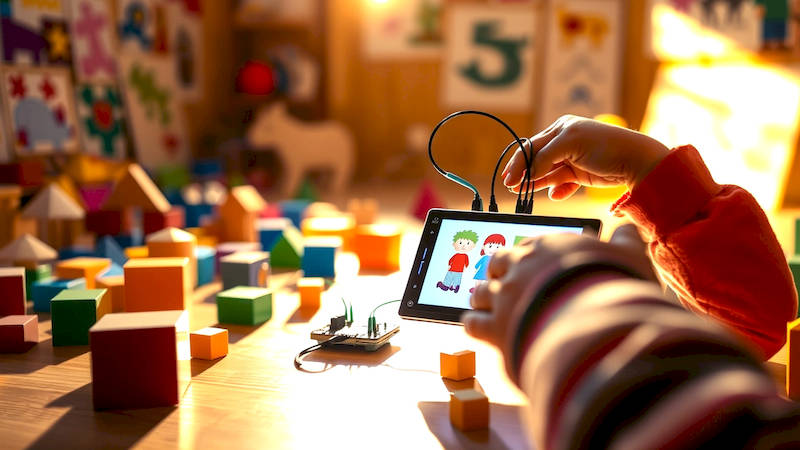
In today's rapidly evolving digital landscape, coding is no longer a niche skill; it’s a fundamental literacy. While the thought of teaching a child to code might seem daunting, it doesn’t require complex textbooks or intensive programming courses. Instead, a playful and intuitive approach, leveraging the technologies children already enjoy – games and animation – can unlock their potential. Introducing coding through game design and animation apps provides a natural and engaging pathway for kids to develop computational thinking skills, problem-solving abilities, and a crucial understanding of how the digital world around them works.
The benefits extend far beyond future career prospects. Coding fosters creativity, encourages logical reasoning, and builds resilience as children learn to debug and overcome obstacles. It’s about empowering them to be creators, not just consumers, of technology. This approach also directly addresses the growing STEM skills gap, preparing the next generation to thrive in a technology-driven society. Ignoring this fundamental skill risks leaving our children at a significant disadvantage, while embracing it opens a world of opportunities.
This article will explore effective strategies and resources for introducing coding concepts to children through game design and animation apps, providing parents with practical insights and actionable steps to nurture their child’s technological fluency. We'll dissect the benefits of this methodology, examine specific app recommendations, and discuss how to support your child’s learning journey effectively.
- The Power of Play: Why Game Design is an Ideal Coding Gateway
- Animation as Code: Visualizing Computational Concepts
- Top App Recommendations: A Spectrum of Options
- Supporting Your Child's Learning: Parental Involvement and Encouragement
- Beyond the Apps: Connecting Coding to Real-World Applications
- Addressing Counterarguments: Screen Time and Complexity
- Conclusion: Empowering the Next Generation of Creators
The Power of Play: Why Game Design is an Ideal Coding Gateway
Game design provides a uniquely motivating platform for learning to code. Unlike abstract coding exercises, building a game immediately connects code to a visible and engaging outcome. Children aren't simply writing lines of code; they’re creating worlds, characters, and interactive experiences, which inherently boosts engagement and encourages persistence. This intrinsic motivation is crucial for overcoming the inevitable challenges that come with learning any new skill. The visual feedback loop - seeing changes in the game directly resulting from code modifications - reinforces learning and provides a sense of accomplishment.
Furthermore, game design naturally incorporates core coding concepts. Variables represent game statistics like score and health. Loops control repetitive actions like character movement. Conditionals dictate game events based on player input or game state. These concepts, often presented as abstract ideas in traditional coding lessons, become tangible and intuitive when applied to game development. Consider, for example, a simple platformer game. A child learns that if “character touches obstacle” then “character loses health,” demonstrating a fundamental conditional statement in a context they find exciting and relevant.
A 2021 study by the Joan Ganz Cooney Center found that children who designed their own games demonstrated a significant improvement in problem-solving skills and computational thinking, even when compared to those who only played commercially available video games. This reinforces the idea that actively creating digital experiences is much more beneficial for cognitive development than passive consumption.
Animation as Code: Visualizing Computational Concepts
Animation apps, surprisingly, are also excellent vehicles for introducing coding principles. Even seemingly simple animations require a sequence of instructions – movements, transformations, color changes – that mirror the logic of coding. Storyboarding and sequencing, fundamental aspects of animation, directly translate to algorithmic thinking – breaking down a complex task into smaller, manageable steps. This transition is smoother than expected, as animation inherently demands precise control over timing and execution.
These apps often use block-based coding interfaces, where children drag and drop visual code blocks to create animations. This eliminates the need for typing complicated syntax, making it accessible to younger children and focusing their attention on the logic of the program rather than the technical details. A child creating a simple bouncing ball animation, for instance, might use blocks to define the ball’s initial position, its speed, and the force of gravity, all while visually seeing the outcome of their instructions.
Platforms like ScratchJr (designed for ages 5-7) explicitly leverage this connection. It allows children to program interactive stories and animations through a drag-and-drop interface, making it an ideal starting point. The focus isn't on “writing code,” but on “telling the computer what to do,” a colloquialism that bypasses potential intimidation factors.
Top App Recommendations: A Spectrum of Options
The app landscape for coding education is constantly evolving, but several platforms stand out for their effectiveness and user-friendliness. Scratch (ages 8+) and ScratchJr (ages 5-7), developed by MIT Media Lab, remain industry standards. Scratch’s visual programming language lets kids create interactive stories, games, and animations, fostering a strong foundation in computational thinking. ScratchJr provides a simplified, age-appropriate version with larger icons and a more streamlined interface.
Blockly Games (ages 8+) offers a series of puzzles and challenges that progressively introduce coding concepts using a block-based interface, eventually transitioning to JavaScript. It’s a fantastic bridge between visual programming and text-based coding. For animation specifically, Flipaclip (ages 9+) is a powerful yet accessible app for creating frame-by-frame animations, which can be integrated with simple scripting for interactivity. Tynker (ages 7+) incorporates game-based learning with courses covering a variety of coding languages and platforms, offering a structured curriculum.
Finally, Kodable (ages 4-10) uses a playful storyline and adorable characters to introduce coding concepts without requiring any reading skills. It's a particularly good option for pre-readers and early learners. When selecting an app, consider your child’s age, learning style, and existing experience with technology.
Supporting Your Child's Learning: Parental Involvement and Encouragement
While these apps are designed to be intuitive, parental involvement can significantly enhance the learning experience. Don’t feel pressured to become a coding expert; your role isn’t to teach the code, but to facilitate the learning process. Start by exploring the app with your child, demonstrating genuine curiosity and a willingness to learn alongside them. Ask open-ended questions like “What happens if you change this number?” or “How could you make the character move faster?” to encourage experimentation and critical thinking.
Avoid jumping in to “fix” their code immediately when they encounter problems. Instead, encourage them to debug their own creations. Ask guiding questions like “What did you expect to happen?” and “What actually happened?” This fostering of independent problem-solving is crucial for developing resilience and a growth mindset. Celebrate their accomplishments, no matter how small, and focus on the process of learning rather than the final product.
Consider joining online communities or forums dedicated to coding education for kids. These groups can provide valuable resources, support, and inspiration. Coding clubs and workshops are also excellent opportunities for children to collaborate with peers and learn from experienced mentors.
Beyond the Apps: Connecting Coding to Real-World Applications
To truly solidify understanding, help your child connect coding concepts to real-world applications. Discuss how coding powers the devices they use every day – their smartphones, video game consoles, and even household appliances. Point out examples of algorithms in everyday life, such as a recipe (a sequence of instructions) or a set of directions (conditional statements: “If you reach a red light, stop”).
Encourage them to think about how they could use coding to solve problems they encounter in their own lives. Could they create a game to help them practice their math facts? Could they design an animation to explain a scientific concept they’re learning in school? By making coding relevant and meaningful, you can foster a lifelong passion for technology.
Addressing Counterarguments: Screen Time and Complexity
A common concern surrounding increased screen time is valid; however, coding through game design and animation can be a productive and educational use of technology, distinct from passive consumption. Set clear boundaries for screen time and ensure a balance with other activities like outdoor play, reading, and social interaction. Highlighting the creative aspect—building rather than just playing—can also reframe the ‘screen time’ perspective.
Another concern is the perceived complexity of coding. Fortunately, the apps discussed above are designed to be accessible to young children with little or no prior experience. Starting with block-based coding eliminates the frustration of syntax errors and allows children to focus on the underlying logic. Gradually introduce more complex concepts as their skills develop, providing support and encouragement along the way. Remember the emphasis is on exploration and learning, not perfection.
Conclusion: Empowering the Next Generation of Creators
Introducing kids to coding through game design and animation apps is a powerful way to foster creativity, problem-solving skills, and computational thinking. This approach transcends simply preparing children for future careers in technology; it empowers them to become active creators and innovators in a rapidly changing world. By leveraging the technologies they already enjoy, we can unlock their potential and inspire a lifelong passion for learning.
The key takeaways are clear: start early, embrace play-based learning, support their exploration, and connect coding to real-world applications. Resources like Scratch, Blockly Games, and Tynker offer excellent starting points. Don’t be afraid to learn alongside your child, and remember to prioritize the process of learning over the outcome. By taking these steps, you can equip your child with the essential skills they need to thrive in the 21st century. The future is digital, and empowering our children to understand and create within it is one of the most important gifts we can give them.
Deja una respuesta