How to Use Storytelling to Teach Scientific Concepts to Children
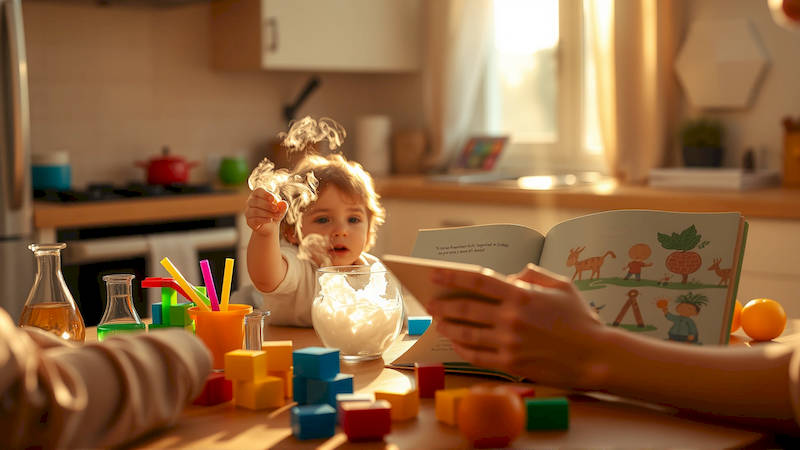
The world is increasingly driven by Science, Technology, Engineering, and Mathematics (STEM). Yet, these fields can often appear daunting and abstract to children, potentially stifling their curiosity and enthusiasm before it even has a chance to blossom. Traditional rote learning and textbook approaches frequently struggle to capture a child’s imagination and facilitate true understanding. However, there’s a powerful, time-tested method that can bridge this gap: storytelling. Storytelling isn’t merely entertainment; it's a fundamental way humans learn, process information, and make sense of the world. By weaving scientific concepts into compelling narratives, we can unlock a child's natural curiosity, foster a deeper grasp of STEM principles, and ignite a lifelong love of learning.
This article will delve into the art of using storytelling to teach scientific concepts to children, exploring why this method is so effective, outlining practical strategies for implementation, and providing examples across various STEM disciplines. We’ll move beyond simply reciting facts and figures, and instead focus on creating immersive experiences that resonate with young minds, making complex ideas accessible and – most importantly – enjoyable. The goal isn’t to create miniature scientists overnight, but to nurture critical thinking, problem-solving skills, and a genuine appreciation for the wonders of the STEM world.
- The Neuroscience of Storytelling and Learning
- Crafting Effective STEM Stories: Core Principles
- Stories for Young Scientists: Examples Across Disciplines
- Incorporating Interactive Elements and Hands-on Activities
- Adapting Stories to Different Age Groups and Learning Styles
- Beyond the Book: Leveraging Digital Tools for STEM Storytelling
- Conclusion: Inspiring the Next Generation of STEM Innovators
The Neuroscience of Storytelling and Learning
Storytelling isn’t just a nice-to-have pedagogical tool; it’s deeply rooted in how our brains are wired. Neuroscientists have discovered that when we listen to a story, our brains light up in remarkable ways. Not only do the language processing areas activate, but also areas associated with sensory experiences, emotions, and even physical sensations. This is because stories stimulate the release of dopamine, a neurotransmitter associated with pleasure, motivation, and memory. Essentially, engaging stories make learning more enjoyable and, crucially, more memorable.
This neurochemical response isn’t limited to adults. Children, in particular, benefit immensely from this effect. Their brains are still developing, making them especially receptive to novel experiences and emotionally engaging content. When scientific concepts are presented within a story, they become connected to characters, plots, and emotions, creating a richer and more durable neural pathway. Consider the difference between memorizing the phases of the moon and hearing a story about a little firefly who sets out on a journey to understand why the moon changes shape each night. The latter is far more likely to stick.
Furthermore, stories facilitate the construction of mental models. A well-crafted narrative provides a framework for understanding complex systems and relationships. Research by Jerome Bruner highlights the importance of "narrative thinking" in cognitive development, demonstrating how children use stories to organize their experiences and build a coherent understanding of the world. Stories don’t just deliver information; they provide context, meaning, and a sense of relevance, leading to a much stronger conceptual grasp.
Crafting Effective STEM Stories: Core Principles
Creating effective STEM stories requires more than simply adding scientific jargon to a familiar fairytale. It's about strategically embedding concepts within a compelling narrative structure. The first key principle is relatability. The characters and situations within the story should resonate with the child's experiences and interests. A story about a robot exploring a distant planet is exciting, but a story about a robot helping a child solve a problem in their backyard is likely to be even more engaging.
The second principle is accuracy. While creative license is important, the underlying scientific concepts must be presented correctly. Misinformation can be far more damaging than omitting details. Veterinarian and science communicator Dr. Sabrina Shaffer emphasizes that, "When introducing science to children through stories, it's vital to ensure the science is sound. Even fantastical embellishments should be anchored in accurate principles." Consider consulting with STEM professionals or reliable sources to verify the accuracy of your content.
Finally, conflict and resolution are essential components. A good story needs a challenge, a problem to solve, or an obstacle to overcome. This conflict provides a natural opportunity to introduce scientific concepts and demonstrate their application. The resolution, where the characters successfully address the challenge using STEM principles, reinforces learning and demonstrates the power of scientific thinking.
Stories for Young Scientists: Examples Across Disciplines
Let’s explore how storytelling can be applied to different STEM disciplines. In physics, a story about building a tower of blocks can introduce concepts like gravity, balance, and structural integrity. Instead of simply explaining these terms, the narrative could focus on a young architect struggling to build a tower that won’t topple, learning through trial and error about weight distribution and stable foundations. For chemistry, a story about a magical potion maker (emphasizing safe experimentation, of course) can illustrate concepts like mixtures, solutions, and chemical reactions. The potion maker's attempts to create different effects – fizzing, color changes, etc. – can explain these phenomena in an accessible way.
Biology lends itself particularly well to storytelling. A story about a migrating monarch butterfly could explain concepts like metamorphosis, navigation, and ecosystems. The journey of the butterfly – facing predators, finding food, and adapting to changing environments – provides a compelling narrative framework. Engineering concepts can be introduced through stories about building bridges, designing robots, or creating innovative solutions to everyday problems. A story about a team of animal friends building a dam to save their forest could beautifully illustrate engineering design principles. Meanwhile, mathematics doesn’t have to be limited to rote memorization of equations. A story about a pirate discovering buried treasure can introduce concepts like measurement, geometry, and probability.
Incorporating Interactive Elements and Hands-on Activities
Storytelling doesn't have to be a passive experience. Incorporating interactive elements and hands-on activities can significantly enhance learning. Pause during the story to ask questions like, “What do you think will happen next?” or “How could the characters solve this problem?” Encourage children to predict outcomes, brainstorm solutions, and share their own ideas. After the story, extend the learning with a related activity.
For instance, following the butterfly migration story, children could create their own butterfly life cycle models using construction paper or engage in a butterfly-themed scavenger hunt in a garden. After the tower-building story, they could be challenged to build their own towers using different materials, experimenting with different designs and testing their stability. These hands-on experiences solidify the concepts learned in the story and encourage exploration and experimentation. This is also where you can introduce the scientific method: ask a question, make a hypothesis, test it, observe, and draw a conclusion.
Adapting Stories to Different Age Groups and Learning Styles
The key to successful STEM storytelling is adapting the content and approach to the child’s age and learning style. Younger children (ages 3-5) benefit from simple stories with vivid illustrations and repetitive elements. Focus on concrete concepts and sensory experiences. Stories should be short, engaging, and filled with opportunities for participation. Older children (ages 6-10) can handle more complex narratives and abstract concepts. Encourage them to ask questions, analyze characters' motivations, and think critically about the scientific principles at play.
Furthermore, recognize that children learn in different ways. Some are visual learners, while others are auditory or kinesthetic learners. Tailor your storytelling approach accordingly. Visual learners will appreciate illustrations, diagrams, and demonstrations. Auditory learners will benefit from dramatic readings and discussions. Kinesthetic learners will thrive with hands-on activities and opportunities to build, explore, and experiment. Incorporating various media like puppets, animation, or even simple coding can cater to different learning preferences.
Beyond the Book: Leveraging Digital Tools for STEM Storytelling
While traditional storytelling is incredibly powerful, digital tools can amplify its impact. Interactive ebooks, educational apps, and online platforms offer new ways to engage children with STEM concepts. Consider using programs like ScratchJr to create interactive stories where children can program characters to demonstrate scientific principles. Augmented reality (AR) apps can bring scientific concepts to life by overlaying digital information onto the real world. For example, an AR app could allow children to virtually dissect a frog or explore the inside of a volcano.
YouTube channels dedicated to STEM education, often utilizing animated stories or experiments, can serve as valuable supplementary resources. However, it’s important to carefully curate these resources, ensuring their accuracy and age-appropriateness. The key is to use digital tools strategically to enhance, not replace, the power of human connection and engaging narratives.
Conclusion: Inspiring the Next Generation of STEM Innovators
Storytelling is a potent tool for sparking curiosity, fostering understanding, and igniting a passion for STEM in children. By weaving scientific concepts into compelling narratives, we can make learning more enjoyable, memorable, and meaningful. This approach moves beyond rote memorization and instead cultivates critical thinking, problem-solving skills, and a genuine appreciation for the wonders of the STEM world.
Remember the core principles: relatability, accuracy, and compelling conflict resolution. Embrace interactive elements, hands-on activities, and adapt your approach to the child’s age and learning style. Leverage digital tools wisely to enhance engagement, but never lose sight of the power of human connection and a well-told story. By embracing storytelling as a key component of STEM education, we can inspire the next generation of scientists, engineers, and innovators, equipping them with the skills and knowledge they need to thrive in a rapidly changing world. The journey to unlocking scientific minds begins with a story—let's start writing them.
Deja una respuesta