
How to Use Positive Reinforcement to Build Early Learning Habits
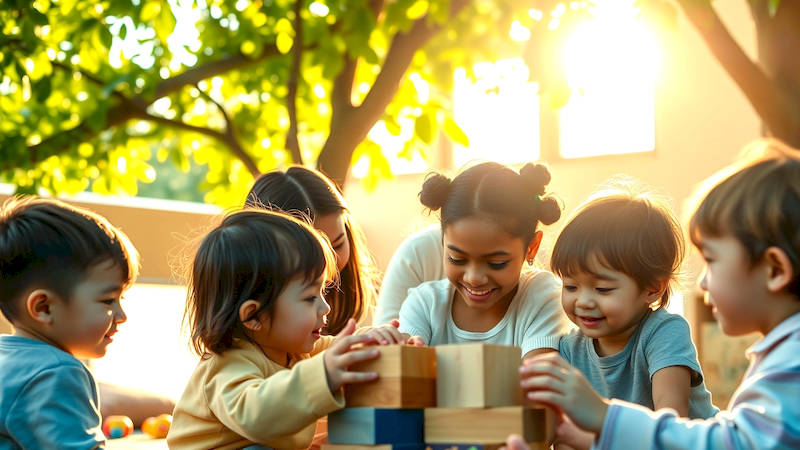
The early years of a child’s life represent a period of incredible neurological development, a time when foundational learning habits are firmly established. As parents, we naturally want to nurture this growth, guiding our children towards a lifelong love of learning. However, the how often gets lost in the what. While discipline plays a role, a far more effective and enduring approach lies in positive reinforcement – strategically using encouragement and rewards to strengthen desired behaviors and cultivate a positive learning environment. This isn't simply about showering children with empty praise; it's about understanding the science behind motivation and applying it to foster intrinsic curiosity and a genuine desire to learn.
The traditional approach to learning often emphasizes correction and consequence, focusing on what a child doesn’t do correctly. While addressing undesirable behavior is important, a disproportionate focus on the negative can stifle a child’s enthusiasm and create anxiety around learning. Positive reinforcement, conversely, builds confidence, fosters a growth mindset, and encourages a child to embrace challenges. It’s about creating a cycle of positive interaction where effort and improvement are recognized and celebrated, prompting a desire to repeat those successful behaviors.
This article will delve into the principles of positive reinforcement, providing practical strategies and actionable techniques for parents seeking to build strong, enduring learning habits in their young children. We’ll explore the nuances of effective praise, the importance of timing, and how to tailor reinforcement strategies to individual temperaments and learning styles, ensuring your child not only learns, but enjoys the process.
- Understanding the Science Behind Positive Reinforcement
- The Art of Effective Praise: Beyond "Good Job!"
- Tailoring Reinforcement to the Individual Child
- From Rewards to Intrinsic Motivation: Fading the Reinforcement
- Addressing Common Challenges and Potential Pitfalls
- Positive Reinforcement and Building a Growth Mindset
- Conclusion: Embracing a Positive Approach to Learning
Understanding the Science Behind Positive Reinforcement
Positive reinforcement operates on the psychological principle of operant conditioning, a theory pioneered by B.F. Skinner. Simply put, behaviors followed by positive consequences are more likely to be repeated. This isn't about bribery or manipulation; it’s about leveraging a fundamental aspect of how the brain learns. When a child experiences a feeling of satisfaction or reward following an action, dopamine is released in the brain. This neurotransmitter is associated with pleasure, motivation and learning, and it strengthens the neural pathways associated with that behavior, making it more likely to occur again in the future.
Importantly, the “positive” in positive reinforcement isn’t necessarily about things. It can be verbal praise, a hug, a high-five, extra playtime, or simply a beaming smile of approval. The key is that it must be perceived as rewarding by the child. What constitutes a reward will vary greatly based on age, personality, and individual preferences. For a toddler, a simple enthusiastic "You did it!" might be sufficient. For a preschooler, it may be a sticker or a few extra minutes of reading. A 2018 study published in the Journal of Child and Family Studies found that consistent positive reinforcement was significantly correlated with increased self-efficacy and academic performance in young children.
However, it's vital to understand that consistency is paramount. Just as intermittent punishment can be confusing and ineffective, sporadic reinforcement can dilute its impact. A consistent pattern allows the child to understand the connection between their actions and the positive consequences, solidifying the learning process. This isn't about being a helicopter parent, but a mindful and responsive one.
The Art of Effective Praise: Beyond "Good Job!"
While praising a child seems intuitive, simply saying “Good job!” can be surprisingly ineffective. This type of praise is vague and doesn’t tell the child what specifically they did well. Effective praise is descriptive, specific, and focuses on effort rather than inherent ability. Instead of “You’re so smart!”, try “I noticed how carefully you concentrated on building that tower, even when it kept falling over. That shows a lot of persistence!” The latter praises the effort and problem-solving skills, qualities that can be cultivated and replicated, rather than implying that success is solely due to innate talent.
Focusing on the process, not just the product, is equally important. A child who is praised for their perseverance, creativity, or problem-solving approach is more likely to exhibit those behaviors in the future, even when facing challenges. Phrases like, "I love how you tried different colors to create that picture!" or "You worked really hard to sound out those letters!" are far more impactful than a generic "Good job!". This type of feedback teaches children to value the learning process itself, and not just the end result which helps in building resilience and a growth mindset.
Finally, be genuine and sincere in your praise. Children are remarkably perceptive and can easily detect inauthenticity. A forced or insincere compliment will likely have the opposite effect, potentially diminishing trust. True, heartfelt appreciation is the most powerful form of reinforcement.
Tailoring Reinforcement to the Individual Child
Every child is unique, with their own individual temperament, learning style, and preferences. What motivates one child may not motivate another. A highly sensitive child might thrive on quiet verbal affirmation, while a more outgoing and energetic child might respond better to physical affection or a shared activity. Understanding your child's individual profile is crucial for effectively applying positive reinforcement.
Consider your child’s sensory preferences as well. Some children are highly attuned to visual stimuli, and a sticker chart or visual reward system might be particularly effective. Others may respond better to auditory cues, such as verbal praise or a special song. This is where observation becomes invaluable. Pay attention to what genuinely excites and engages your child – what activities do they gravitate towards? What types of praise elicit the biggest smiles?
Remember, positive reinforcement isn’t a one-size-fits-all approach. Experiment with different strategies and observe your child’s responses. You might find that a combination of verbal praise, physical affection, and small rewards works best. Avoid comparing your child to siblings or peers; focus on celebrating their individual progress and achievements.
From Rewards to Intrinsic Motivation: Fading the Reinforcement
While rewards can be a powerful tool for establishing new learning habits, the ultimate goal is to foster intrinsic motivation – a desire to learn for the sake of learning itself. Over-reliance on external rewards can actually undermine intrinsic motivation, leading children to perform tasks only when a reward is offered. This is why it's essential to gradually fade the reinforcement as the behavior becomes more established.
Start by reducing the frequency of rewards. Once a child consistently demonstrates a desired behavior, move from providing a reward every time to rewarding intermittently. You can also shift from tangible rewards to more intrinsic forms of recognition, such as verbal praise or opportunities for choice. For example, if you've been rewarding your child with a sticker for completing their homework, transition to simply acknowledging their effort and celebrating their accomplishments.
The goal isn’t to eliminate positive reinforcement altogether, but to shift the focus from external validation to internal satisfaction. By emphasizing the joy of learning and the sense of accomplishment that comes from mastering new skills, you can help your child develop a lifelong love of knowledge.
Addressing Common Challenges and Potential Pitfalls
Implementing positive reinforcement isn’t always smooth sailing. One common challenge is dealing with setbacks or regressions. It’s important to remember that learning isn’t linear; children will inevitably experience moments of frustration or difficulty. During these times, avoid criticism or punishment. Instead, refocus on effort, acknowledge the challenges, and offer encouragement. Remind your child of their past successes and express confidence in their ability to overcome obstacles.
Another potential pitfall is inadvertently reinforcing undesirable behaviors. For example, if a child throws a tantrum to get your attention, giving in to their demands will inadvertently reinforce the tantrum behavior. In such cases, it’s important to remain calm, ignore the undesirable behavior (when safe to do so), and redirect the child’s attention to a more positive activity.
Finally, be mindful of the long-term effects of reward systems. Avoid creating a sense of entitlement or dependency on rewards. Emphasize that learning is valuable in itself, regardless of external recognition.
Positive Reinforcement and Building a Growth Mindset
Positive reinforcement is particularly powerful when coupled with the cultivation of a growth mindset - the belief that abilities and intelligence can be developed through dedication and hard work. When we praise effort, perseverance, and learning strategies, we are directly reinforcing a growth mindset.
Encourage your child to view challenges as opportunities for growth, and to see mistakes as valuable learning experiences. Language matters here: instead of saying, “You failed,” try, “That didn’t work out this time. What can you learn from this and try differently next time?” Dr. Carol Dweck, a leading researcher on mindset, emphasizes in her work that praising intelligence can actually discourage children from taking on challenging tasks for fear of appearing less intelligent, while praising effort encourages them to embrace challenges and persevere.
By combining positive reinforcement with a growth mindset, you're not just building learning habits, you’re equipping your child with the resilience, confidence, and intrinsic motivation to thrive throughout their lives.
Conclusion: Embracing a Positive Approach to Learning
Positive reinforcement is more than just a parenting technique; it’s a philosophy rooted in understanding how children learn best. By prioritizing encouragement, focusing on effort, and tailoring our approach to individual needs, we can create a learning environment that fosters curiosity, confidence, and a lifelong love of knowledge. Remember, consistency is key, praise should be specific and genuine and the ultimate goal is to move from external rewards to intrinsic motivation.
The takeaways are clear: ditch the harsh corrections and embrace the power of praise. Start small, observe your child, and experiment with different approaches. Celebrate effort over outcome, and remember that learning is a journey, not a destination. By implementing these strategies, you'll not only build strong learning habits in your child, but also foster a strong, positive parent-child relationship built on trust, encouragement, and mutual respect. A brighter, more engaged learner – and a happier child – await.
Deja una respuesta