
How to Use Cooperative Games to Strengthen Teamwork Skills
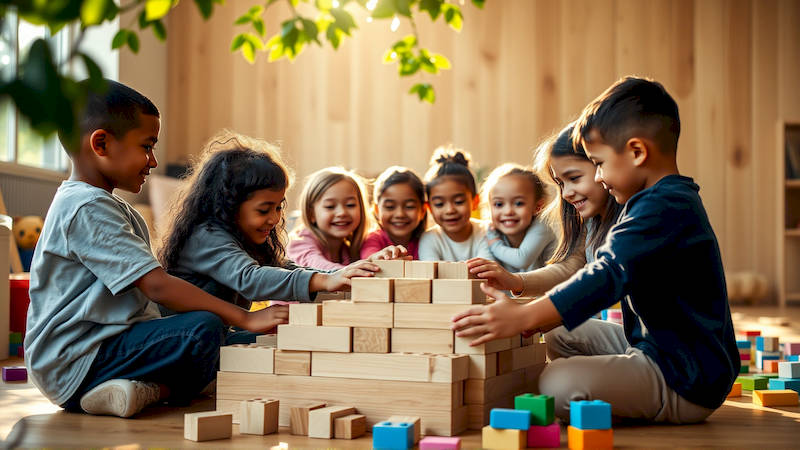
In today’s interconnected world, the ability to collaborate effectively is no longer a “nice-to-have” skill, but a fundamental necessity. While academic curricula increasingly emphasize individual achievement, fostering teamwork skills – the ability to work harmoniously with others towards a common goal – is equally crucial, especially during childhood. Children who learn to cooperate, communicate, and compromise develop not only stronger social skills but also enhanced problem-solving abilities and emotional intelligence. This is where the power of cooperative games comes into play. Unlike competitive games that pit players against each other, cooperative games necessitate collaboration. They provide a safe and engaging environment for children to practice vital teamwork skills, fostering a sense of community and shared success.
The importance of social and emotional learning (SEL) in a child’s development has been increasingly recognized by educators and psychologists. Research consistently demonstrates a strong correlation between SEL skills and academic performance, positive behavior, and overall well-being. "Children with strong social-emotional skills are better equipped to navigate challenges, build healthy relationships, and succeed in school and life," explains Dr. Linda Darling-Hammond, President and CEO of the Learning Policy Institute. Cooperative games offer a playful and natural way to integrate SEL principles into a child’s play routine, making learning a collaborative and enjoyable experience. This article will delve into the how-to of leveraging these games to bolster teamwork abilities in children, offering practical strategies and examples for parents and educators.
- Understanding the Core Principles of Cooperative Games
- Selecting Age-Appropriate Cooperative Games
- Facilitating Effective Teamwork During Gameplay
- Addressing Challenges and Conflict Resolution
- Beyond the Game: Transferring Skills to Real-Life Situations
- Expanding the Scope: Adapting Games and Creating Your Own
- Conclusion: Nurturing Collaborative Champions
Understanding the Core Principles of Cooperative Games
Cooperative games distinguish themselves from traditional competitive games by shifting the focus from individual winning to collective success. Instead of striving to outperform others, players work together to overcome a challenge or achieve a shared objective. This fundamental shift in dynamics fosters a different set of skills and emotional responses. At its heart, cooperative gameplay relies on strong communication, shared decision-making, and mutual support amongst players. It encourages children to articulate their ideas, listen attentively to others, and respectfully consider diverse perspectives.
Furthermore, the structure of these games often necessitates a distribution of roles or responsibilities, promoting a sense of individual contribution to the overall goal. This can be visually represented with board games requiring joint card plays, physical games needing coordinated movements, or even simple storytelling games where each participant builds upon the narrative. The emphasis is on working with each other, using individual strengths to complement others' weaknesses. A significant benefit, especially for children struggling with competitive environments, is that cooperative games diminish the fear of failure. Because the aim is shared success, a setback isn’t viewed as a personal defeat but rather a collective challenge to overcome together.
Selecting Age-Appropriate Cooperative Games
Choosing the right cooperative game is paramount to ensuring a positive and effective learning experience. The complexity of the game should align with the children’s developmental stage and cognitive abilities. For younger children (ages 3-6), simple games with clear instructions and minimal rules are ideal. Think about games involving building a large structure together with blocks, collaborative puzzles with large pieces, or movement games like “Red Light, Green Light” where the goal is to move as a group. Focus should be on taking turns, sharing materials, and following simple directions.
As children grow older (ages 7-10), you can introduce games with more strategic elements and increased complexity. Popular options include "Forbidden Island", where players work together to collect treasures before the island sinks, or “Castle Panic”, where they defend a castle from attacking monsters. These games require more planning, communication, and problem-solving skills. For older children and teenagers (ages 11+), consider more complex cooperative board games such as "Pandemic" (a cooperative disease-fighting game) or role-playing games that encourage collaborative storytelling and character development. Always observe the children during gameplay and adjust the game’s rules if needed to maintain engagement and ensure everyone feels included and challenged – but not overwhelmed.
Facilitating Effective Teamwork During Gameplay
Simply introducing a cooperative game isn't enough to automatically cultivate teamwork skills. Active facilitation is vital to guide the children and maximize the learning potential. To begin, clearly explain the rules and objectives of the game, emphasizing the importance of collaboration. Encourage children to brainstorm strategies together before taking action. Resist the urge to jump in and solve problems for them; instead, ask open-ended questions that prompt them to think critically and creatively. For example, instead of saying “You should try this,” ask “What are some different ways we could approach this challenge?”
A crucial part of facilitating is encouraging effective communication. Prompt children to articulate their ideas clearly, actively listen to their peers, and respectfully consider different viewpoints. If a conflict arises, guide them through the process of compromise and finding a solution that benefits the group. Avoid letting one child dominate the discussion or dismissing the contributions of others. A technique called “Round Robin” – where each person in the group has a designated turn to share their thoughts without interruption – can be particularly effective in ensuring everyone's voice is heard. It’s also important to model positive teamwork behavior yourself, demonstrating active listening, respectful communication, and a willingness to compromise.
Addressing Challenges and Conflict Resolution
Conflict is a natural part of any group dynamic, and cooperative games are no exception. However, disagreements offer valuable opportunities for children to learn conflict resolution skills. When a conflict arises, the first step is to create a safe space for everyone to express their feelings and perspectives. Encourage children to use “I” statements to articulate their concerns without blaming others. For example, instead of saying “You always do this wrong!”, a child could say “I feel frustrated when the task isn’t completed as planned.”
Facilitate a discussion where each child has a chance to share their perspective without interruption. Help them identify the underlying cause of the conflict and brainstorm potential solutions together. Encourage compromise and emphasize the importance of finding a outcome that benefits the whole group, not just one individual. A helpful technique is “win-win” problem-solving, where the goal is to find a solution that meets the needs of everyone involved. This requires creativity, empathy, and a willingness to be flexible. Remember to emphasize that it’s okay to disagree, but it’s important to do so respectfully and constructively.
Beyond the Game: Transferring Skills to Real-Life Situations
The ultimate goal of using cooperative games is to help children develop teamwork skills that they can apply to real-life situations. Make explicit connections between the skills practiced during gameplay and the challenges they face in school, at home, or with friends. For example, after playing a game that required careful planning and coordination, discuss how those same skills could be used to complete a group project at school. Encourage them to reflect on how they felt during the game—what worked well, what was challenging—and how those experiences might inform their approach to future collaborations.
Help them identify opportunities to practice teamwork in their everyday lives. This could involve volunteering for a community service project, participating in a sports team, or simply helping a classmate with an assignment. Discuss strategies for effective communication, conflict resolution, and compromise in these real-world contexts. "The skills learned through cooperative play are transferable to all aspects of life, promoting empathy, collaboration, and a sense of community," states renowned play therapist, Dr. Stuart Brown. Regularly discuss the importance of teamwork and celebrate instances where they demonstrate these skills in their daily lives.
Expanding the Scope: Adapting Games and Creating Your Own
While many excellent cooperative games are commercially available, you can also adapt existing games or create your own to suit the specific needs and interests of the children. For example, you can modify a competitive board game by changing the rules to emphasize collaboration instead of competition. Or, you can create a simple obstacle course that requires children to work together to navigate it safely and efficiently. The key is to focus on challenges that require communication, coordination, and shared problem-solving.
When creating your own games, involve the children in the design process. This will not only increase their engagement but also give them ownership over the learning experience. Ask them what kinds of challenges they enjoy and what skills they want to practice. Simple games like a collaborative storytelling exercise, where each person contributes a sentence or paragraph to build a narrative, or a building challenge using limited materials, can be highly effective. The possibilities are endless, and the most important thing is to create a fun and engaging environment where children can practice teamwork skills in a meaningful way.
Conclusion: Nurturing Collaborative Champions
Cooperative games offer a powerful and playful pathway to nurture essential teamwork skills in children. By shifting the focus from competition to collaboration, these games foster communication, problem-solving, empathy, and a sense of shared accomplishment. Selecting age-appropriate games, actively facilitating gameplay, and addressing conflicts constructively are crucial elements of successful implementation. However, the true value lies in extending these skills beyond the game itself, helping children recognize and apply them to real-life situations.
The key takeaways are: prioritize collaborative gameplay, actively facilitate the learning process, emphasize communication and conflict resolution, and connect game-based learning to real-world application. As parents and educators, we have a responsibility to equip children with the tools they need to thrive in an increasingly collaborative world. Cooperative games are a significant part of that toolkit, fostering not just teamwork skills but also the social and emotional intelligence that will empower them to become collaborative champions – ready to navigate challenges and build a better future, together. Embrace the power of play, and watch your children flourish as they learn the art of working together.
Deja una respuesta