
Top Indoor Activities to Boost Infant Motor Skill Development
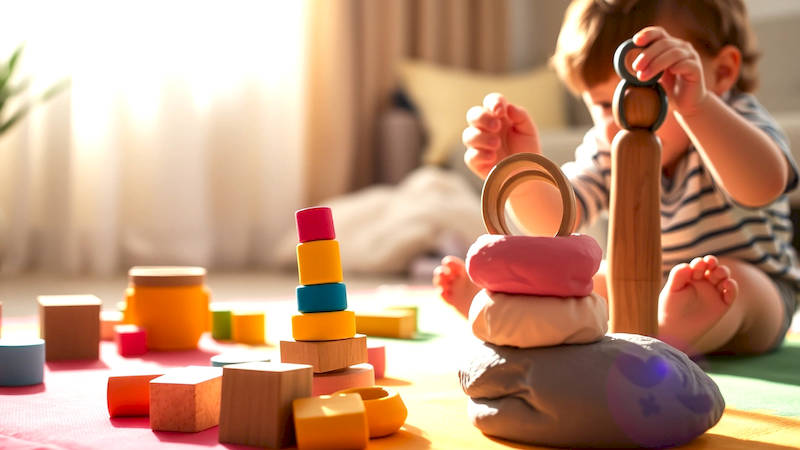
The first year of a baby's life is a period of astonishing physical development. From the initial reflexive grasps to the wobbly first steps, infants are constantly learning to control their bodies and interact with the world around them. While outdoor play is undoubtedly beneficial, inclement weather, seasonal changes, or simply limited access can necessitate a focus on indoor activities. However, creating a stimulating indoor environment doesn’t require expensive toys or elaborate setups. In fact, many everyday household items can be repurposed to provide ample opportunity for your little one to develop crucial motor skills. Prioritizing these skills - both gross (large movements like rolling and crawling) and fine (small, precise movements like grasping and manipulating objects) - is vital for their overall cognitive, social, and emotional growth.
The benefit of focusing on motor skill development extends far beyond physical prowess. Research consistently demonstrates a strong correlation between motor skill mastery and cognitive development. As infants gain greater control over their bodies, they’re better equipped to explore their environment, which in turn fuels curiosity, problem-solving, and ultimately, learning. Supporting their physical development isn’t just about helping them walk; it’s about laying the foundation for a lifetime of confident, capable exploration and learning. This article provides a comprehensive guide to engaging indoor activities specifically designed to nurture and accelerate your infant’s motor skill development, broken down by developmental stage and skill focus.
- Tummy Time Transformations: Strengthening Core and Neck Muscles (0-3 Months)
- Treasure Basket Exploration: Refining Grasp and Hand-Eye Coordination (3-6 Months)
- Obstacle Course Adventures: Encouraging Rolling, Crawling, and Spatial Awareness (6-9 Months)
- Container Play and Posting Activities: Developing Fine Motor Skills and Problem Solving (9-12 Months)
- Dance Parties & Movement Games: Enhancing Gross Motor Skills and Rhythm (All Ages)
- Creating a Safe and Stimulating Environment
Tummy Time Transformations: Strengthening Core and Neck Muscles (0-3 Months)
Tummy time, often dreaded by little ones, is arguably the most crucial activity for early motor skill development. This is when babies begin to build the strength necessary to lift their heads, strengthen their neck and shoulder muscles, and prepare for rolling. Many newborns initially dislike tummy time, so it’s best to start with short sessions - 30-60 seconds at a time, several times a day – gradually increasing the duration as they grow stronger. The key is to make it engaging. Don't just lay them on a flat surface; introduce visual stimulation.
A fantastic variation is to lie down with your baby during tummy time. Your face provides immediate and captivating engagement. You can sing songs, make silly faces, or simply talk to them. Another enriching option is to place a mirror (baby-safe, of course!) in front of them. Babies are fascinated by their own reflections, offering a potent incentive to lift their heads and explore. Don't forget to also vary the surface. A slightly rolled towel under their chest can provide extra support and encourage them to push up. Remember consistency is key and it’s about creating positive associations.
Consider the environment too. Avoid placing your baby on highly stimulating or distracting surfaces. A simple playmat on the floor is ideal. Experts at the American Academy of Pediatrics emphasize the importance of supervised tummy time, ensuring that your baby is always within your sight and reach. According to a study published in Pediatrics, consistent tummy time is linked to reduced rates of developmental delays in motor skills.
Treasure Basket Exploration: Refining Grasp and Hand-Eye Coordination (3-6 Months)
As your baby gains more head and upper body control, they will begin to reach for and grasp objects. This is where a treasure basket comes into play. A treasure basket is simply a low-sided basket filled with a variety of safe, everyday objects with different textures, shapes, and materials. Think wooden spoons, metal whisks (without sharp edges), silk scarves, chunky plastic rings, or soft cloths. The key is to avoid anything that could be a choking hazard or easily broken.
The value of a treasure basket lies in its open-ended nature. There’s no ‘right’ way to play with the objects – your baby is free to explore at their own pace, discovering how the items feel, sound, and move. This promotes critical thinking, problem-solving, and, crucially, refines their grasp. Initially, babies will use a palmar grasp – holding objects in their entire hand. Over time, with repeated practice, they'll develop a pincer grasp – using their thumb and forefinger to pick up smaller items, a milestone typically achieved around 9-12 months.
Supervise closely during treasure basket time, and regularly rotate the objects to maintain your baby’s interest. This continually challenges them with new sensory experiences. Consider introducing objects of varying weights and sizes. A lightweight silk scarf will feel different than a heavier wooden spoon, providing a wider range of tactile input. "The intrinsic motivation that comes with exploring everyday objects is far more beneficial than flashy, battery-operated toys," comments Dr. Angela Duckett, a pediatric occupational therapist.
Obstacle Course Adventures: Encouraging Rolling, Crawling, and Spatial Awareness (6-9 Months)
Once your baby is demonstrating more mobility—rolling, scooting, and possibly beginning to crawl—it’s time to create an indoor obstacle course. This doesn’t need to be complicated! Use pillows, cushions, blankets, and soft toys to create gentle hills, tunnels, and pathways. The goal is to encourage them to navigate different surfaces and challenges, building strength, coordination, and spatial awareness.
Start with a simple course. Use a rolled-up blanket to create a small hill for them to roll over, and a tunnel made of blankets draped over chairs. As they become more confident, gradually increase the complexity, adding more obstacles and challenges. For example, place a favorite toy just out of reach, encouraging them to crawl or scoot to retrieve it. Remember to prioritize safety. Ensure the course is free of hard edges and potential hazards. Always supervise closely to prevent falls or injuries.
This stage is also about encouraging reaching and grasping while they’re mobile. Strategically place toys along the course to motivate them to reach, grab, and maintain balance as they move. And resist the urge to “help” too much. Allowing your baby to struggle and problem-solve independently is crucial for their development. The small victories they achieve – navigating a tricky obstacle, reaching for a desired toy – build confidence and resilience.
Container Play and Posting Activities: Developing Fine Motor Skills and Problem Solving (9-12 Months)
As your baby approaches their first birthday, their fine motor skills will be rapidly developing. Container play and posting activities are excellent ways to refine these skills. Provide a variety of containers – boxes, buckets, baskets – and safe objects to put inside and take out. This encourages hand-eye coordination, pincer grasp refinement, and understanding of spatial relationships (inside/outside). Think large building blocks, soft balls, or even simple household items like measuring cups and spoons.
Posting activities, where babies drop objects into openings, are also particularly beneficial. You can purchase specific posting toys, or create your own using a plastic container with a hole cut in the lid. Start with large objects that are easy to drop in, and gradually decrease the size as their skills improve. Observe how they approach the task. Some babies will immediately understand the concept, while others may need to experiment with trial and error. This is a valuable learning process.
Be mindful of the objects you provide. Avoid anything small enough to be a choking hazard. Also, encourage variations in play. Can they fill the container halfway? All the way? Can they sort objects by color or shape? These variations add complexity and further challenge their problem-solving abilities. “Fine motor skills are not just about dexterity; they’re intricately linked to cognitive development and academic readiness," explains Dr. Sarah Jones, a developmental pediatrician.
Dance Parties & Movement Games: Enhancing Gross Motor Skills and Rhythm (All Ages)
Throughout all developmental stages, incorporating music and movement is exceptionally beneficial. Simply putting on some upbeat music and dancing with your baby can stimulate their gross motor skills, improve their coordination, and foster a sense of joy and connection. Holding them while you gently sway, bounce, or spin can help them develop balance and spatial awareness.
As they get older, you can introduce simple movement games. For example, gently bouncing them on your lap while singing “The Wheels on the Bus” reinforces rhythmic movements. Or, you can hold their hands and help them ‘walk’ or ‘dance’ along to the music. Even just encouraging them to reach for a brightly colored scarf while music plays stimulates movement and coordination. This also introduces them to concepts like rhythm and timing, which are important for later musical and cognitive development. Remember to vary the tempo of the music, from slow and calming to fast and energetic, to challenge their motor skills in different ways.
Creating a Safe and Stimulating Environment
Regardless of the specific activities you choose, creating a safe and stimulating indoor environment is paramount. Baby-proof all areas where your baby will be playing, removing potential hazards such as sharp objects, loose wires, and toxic substances. Provide a variety of textures and materials to explore, and rotate toys and activities regularly to maintain their interest. Remember, you are your baby's most important playmate. Your active engagement, encouragement, and positive reinforcement will be the greatest catalyst for their motor skill development.
In conclusion, fostering infant motor skill development doesn’t require a dedicated playroom or expensive equipment. By understanding the key milestones and incorporating simple, engaging activities into your daily routine, you can create a nurturing indoor environment that supports your baby’s physical, cognitive, and emotional growth. Remember that every baby develops at their own pace, so be patient, observant, and most importantly, have fun! The most valuable gift you can give your little one is the opportunity to explore, learn, and discover the amazing capabilities of their growing body. Prioritize tummy time, treasure basket exploration, obstacle course adventures, and opportunities for dancing and movement, and you’ll be well on your way to helping your tiny mover reach their full potential.
Deja una respuesta