
Building Self-Discipline Skills in Preschoolers Through Play
The preschool years are a pivotal time for development, laying the very foundation for future success – academically, socially, and emotionally. While we often think of this age as being primarily about playdates and learning the alphabet, it's also the critical period for cultivating essential life skills, chief among them being self-discipline. This isn’t about demanding rigid obedience; rather, it’s about empowering young children to manage their impulses, delay gratification, and develop the internal regulation necessary to navigate challenges. The good news is that building self-discipline in preschoolers isn’t a daunting task – it's delightfully achievable through play, their natural language of learning and exploration.
Often, the term “discipline” evokes images of time-outs and scolding, but a play-based approach reframes it as a collaborative process of guided discovery. This means creating environments and activities that subtly encourage self-control, problem-solving, and responsible decision-making. Prioritizing play-based learning allows children to practice these skills in a low-pressure setting, strengthening their capacity to apply them in more demanding situations later on. Neuroscientific research increasingly demonstrates the importance of this period for building prefrontal cortex connections – the brain region responsible for executive functions like impulse control and planning – making intentional skill-building crucial.
- The Neuroscience of Play and Self-Discipline
- Designing Play Spaces to Encourage Self-Control
- Games That Specifically Target Self-Discipline
- Modeling Self-Discipline: The Power of "Do as I Do"
- Positive Reinforcement and Gentle Guidance
- Addressing Common Challenges and Maintaining Consistency
- Conclusion: Cultivating Resilient, Capable Individuals
The Neuroscience of Play and Self-Discipline
Understanding why play is so effective requires a brief look at brain development. During the preschool years (ages 3-5), the brain is undergoing a period of rapid synaptic growth. Play, especially unstructured play, actively stimulates this growth, creating and strengthening neural pathways. Specifically, activities that require planning, negotiation, and rule-following – all common elements of play – promote the development of the prefrontal cortex, which is directly linked to self-discipline. “Play isn't just fun and games; it’s brain-building time,” states Dr. Laura Markham, a clinical psychologist specializing in parenting. The emotional regulation cultivated through navigating the ups and downs of play also contributes significantly to improved self-control.
Moreover, play offers a safe space to practice emotional regulation. When a tower of blocks topples, a child experiences frustration. Learning to cope with this disappointment – to breathe, to try again, or to ask for help – builds emotional resilience, a vital component of self-discipline. This resilience allows children to approach challenges with a more balanced and thoughtful mindset, rather than resorting to impulsive reactions. This doesn’t diminish the feelings, but provides the opportunity to practice how to manage them. The benefits extend beyond emotional control to the vital development of impulse control.
Furthermore, the benefits aren't limited to individual play. Collaborative play, where children negotiate roles, share resources, and resolve conflicts, also strengthens self-discipline. Successfully navigating these social interactions requires patience, empathy, and the ability to compromise – skills that translate directly to other areas of life. Observing a child work these issues through with their peers also gives you valuable insight into their developing self-regulation abilities.
Designing Play Spaces to Encourage Self-Control
The environment itself can be a powerful tool for fostering self-discipline. A thoughtfully designed play space isn't just about having lots of toys; it’s about creating an environment that encourages focused attention, thoughtful decision-making, and responsible interaction. Avoid overwhelming the space with too many options. Too much choice can lead to decision fatigue and impulsive grabbing, hindering the development of self-control. Instead, curate a selection of activities that are engaging but not overly stimulating.
Rotation of toys is a particularly effective strategy. By limiting access to the entire toy collection at once, you increase the novelty and appeal of the available items, fostering sustained engagement. Introduce organization systems appropriate for the child’s age. Simple labelled bins or shelves help children learn to take responsibility for putting things away, promoting a sense of order and self-regulation. This isn’t just tidying; it's building a habit of responsibility. Consider incorporating "yes" spaces - areas where exploration is freely encouraged within safe boundaries. These defined spaces can help a child learn to understand limits and practice self-control in other areas.
Finally, consider the physical layout. Creating designated areas for different types of play – a reading nook, a building station, an art corner – can help children transition between activities more smoothly, minimizing distractions and promoting focus. This intentional design communicates clear expectations and reinforces the importance of respecting boundaries, both physical and behavioral.
Games That Specifically Target Self-Discipline
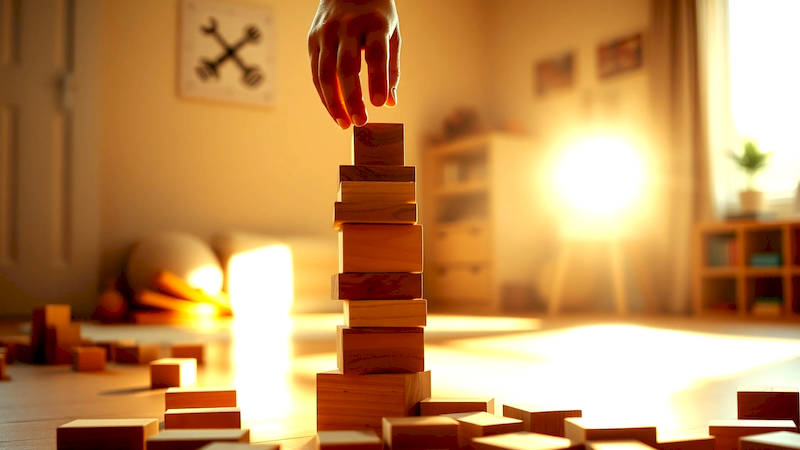
Beyond the environment, specific games and activities can directly target the skills underlying self-discipline. “Red Light, Green Light” is a classic for a reason – it requires children to inhibit their impulses and listen attentively. Building with blocks, particularly larger sets, demands planning, patience, and the ability to delay gratification as they work towards a larger goal. Simple board games, designed for preschoolers, introduce the concept of taking turns, following rules, and accepting the outcomes of chance, all of which contribute to self-control.
Another highly effective activity is obstacle courses. These challenge children to navigate physical tasks, requiring them to focus, coordinate their movements, and persevere through challenges. You can adjust the difficulty level to match their individual abilities, gradually increasing the demands to promote continued growth. Imaginative play, such as pretending to be a chef following a recipe, also provides opportunities to practice following instructions and managing multiple steps. Remember too, the value of open-ended play. A box of materials – fabrics, ribbons, cardboard tubes – can encourage creative problem-solving, self-direction and sustained engagement.
These aren’t just "fun distractions"; these activities are intentional practice in the skills required for future academic and social success. The key is to frame these activities as games rather than drills, maintaining a lighthearted and playful approach.
Modeling Self-Discipline: The Power of "Do as I Do"
While creating supportive environments and engaging activities is crucial, perhaps the most impactful thing you can do is model self-discipline yourself. Preschoolers are master imitators; they learn by observing the behaviors of the adults around them. If you want your child to learn to manage their impulses, demonstrate self-control in your own interactions.
This means being mindful of your own emotional responses, particularly in challenging situations. Instead of reacting with anger or frustration, take a deep breath, pause, and respond thoughtfully. Verbalize your thought process: “I’m feeling frustrated right now, so I’m going to take a few deep breaths to calm down before I respond.” This not only models healthy coping mechanisms but also helps your child understand that managing emotions is a skill that requires practice. It’s about showing them how you regulate, not just telling them to regulate.
Furthermore, demonstrate responsible decision-making and follow-through. If you make a commitment, honor it. If you apologize for a mistake, be sincere. Children are keenly attuned to hypocrisy; your actions must align with your words if you want to have a positive influence.
Positive Reinforcement and Gentle Guidance
Effective discipline isn’t about punishment; it's about guidance. Focus on positive reinforcement, praising and acknowledging your child’s efforts to demonstrate self-control. "I noticed how patiently you waited your turn with the blocks! That shows great self-discipline," is far more effective than scolding for interrupting. Instead of focusing on what they did wrong, emphasize what they did right and encourage them to repeat that behavior.
When addressing challenging behaviors, adopt a gentle and empathetic approach. Instead of blaming or shaming, help your child understand the consequences of their actions and brainstorm alternative solutions. For example, if they grab a toy from a friend, you might say, “I see you really wanted that truck. It’s hard to wait, isn’t it? Let’s ask your friend if you can have a turn when they’re finished.” This approach validates their feelings while simultaneously teaching them a more appropriate way to respond. Remember to always separate the behavior from the child. It’s “That was not a kind choice,” rather than “You are a bad boy.”
Addressing Common Challenges and Maintaining Consistency
Building self-discipline is a process, not a destination, and there will inevitably be setbacks. Expect occasional meltdowns and impulsive behaviors. The key is to respond with patience, empathy, and consistency. Avoid giving in to demands simply to avoid a tantrum; this inadvertently reinforces the negative behavior.
Consistency is paramount. Establish clear expectations and boundaries, and enforce them consistently. If you allow certain behaviors one day and forbid them the next, you’ll only confuse your child and undermine your efforts. Communicate with all caregivers to ensure everyone is on the same page and reinforcing the same expectations. Remember also that every child develops at their own pace. Some children may naturally exhibit more self-control than others; avoid comparison and focus on celebrating your child’s individual progress.
Conclusion: Cultivating Resilient, Capable Individuals
Building self-discipline in preschoolers through play is an investment in their future success. By understanding the neuroscience of brain development, creating supportive play environments, and modeling positive behaviors, we can empower young children to develop the internal regulation necessary to navigate the challenges of life. It's not about creating perfectly obedient children; instead, it’s about fostering resilient, capable, and compassionate individuals who are equipped to make responsible choices, pursue their goals, and thrive in a complex world.
The key takeaways are to prioritize play-based learning, focus on positive reinforcement, maintain consistency, and remember that self-discipline is a skill that develops gradually over time. Your role as a parent is to be a supportive guide, providing the tools and encouragement your child needs to blossom into their fullest potential. Start small, celebrate successes, and remember that even small steps can make a significant difference in building a foundation for lifelong self-regulation and success.
Deja una respuesta