
Building Social Skills Through Group Play Activities
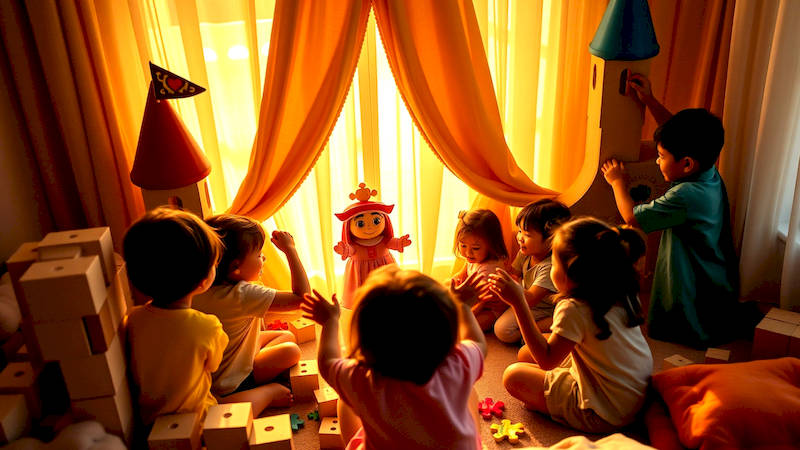
The early years of a child’s life are a period of remarkable growth, not just physically and cognitively, but crucially, socially and emotionally. While academic skills often take center stage, the ability to navigate social interactions – to share, cooperate, empathize, and resolve conflicts – is fundamentally important for future success in all areas of life. These skills aren’t automatically developed; they are learned through practice, observation, and guided experiences. Group play provides the ideal environment for this learning, allowing children to explore social dynamics in a safe and supportive setting.
Developing strong social skills isn’t simply about making friends; it's about building a foundation for healthy relationships, emotional regulation, and overall well-being. Children who struggle socially may experience difficulties in school, have lower self-esteem, and potentially face challenges forming meaningful connections later in life. Recognizing the foundational importance of these skills, proactively providing opportunities for social interaction, and understanding how to facilitate positive experiences during play are therefore essential responsibilities for parents and educators.
This article will delve into the profound benefits of group play for building social skills, offering a comprehensive guide to fostering these abilities in young children. We'll explore specific activities, strategies for intervention, and ways to create play environments that maximize social learning, supporting children as they build the bridges to meaningful connection. We will also address common challenges and offer practical solutions to help navigate the complexities of young children’s social development.
- The Neuroscience of Social Play: Why it Matters
- Types of Play and Skill Development: Matching Activities to Goals
- Facilitating Positive Interactions: The Role of the Adult
- Addressing Common Challenges: Shyness, Aggression, and Exclusion
- Creating a Supportive Play Environment: Space, Materials, and Atmosphere
- Beyond the Playdate: Extending Social Learning
The Neuroscience of Social Play: Why it Matters
Social play isn’t just "fun and games"; it’s a biologically crucial activity that directly impacts brain development. The prefrontal cortex, the region responsible for executive functions like impulse control, planning, and social cognition, is particularly sensitive to experiences during early childhood. Engaging in social play stimulates neural connections in this area, strengthening a child’s ability to understand and respond appropriately to social cues. According to Dr. Jaak Panksepp, a neuroscientist renowned for his work on affective neuroscience, play is a fundamental biological drive, essential for emotional regulation and social bonding.
Furthermore, during group play, children naturally practice perspective-taking – the ability to understand things from another person's point of view. This skill, crucial for empathy and social competence, is honed through negotiations, compromise, and navigating shared goals. Brain imaging studies demonstrate that social interaction activates mirror neurons, allowing children to literally "feel" what others are feeling. This innate biological mechanism is vital for developing empathy and building strong social connections. This neurological underpinning highlights why depriving children of social interaction can have detrimental effects on their emotional and social development.
Creating opportunities for spontaneous, child-led play is vital. While adult-directed activities can be beneficial, the true magic happens when children are given the space to navigate their own interactions, solve problems collaboratively, and develop their own social rules. Interrupting too frequently or constantly directing the play can stifle this natural learning process, preventing children from practicing the very skills we intend to foster.
Types of Play and Skill Development: Matching Activities to Goals
Different types of play emphasize different social skills. Understanding these nuances allows you to select activities that specifically target areas where a child needs support. Constructive play, like building with blocks or creating art, fosters cooperation, sharing of materials, and collaborative problem-solving. Children learn to negotiate roles ("You be the architect, and I’ll be the builder!") and share limited resources ("Let’s both use the red blocks, but you can have them first").
Dramatic play, encompassing role-playing and pretend scenarios, is invaluable for developing empathy, communication skills, and emotional regulation. A child pretending to be a doctor learns to comfort a "patient," while a child playing "house" negotiates household responsibilities. However, “Dramatic play” can be challenging for some children as it often requires abstract thinking and verbalization. Games with rules, such as board games or simple sports, teach children about turn-taking, following directions, accepting both winning and losing with grace, and adhering to social conventions. It's important to start with simple games and gradually introduce more complexity as a child’s skills develop. Finally, rough-and-tumble play (carefully monitored and appropriate for age and temperament) can help children learn about boundaries, physical cues, and appropriate levels of physical contact.
Facilitating Positive Interactions: The Role of the Adult
While it’s essential to allow children to lead their own play, a thoughtful adult presence can significantly enhance the social learning experience. The role isn’t to direct the play, but rather to facilitate positive interactions. This can involve prompting communication ("What do you think your friend wants to build?"), mediating conflicts ("It looks like you both want the same toy. How can we solve this problem?"), and modeling positive social behaviors (sharing, taking turns, using polite language).
Effective facilitation also requires careful observation. Pay attention to children who are struggling to integrate into the group, or those who consistently dominate the play. Gently encourage participation from quieter children ("Would you like to join the building team?"), and help assertive children learn to share the spotlight ("That’s a wonderful idea. Let’s hear what your friend thinks too"). Consider "scripting" potential social scenarios beforehand, especially for children who struggle with specific skills. For example, "If you want to play with the truck, you can say, 'Can I have a turn when you're finished?'" This provides a concrete phrase they can use in the moment.
Importantly, resist the urge to jump in and "fix" every conflict. Allowing children to navigate disagreements (with gentle guidance when needed) provides valuable learning opportunities. Encourage them to verbalize their feelings and find solutions collaboratively.
Addressing Common Challenges: Shyness, Aggression, and Exclusion
Not all children approach group play with equal ease. Shyness, aggression, and exclusion are common challenges that require sensitive intervention. For shy children, start small. Encourage interaction with one or two familiar peers in a smaller, less overwhelming setting. Avoid pushing them into situations they aren’t ready for, and offer plenty of positive reinforcement when they do participate. Role-playing is particularly helpful, allowing them to practice social interactions in a safe environment.
Aggression, whether physical or verbal, requires a different approach. First, ensure the safety of all children involved. Then, calmly but firmly address the behavior, explaining why it's unacceptable ("Hitting hurts. We use our words to solve problems."). Help the child identify their feelings ("You seem angry because your friend took your toy"), and teach them alternative ways to express those feelings. A “cool down” area can provide a space for a child to regain control and practice self-regulation.
Exclusion can be particularly painful for children. Validate the child’s feelings ("It’s okay to feel sad when you’re left out"), and help them brainstorm ways to rejoin the group. Sometimes, facilitating a specific activity that includes everyone can be effective. Teaching children about inclusiveness and empathy is vital in creating a welcoming play environment.
Creating a Supportive Play Environment: Space, Materials, and Atmosphere
The physical environment significantly influences the quality of social interaction. Designate a dedicated play space that is safe, accessible, and stimulating. Provide a variety of materials that encourage collaboration and creativity – blocks, art supplies, dress-up clothes, and open-ended toys are all excellent choices. Avoid materials that are overly structured or have a single "right" way to play.
Consider the atmosphere. A calm and nurturing environment fosters positive social interactions. Minimize distractions, reduce noise levels, and create a sense of safety and belonging. Accessibility is also crucial; ensure the play space is inclusive for children with different abilities and needs. Regularly rotate the materials to maintain interest and provide new opportunities for play. Finally, a well-organized space encourages children to take responsibility for their environment and contributes to a sense of order and cooperation.
Beyond the Playdate: Extending Social Learning
The benefits of group play extend far beyond the playdate. Encourage children to practice their social skills in everyday situations – during mealtimes, on errands, and when interacting with family members. Modeling positive social behaviors is paramount. Show your child how to share, cooperate, and resolve conflicts respectfully.
Read books and watch shows that highlight positive social interactions. Discuss the characters’ actions and explore different ways they could handle challenging situations. And importantly, provide opportunities for children to reflect on their own social experiences. Ask them about their playdates – what went well, what was difficult, and what they learned. This helps them develop self-awareness and refine their social skills over time.
In conclusion, building social skills through group play activities is a cornerstone of healthy child development. It’s not merely about letting children play; it’s about understanding the neuroscience, carefully selecting activities, facilitating positive interactions, addressing challenges with sensitivity, and creating a supportive environment. Embracing play as a vital learning opportunity, and actively participating in fostering these skills, equips children with the emotional intelligence and social competence they need to thrive – not just in their childhood, but throughout their lives. Remember that every interaction is an opportunity for growth, and with patience, guidance, and a commitment to creating positive experiences, we can help children build the bridges to meaningful connections and a brighter future.
Deja una respuesta