Using Storytelling to Improve Cognitive and Language Skills in Preschoolers
Storytelling is arguably the oldest form of education, predating written language by millennia. Yet, in a world dominated by screens and fast-paced stimulation, the art of narrative often gets overlooked. For preschoolers, however, storytelling isn't just entertainment; it's a crucial catalyst for cognitive and language development. This period, spanning roughly ages 3-5, is characterized by rapid brain growth and a heightened capacity for learning, making it the perfect time to harness the power of stories. This article delves into the profound impact of storytelling on young minds, offering practical strategies and insights for parents and educators seeking to foster a love of language and learning through narrative.
The benefits of regular story exposure extend far beyond simple vocabulary expansion. Storytelling actively shapes how children understand the world, develop empathy, and build essential cognitive skills. It’s a dynamic process where imagination is sparked, problem-solving is practiced, and emotional intelligence is nurtured. Moreover, a strong foundation in language and literacy established during these formative years sets the stage for future academic success and lifelong learning. Simply put, cultivating a storytelling rich environment is one of the most valuable gifts we can offer a preschooler.
- Why Storytelling is So Effective: A Brain-Based Approach
- Boosting Language Development Through Narrative
- Cognitive Skill Enhancement: Problem Solving and Critical Thinking
- Fostering Imagination and Creativity Through Narrative
- Making Storytelling Interactive and Engaging
- Choosing Age-Appropriate and Diverse Stories
- Beyond Books: Oral Storytelling and Family Traditions
Why Storytelling is So Effective: A Brain-Based Approach
The preschooler brain is remarkably plastic, meaning it’s highly adaptable and responsive to experiences. When a child listens to a story, multiple areas of the brain are activated simultaneously. The language centers light up, processing vocabulary and grammatical structures. The visual cortex creates mental images, building imaginative capacity. Crucially, the emotional centers become engaged, fostering empathy and understanding of different perspectives. Several studies demonstrate a strong correlation between early language exposure, particularly through narrative, and increased grey matter volume in brain regions associated with language processing and comprehension.
Furthermore, stories provide a safe space for children to explore complex emotions and navigate challenging social situations. A character's struggles and triumphs offer a child a vicarious experience, allowing them to process feelings and develop coping mechanisms without direct personal risk. Neuroscientists often point to the concept of "neural mirroring" – where observing others (even fictional characters) activates the same neural pathways as if we were experiencing it ourselves – as a key mechanism behind this empathetic development. Storytelling isn't just about hearing a story; it’s about living it, in a way, within the child's own neurological landscape.
This neurological activation isn’t simply passive; it’s an active construction of meaning. Children aren't merely receiving information; they're actively interpreting, predicting, and connecting the story’s elements to their own experiences. This process strengthens neural connections and builds cognitive flexibility – the ability to adapt to new information and think creatively.
Boosting Language Development Through Narrative
One of the most immediate benefits of storytelling is its impact on language acquisition. Preschoolers are actively building their vocabulary, mastering grammar, and developing phonological awareness – the understanding of the sounds that make up language. Stories, especially those rich in descriptive language and repetition, provide ample opportunities for children to absorb these essential language skills. Exposure to a diverse range of vocabulary within a compelling narrative context is far more effective than rote memorization.
Beyond vocabulary, stories introduce children to different sentence structures and grammatical concepts. Hearing characters speak in varied ways – asking questions, making statements, using descriptive adjectives – models proper language usage. Interactive storytelling, where you ask questions like “What do you think will happen next?” or “How do you think the character is feeling?” encourages children to actively use language and practice expressing their thoughts and ideas. This is particularly important for children who may be shy or have limited verbal skills.
Consider this scenario: a child is struggling to use past tense verbs. Reading a story filled with past-tense actions ("The bear walked through the forest," "The princess sang a song") provides repeated exposure to the correct usage, subtly reinforcing the grammatical concept. Following up with questions like "What did the bear do?" further solidifies comprehension and application.
Cognitive Skill Enhancement: Problem Solving and Critical Thinking
Storytelling isn't just about language; it’s a powerful tool for developing critical cognitive skills. Stories inherently present problems that characters must solve, encouraging children to develop their own problem-solving abilities. They learn to consider different perspectives, predict outcomes, and understand cause-and-effect relationships. This process cultivates a crucial foundation for logical thinking and reasoning.
When reading a story, pause at crucial moments and ask open-ended questions: “What would you do if you were the character?" or “Why do you think the character made that choice?” These questions prompt children to think critically and apply their own reasoning skills. Encouraging them to justify their answers ("Why do you think that? What makes you say that?") reinforces the importance of logical thought. Even simple stories about everyday events can provide opportunities for problem-solving practice.
Furthermore, stories help children understand the concept of sequencing events. They learn to follow a narrative’s plot, recognizing the beginning, middle, and end, and the logical order in which events unfold. Activities like retelling the story in their own words, or drawing pictures to depict the different stages, reinforce this skill. An example is a story about baking cookies; as you read, discuss the steps involved, emphasizing the order: first you mix the ingredients, then you bake them, and finally you enjoy them!
Fostering Imagination and Creativity Through Narrative
Preschoolers are naturally imaginative, and storytelling provides the perfect fuel for their creative fires. Stories transport children to different worlds, introduce them to fantastical creatures, and expose them to limitless possibilities. This imaginative play is not merely frivolous; it’s essential for cognitive development. Imagination allows children to explore “what if” scenarios, fostering innovation and creative problem-solving.
Encourage children to elaborate on the stories you read. Ask them questions like: “What do you think happened after the story ended?” or “What if the character had made a different choice?” Invite them to create their own stories, either verbally or through drawing and writing (even scribbles are a form of storytelling at this age). Provide them with open-ended materials like blocks, dress-up clothes, and art supplies to encourage imaginative play inspired by the stories they hear.
A simple story about a friendly dragon can spark hours of imaginative play, where a child might transform their stuffed animals into a kingdom defended by the dragon, inventing elaborate backstories and adventures. The key is to nurture their inherent creativity and provide opportunities for them to express it.
Making Storytelling Interactive and Engaging
Storytelling isn't a passive activity; it’s most effective when it's interactive and engaging. Vary your reading style, using different voices for different characters, and incorporating sound effects. Ask questions throughout the story to keep children actively involved. Encourage them to make predictions, share their thoughts, and connect the story to their own experiences.
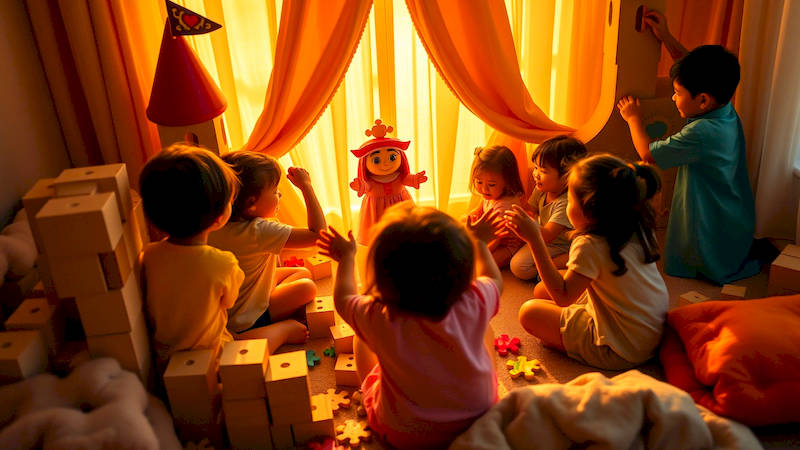
Consider incorporating props or puppets to bring the story to life. Simple hand puppets can transform into beloved characters, making the storytelling experience more immersive and memorable. For example, reading "The Three Little Pigs" while building structures out of blocks for each pig emphasizes the story’s central theme of building strong foundations.
Don't be afraid to deviate from the text. Pause and ask, “How do you think the character is feeling right now?” or “What would you do in that situation?” This encourages critical thinking and personal connection to the narrative. Most importantly, make it fun! Enthusiasm is contagious, and children are more likely to engage with stories when they sense your own enjoyment.
Choosing Age-Appropriate and Diverse Stories
Selecting books that are age-appropriate and diverse is crucial for maximizing the benefits of storytelling. Preschoolers thrive on stories that are visually appealing, with simple plots and relatable characters. Board books and picture books with vibrant illustrations are excellent choices. As their attention spans increase, you can gradually introduce more complex narratives.
Representation matters. Ensuring the stories you share feature diverse characters – reflecting a range of ethnicities, cultures, family structures, and abilities – is essential for fostering inclusivity and promoting a sense of belonging. Children need to see themselves reflected in the stories they read, and they also need to learn about and appreciate the experiences of others.
Avoid stories that are overly violent, frightening, or contain negative stereotypes. Focus on stories that promote positive values like kindness, empathy, resilience, and cooperation. Explore different genres – fairy tales, realistic fiction, rhyming books, and non-fiction – to expose children to the rich variety of storytelling.
Beyond Books: Oral Storytelling and Family Traditions
Storytelling doesn’t solely rely on reading from books. Sharing personal anecdotes, family stories, and made-up tales are equally valuable. Oral storytelling fosters a closer connection between parent and child, strengthening bonds and creating cherished memories. Recall stories from your own childhood, recount funny family incidents, or invent fantastical adventures together.
Establishing family storytelling traditions – like sharing a story at bedtime or recounting the day’s events during dinner – can create a lasting legacy of literacy and imagination. Encourage each family member to contribute their own stories, fostering a sense of shared history and connection.
In conclusion, storytelling is a powerful and versatile tool for fostering cognitive and language development in preschoolers. By actively engaging in narrative – through reading, oral storytelling, and imaginative play – we can help our children build a strong foundation for future learning, emotional intelligence, and creativity. Prioritize regular story exposure, make it interactive, choose diverse and age-appropriate stories, and most importantly, embrace the joy of sharing the power of narrative with the young minds in your care. Remember, a story isn’t just something you read; it’s an experience you share, a world you explore, and a connection you build.
Deja una respuesta