
How to Use Role-Playing to Teach Empathy and Emotional Expression
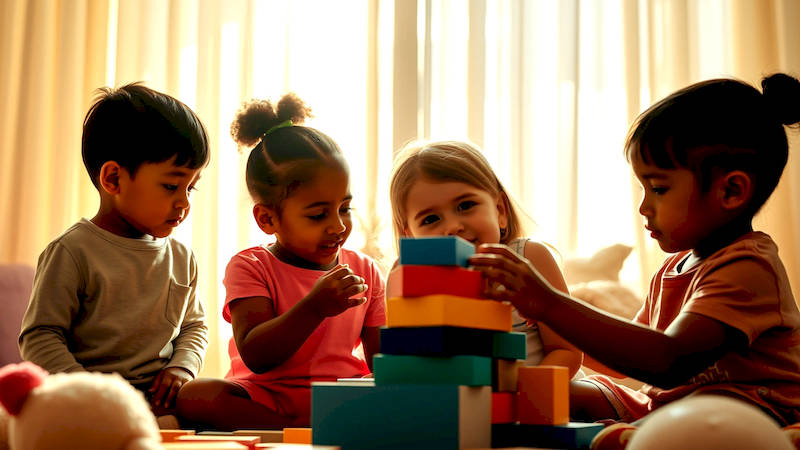
Emotional intelligence – the ability to understand and manage one’s own emotions and recognize and influence the emotions of others – is increasingly recognized as a cornerstone of success in life. While cognitive skills are important, research shows that emotional competence is a stronger predictor of well-being, academic achievement, and even career success than IQ alone. As parents, nurturing this crucial skill in our children isn’t just about preparing them for a brighter future; it's about equipping them with the tools to navigate a complex emotional world, build healthy relationships, and become compassionate, resilient individuals. However, simply telling children about empathy or emotional expression often isn't enough. They need opportunities to practice these skills in a safe and supportive environment. This is where role-playing, a powerful and often overlooked pedagogical tool, comes into play.
- Why Role-Playing is a Powerful Tool for Emotional Development
- Setting the Stage: Creating a Safe and Supportive Environment
- Crafting Effective Role-Playing Scenarios: Specific Examples
- The Role of the Parent: Facilitating, Not Directing
- Debriefing and Processing: Making the Learning Stick
- Addressing Potential Challenges and Adapting to Individual Needs
- Beyond the Play: Integrating Emotional Expression into Daily Life
Why Role-Playing is a Powerful Tool for Emotional Development
Role-playing provides a unique space for children to explore emotions without the pressure of "real-life" consequences. It allows them to step outside of their own experiences and inhabit the perspective of another, fostering a deeper understanding of differing feelings and motivations. This is particularly important because children often struggle to differentiate between their own emotions and those of others. A child might understand they feel sad when losing a toy, but connecting that feeling to a friend who’s experiencing a similar loss requires practiced empathy.
Furthermore, role-playing actively involves children in the learning process. It's not passive listening; it’s active engagement, requiring them to think on their feet, improvise responses, and consider the impact of their actions. According to Dr. Brené Brown, a leading researcher on vulnerability and empathy, “Empathy is about connecting with others, not fixing them.” Role-playing provides a safe way to practice that connection, focusing on understanding with someone rather than trying to solve their problems for them. This fosters emotional validation, a crucial component of healthy emotional development.
Finally, role-playing can be adapted for a wide range of ages and developmental levels. From simple scenarios with stuffed animals for preschoolers to more complex simulations for older children and adolescents, the possibilities are endless, making it a versatile tool for ongoing emotional learning.
Setting the Stage: Creating a Safe and Supportive Environment
Before diving into scenarios, it’s imperative to establish a safe and supportive environment where children feel comfortable exploring vulnerable emotions. This means emphasizing that there are no "right" or "wrong" answers, and that the goal isn’t to perform perfectly, but to practice understanding. Begin by explicitly stating the purpose: “We’re going to pretend to be different people so we can learn what it might feel like to be in their shoes.” Avoid judgment, and focus instead on curiosity and exploration.
A key component of this environment is clearly defining boundaries. Let children know they can "pause" the role-play at any time if they become uncomfortable, and that any feelings that arise are valid and acceptable. Model this yourself by being open about your own feelings. For example, if you’re playing a character who’s feeling angry, acknowledge that anger is a normal and sometimes helpful emotion, but that it’s important to express it in healthy ways. This normalizes emotional expression and reduces the stigma surrounding difficult feelings.
The physical environment also matters. Find a quiet, comfortable space free from distractions. Consider using props or costumes to enhance engagement, but be mindful of not making them the focus. The emphasis should be on the interaction and emotional exploration, not on elaborate theatrics.
Crafting Effective Role-Playing Scenarios: Specific Examples
Choosing the right scenarios is crucial for maximizing the learning potential of role-playing. Start with situations familiar to your child, such as conflicts with friends, feeling left out, or experiencing disappointment. Begin with simpler scenarios and gradually increase the complexity as your child's emotional understanding grows. For a younger child (ages 4-7), a scenario like “Your friend doesn’t want to share their toy” can be a great starting point. You can play the friend, and your child can practice expressing their disappointment and trying to understand why their friend might not want to share.
For older children (ages 8-12), you can tackle more nuanced situations like “A classmate is being bullied” or “You accidentally hurt someone’s feelings with a thoughtless comment.” These scenarios encourage them to consider the perspectives of all involved, including the bully, the victim, and themselves. Encourage them to explore different responses and discuss the potential consequences of each. Crucially, don't just focus on what the child would say, but how they would say it. Tone of voice, body language, and facial expressions are all key components of effective communication and empathy.
A more complex scenario for teenagers could focus on navigating disagreements with parents. The objective isn't to teach them to ‘win’ an argument, but to communicate their needs and perspectives respectfully while also understanding their parent's point of view.
The Role of the Parent: Facilitating, Not Directing
During role-playing, your job is to facilitate, not direct. Resist the urge to tell your child what to say or do. Instead, ask open-ended questions to prompt reflection and encourage exploration. For example, if your child is playing a character who is feeling sad, you could ask, “What do you think is making that character feel so sad?” or “What could you say to make that character feel better?”
Actively listen to your child’s responses, and validate their feelings. Even if you don’t agree with their perspective, acknowledge it as valid. “I can see why that character would feel frustrated in that situation” is a powerful validating statement. Avoid jumping in with solutions or judgments. Allow your child to grapple with the emotional complexity of the scenario on their own.
Furthermore, be prepared to switch roles. Taking on different characters yourself allows you to model empathetic responses and provides your child with opportunities to practice responding to a variety of emotional cues.
Debriefing and Processing: Making the Learning Stick
The role-playing activity doesn’t end when the scenario is over. The debriefing process is arguably the most important part. This is where you and your child discuss what happened during the role-play, explore the emotions that were evoked, and draw meaningful conclusions. Ask questions like: “How did it feel to be in that role?” “What was challenging about that scenario?” and “What did you learn about yourself and others?”
Encourage your child to reflect on the other character’s perspective. “How do you think the other character was feeling?” and “What might have been going on in their life that contributed to their behavior?” Help them identify potential alternative responses and discuss the likely consequences of each. This fosters critical thinking and problem-solving skills.
Finally, connect the lessons learned from the role-play to real-life situations. “How could you apply what you learned today when you’re dealing with a conflict with a friend?” This helps your child transfer their emotional understanding from the simulated environment to the real world.
Addressing Potential Challenges and Adapting to Individual Needs
Role-playing, while beneficial, isn’t without its challenges. Some children may feel self-conscious or uncomfortable acting out scenarios, especially initially. Start slowly, and allow them to choose the scenario or character they want to play. Others might struggle to separate their own feelings from those of the character they're portraying. Remind them that they are pretending to be someone else, and that their own feelings are still valid.
Adapting to individual needs is also critical. Children with autism spectrum disorder, for example, may benefit from more structured scenarios with clear expectations and limited ambiguity. Similarly, children who have experienced trauma may need a sensitive and trauma-informed approach, with careful attention to avoiding potentially triggering situations. It's essential to be flexible and adjust the role-playing activities to meet your child’s unique developmental and emotional needs.
Beyond the Play: Integrating Emotional Expression into Daily Life
Role-playing isn't a one-time fix, but rather a tool to be integrated into a consistent practice of emotional literacy. Continue to model empathetic behavior in your own interactions. Label your emotions and talk about how you’re managing them. Encourage open communication in your family, creating a space where everyone feels safe to express their feelings.
Read books and watch movies together, and discuss the characters’ emotions and motivations. Use everyday situations as opportunities to practice emotional understanding. For example, when your child is watching a friend struggle, ask, "What do you think your friend is feeling right now?” The more you normalize emotional expression and encourage empathetic thinking, the more equipped your child will be to navigate the complexities of the emotional world.
In conclusion, role-playing is a remarkably effective method for nurturing emotional intelligence in children. It provides a safe, engaging, and practical way to build empathy, improve emotional expression, and develop crucial social-emotional skills. By carefully crafting scenarios, facilitating a supportive environment, and consistently integrating emotional literacy into daily life, parents can empower their children to become emotionally resilient, compassionate, and well-adjusted individuals. The investment in emotional development is an investment in a brighter, more connected, and more empathetic future – for our children and for the world.
Deja una respuesta