Encouraging Cooperation in Group Play for Elementary-Aged Kids
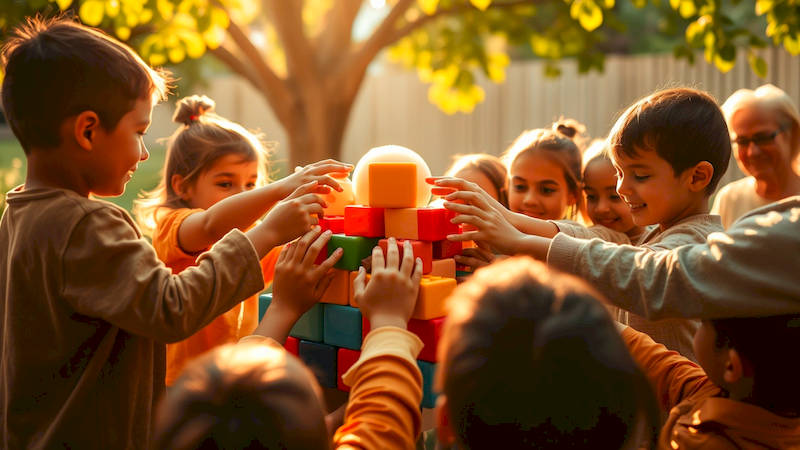
Group play is a cornerstone of childhood development, extending far beyond simple entertainment. It’s where elementary-aged children learn vital social skills – negotiation, compromise, empathy, and conflict resolution – equipping them to navigate the complexities of relationships throughout their lives. However, cooperative play doesn't always happen organically. Often, it requires conscious encouragement and guidance from parents and educators. This article will delve into the nuances of fostering cooperation in group play, providing practical strategies, understanding common challenges, and cultivating a supportive environment where children can thrive socially. Recognizing that social-emotional learning is considered by many experts to be as important as academic learning, we'll explore how to nurture these key skills.
The benefits of collaborative play are well-documented. Studies show that children who engage in frequent cooperative play demonstrate higher levels of prosocial behavior, better emotional regulation, and improved academic performance. According to research from the University of Washington, opportunities for play significantly contribute to the development of executive function skills, crucial for self-control and planning. Ignoring the importance of these skill-building opportunities can leave children feeling isolated or lacking the specific social tools needed to connect with their peers. This article aims to provide you with a robust toolkit to actively support this crucial area of your child’s development.
- Understanding the Stages of Play and Cooperative Development
- Creating a Play Environment That Encourages Cooperation
- Proactive Strategies: Setting the Stage for Successful Collaboration
- Responding to Conflict: Guiding, Not Dictating
- Modeling Cooperative Behavior
- Acknowledging and Reinforcing Cooperative Behavior
- Supporting Children with Specific Needs
- Conclusion: Cultivating a Future of Collaboration
Understanding the Stages of Play and Cooperative Development
Before we jump into strategies, it’s vital to understand where your child is in their play development. Play isn't a single, uniform activity; it evolves through distinct stages. Early on, children engage in solitary play, content to entertain themselves. This progresses to parallel play, where children play alongside each other without much interaction. Associative play involves some sharing of materials and talk, but remains largely individual. True cooperative play, the focus of our discussion, emerges around ages 4-6, characterized by shared goals, defined roles, and collaborative problem-solving. Recognizing these stages helps set realistic expectations and tailor your approach.
A common mistake parents make is expecting full cooperation immediately. A child still developing their associative play skills will struggle with sustained, complex cooperative games. Instead of pushing too hard, offer scaffolding. This means providing gentle guidance, suggesting ideas, asking prompting questions like "What if you both used the blue blocks?" and slowly relinquishing control as they become more comfortable. Understanding that cooperation is a skill that requires practice, just like learning to ride a bike, is key to fostering a positive experience. Remember, occasional disagreements are perfectly normal and offer teachable moments instead of problems to 'fix'.
Furthermore, consider temperament. Some children are naturally more gregarious and eager to collaborate, while others are more reserved and prefer independent activity. Don't force a shy child into the limelight; instead, create opportunities for them to participate in smaller groups or alongside supportive peers.
Creating a Play Environment That Encourages Cooperation
The physical and emotional environment strongly influences how children interact. A well-designed play space can subtly encourage cooperation. Opt for open-ended materials – blocks, art supplies, dress-up clothes – which necessitate shared imagination and negotiation. Avoid highly structured games with rigid rules, especially initially. These can sometimes lead to power struggles and inhibit spontaneous collaboration. Instead, focus on materials that can be used in multiple ways, sparking creativity and the need for collective decision-making.
Beyond the physical space, cultivate an emotionally safe environment. Children are far more likely to cooperate when they feel respected, valued, and free from judgment. Model respectful communication yourself: use "I" statements, actively listen to your child's feelings, and demonstrate empathy. Avoid intervening immediately in minor conflicts. Give children the opportunity to work things out themselves, offering guidance only when truly needed. The goal isn’t to prevent all disagreements, but to equip children with the skills to navigate them constructively. The book "How to Talk So Kids Will Listen & Listen So Kids Will Talk" by Adele Faber and Elaine Mazlish is an excellent resource for learning these communication skills.
Think about designating a "peace corner" or "calm down space" where children can retreat if they feel overwhelmed or need a break from the group. This sends a message that regulating emotions is valued and supported.
Proactive Strategies: Setting the Stage for Successful Collaboration
Rather than reacting to conflicts, “pre-teaching” cooperative skills can be incredibly effective. Before playdates or group activities, have conversations with your child about the importance of sharing, taking turns, listening to others, and compromising. Brainstorm potential scenarios (e.g., "What if someone else wants to play with the same toy?") and discuss possible solutions. Role-playing is particularly useful – you can act out different scenarios and practice using cooperative language ("Can I have a turn when you're finished?").
Introduce games that inherently require cooperation. "Build a tower together" challenges children to negotiate size, placement, and stability. "Storytelling circle" encourages collaborative narrative creation. “Obstacle courses” that need team work to complete foster problem-solving as a group. The key is to select activities that are age-appropriate and engaging. A game that's too difficult will frustrate children and discourage cooperation, while one that's too easy won’t provide sufficient challenge.
Responding to Conflict: Guiding, Not Dictating
When conflicts inevitably arise, resist the urge to immediately jump in and "fix" things. Instead, act as a facilitator. First, ensure everyone is safe and calm. Then, help the children articulate their feelings and perspectives. ("It sounds like you're upset because Sarah took the truck without asking.") Encourage them to actively listen to each other. ("Can you tell Sarah what bothered you?")
Avoid assigning blame. Focus on helping the children identify the problem and brainstorm solutions together. ("Okay, so you both want to play with the truck. What can you do?") Suggest options like taking turns, finding another truck, or playing something else. If they can't come to a consensus, offer a neutral suggestion, but allow them to feel ownership of the outcome. It's crucial to resist phrasing like "You have to share." Instead, explore "What could you do to make sure everyone gets a turn?"
According to Dr. Laura Markham, author of "Peaceful Parent, Happy Kids," the goal is not to eliminate conflicts, but to teach children how to resolve them constructively.
Modeling Cooperative Behavior
Children learn by observing the adults in their lives. If you want your child to be cooperative, you must model cooperative behavior yourself. This includes demonstrating respect, empathy, and a willingness to compromise in your interactions with others – your partner, family members, and even strangers.
When faced with disagreements, verbalize your thought process. ("I was really hoping to watch this show, but I understand that you want to choose something too. Let's find a compromise.") Show your child how you actively listen to others and seek to understand their perspectives.
Furthermore, involve your child in household tasks that require collaboration. Working together to set the table, clean up a mess, or prepare a meal provides opportunities to practice teamwork and shared responsibility.
Acknowledging and Reinforcing Cooperative Behavior
Positive reinforcement is far more effective than punishment when it comes to encouraging desired behaviors. When you observe your child cooperating, acknowledge their efforts specifically. ("I noticed how nicely you shared your crayons with David. That was very kind of you.") Avoid generic praise like "Good job!" Instead, focus on the specific behaviors you want to encourage.
Catch them in the act of being cooperative, even in small ways. ("I saw you listening carefully to your friend’s idea. Thank you for being such a respectful listener.") Reinforce the benefits of cooperation. ("When you work together, you can build something amazing!")
Consider using a reward system – a sticker chart or small privileges – to further incentivize cooperative behavior, particularly when initially establishing these skills. However, gradually phase out the rewards as cooperation becomes more ingrained.
Supporting Children with Specific Needs
For children with certain developmental or emotional challenges, cooperative play may be more difficult. Children with autism spectrum disorder, for example, may struggle with social cues and reciprocal interaction. Children with ADHD may have difficulty with impulse control and waiting their turn. In these cases, it's essential to adjust your expectations and provide individualized support.
This might involve breaking down tasks into smaller, more manageable steps; providing visual supports; or offering opportunities for one-on-one play with a supportive peer. Collaborate with your child's teacher or therapist to develop strategies tailored to their specific needs. Remember, patience and understanding are paramount.
Conclusion: Cultivating a Future of Collaboration
Encouraging cooperation in group play is an investment in your child's social, emotional, and cognitive development. By understanding the stages of play, creating a supportive environment, proactively teaching cooperative skills, responding to conflict constructively, modeling desired behaviors, and acknowledging their efforts, you can empower your child to thrive in social situations. Remember that cooperation isn’t simply about getting children to play nicely together; it's about equipping them with the essential life skills they need to build strong relationships, navigate challenges, and contribute positively to the world around them. The skills learned through collaborative play extend far beyond the playground, shaping them into empathetic, resilient, and successful individuals. Continue to focus on providing opportunities for play, fostering open communication, and celebrating the power of working together.
Deja una respuesta