Top 10 Coding Projects for Children Aged 7-12 to Boost Problem-Solving Skills
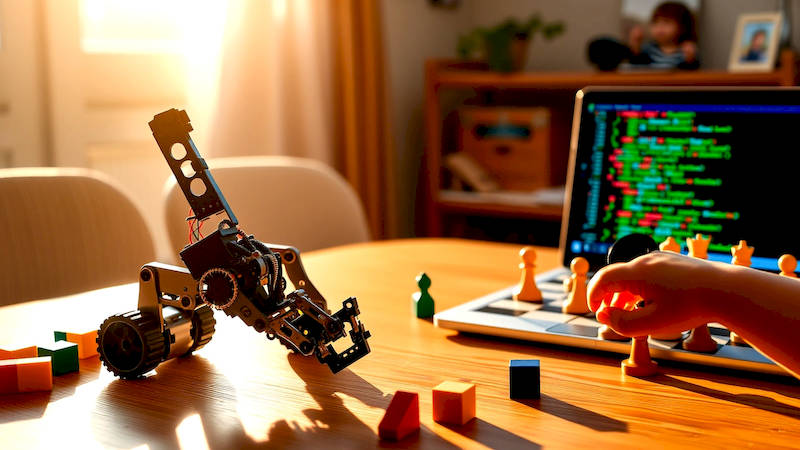
The 21st century is undeniably digital. From the devices we use daily to the jobs of the future, technology permeates every aspect of modern life. Equipping our children with digital literacy isn’t simply about preparing them for a technologically advanced world; it's about empowering them to shape it. And increasingly, that empowerment begins with coding. But coding isn't just about learning syntax and commands – it’s a powerful tool for fostering critical thinking, problem-solving abilities, and creativity. Early exposure to coding concepts lays a foundation for logical thought, analytical skills, and the ability to break down complex problems into manageable steps – skills that are transferrable to all areas of life.
While the idea of children learning to code might conjure up images of complex lines of text, the reality is far more approachable, especially for the 7-12 age group. Numerous kid-friendly platforms and visual programming languages, like Scratch and Blockly, have made coding accessible and engaging. These tools emphasize a block-based approach, allowing children to drag and drop code blocks instead of typing, reducing frustration and fostering a sense of accomplishment. This isn’t about churning out future software engineers (though it could lead there!), but about unlocking a new way of thinking and building resilience through iterative problem-solving.
This article will explore ten coding projects specifically tailored for children aged 7-12, focusing on projects that not only introduce coding concepts but also actively cultivate key problem-solving skills. Each project will include a brief overview, the skills it reinforces, and suggestions for platforms where children can bring their ideas to life. We aim to provide parents and educators with actionable ideas to inspire the next generation of innovators.
- 1. Interactive Storytelling with Scratch
- 2. Simple Number Guessing Game (Python with Turtle)
- 3. Design a Maze Game with Blockly
- 4. Create a Basic Calculator with JavaScript (Khan Academy)
- 5. Build a Virtual Pet with Scratch
- 6. Design a Simple Animation with Piskel and JavaScript
- 7. Data Visualization with Blockly (Simple Charts)
- 8. Create a Quiz Game Using Code.org's App Lab
- 9. Remote Control Robot Simulation with Scratch
- 10. Create a Simple Landing Page with HTML and CSS (CodePen)
1. Interactive Storytelling with Scratch
Scratch, developed by MIT Media Lab, is arguably the most popular visual programming language for kids. Its block-based interface makes it incredibly easy to learn and allows children to build interactive stories, games, and animations. A fantastic starting project is creating an interactive story where characters respond to user input. For instance, a child could create a story about a lost puppy, and the storyline changes based on whether the user chooses to “look left” or “look right.”
This project inherently reinforces sequential thinking, as children map out the order of events in the story. It also introduces the concept of conditional statements ("if this, then that") – a fundamental building block of programming logic. Building the interactivity requires understanding event handling, such as responding to mouse clicks or key presses. Importantly, Scratch encourages creativity and narrative development alongside the technical skills.
Scratch is freely available online (scratch.mit.edu) and offers a supportive community where children can share their projects and learn from each other. There are also copious tutorials and resources available, making it perfect for independent learning or guided instruction. A more advanced extension of this project could involve incorporating variables to track story progress or character attributes.
2. Simple Number Guessing Game (Python with Turtle)
For slightly older children (ages 9-12), introducing a text-based coding language like Python can be incredibly rewarding. Python's readability makes it surprisingly accessible, and the Turtle module provides a simple graphical output. A number guessing game is an excellent starting point. The computer randomly generates a number, and the player has a limited number of attempts to guess it.
This project is an ideal way to introduce variables (to store the secret number and the player’s guess), loops (to allow multiple guesses), and conditional statements (to provide feedback to the player – “too high,” “too low,” or “you guessed it!”). It also subtly teaches debugging skills, as children will inevitably encounter errors in their code and learn to identify and fix them. The addition of the Turtle module allows for visual feedback, such as displaying the number of attempts remaining or changing the turtle’s color based on the player’s accuracy.
Resources like CodeCombat (codecombat.com) and Trinket (trinket.io) offer beginner-friendly Python environments with pre-built tools and tutorials specifically designed for children. This is a bridge project, offering a gentle transition into a professional programming language, cultivating a taste for textual coding and its greater flexibility.
3. Design a Maze Game with Blockly
Blockly, created by Google, is another visual programming language similar to Scratch, but it’s particularly well-suited for creating games and simulations. Designing a simple maze game where the player navigates a character through a maze using arrow keys is a great way to introduce algorithmic thinking. Children will need to plan the logic for character movement, collision detection (detecting when the character hits a wall), and win conditions (reaching the end of the maze).
This project necessitates careful planning and decomposition of the problem into smaller, manageable steps. Concepts like coordinates, loops (to repeatedly check for movement), and conditional statements (to prevent the character from moving through walls) are central to its development. Blockly's block structure helps children visualize the flow of logic and understand the cause-and-effect relationships within the code. A slightly more complex iteration could involve adding obstacles, timers, or scoring systems.
Blockly is often integrated into educational platforms like Code.org (code.org), which provides comprehensive courses and projects. It’s an excellent environment for fostering computational thinking and problem-solving skills in a visually engaging way.
4. Create a Basic Calculator with JavaScript (Khan Academy)
JavaScript is the language of the web, and learning its basics can open up a world of possibilities. Khan Academy offers interactive tutorials specifically designed to teach children JavaScript in a fun and accessible way. Building a simple calculator that performs basic arithmetic operations (addition, subtraction, multiplication, division) is a practical and rewarding project.
This project introduces key concepts like variables (to store numbers and the result), operators (to perform calculations), and functions (to encapsulate reusable code blocks). It also highlights the importance of user input and output – how to get data from the user (using buttons or a keyboard) and display the results (on the screen). This project delivers tangible results quickly, enhancing engagement and motivation.
Khan Academy’s (khanacademy.org) interactive platform provides immediate feedback and guidance, making it ideal for self-paced learning. It's more than just learning to code; it's understanding how code translates into interactive experiences that people use every day.
5. Build a Virtual Pet with Scratch
Expanding on the interactive storytelling theme, creating a virtual pet in Scratch provides a fun and engaging framework for learning more complex programming concepts. Children can design their pet's appearance, program its behavior (eating, sleeping, playing), and create interactions based on user input.
This project allows for the implementation of more sophisticated concepts like variables (to track the pet’s hunger, happiness, and health), conditional statements (to determine how the pet reacts to different interactions), and randomized events (to keep the game dynamic and unpredictable). It also offers opportunities for creative expression through character design and animation. For instance, the pet’s happiness might decrease if it's not fed regularly, or it might perform a special animation when it's played with.
The open-ended nature of this project encourages experimentation and allows children to personalize their creations, solidifying their understanding of coding concepts.
6. Design a Simple Animation with Piskel and JavaScript
Piskel (piskelapp.com) is a free online sprite editor that allows children to create pixel art. Combining Piskel with basic JavaScript allows kids to breathe life into their creations. The goal is to create a series of images (frames) in Piskel, then use a JavaScript script to display them in sequence, creating a simple animation.
This project links creative visual design with the logic of code. It teaches about frames, timing, and controlling the sequence of events. Children will be exposed to basic JavaScript syntax to load images and control their display. It illustrates how code and art intertwine, simplifying the concept of game development or creating digital content.
7. Data Visualization with Blockly (Simple Charts)
Introduce the concept of data visualization. Using simple datasets (e.g., favorite colors of classmates), children can learn to create basic bar or pie charts using Blockly. This introduces concepts like data representation, scaling, and visual communication.
This project isn't solely about coding; it's about interpreting data and conveying information effectively. It showcases how code can be used to unlock insights from data, a crucial skill for the future. It encourages logical thinking in how data is structured and displayed.
8. Create a Quiz Game Using Code.org's App Lab
Code.org’s App Lab is a fantastic platform for building simple mobile apps. Creating a basic quiz game with multiple-choice questions is an excellent project that reinforces a variety of coding concepts.
This project focuses on event handling (responding to button clicks), conditional statements (checking the player’s answer), and variables (tracking the score). It also offers an opportunity to learn about user interface (UI) design and creating interactive experiences. The mobile app format adds an extra layer of engagement and pride in creation.
9. Remote Control Robot Simulation with Scratch
Use Scratch extensions that allow you to interact with hardware, or simulate robot control. Children could design a virtual robot and then program movement using keyboard controls.
This helps visualize programming physical objects and introduces the idea of input/output in a realistic context. It is a precursor to physical robotics, developing the foundation for understanding how code controls machines.
10. Create a Simple Landing Page with HTML and CSS (CodePen)
Introduce the fundamental building blocks of the web: HTML and CSS. CodePen (codepen.io) provides an easy environment for experimenting. A simple project involves recreating a basic landing page with a title, image, and short description.
This project is about structure and presentation. It introduces the concepts of tags, attributes, and styling, the base of all websites. Although not strictly a “problem-solving” project in the same way as the others, learning to manipulate HTML and CSS encourages meticulous attention to detail and analytical thinking about layout.
In conclusion, exposing children to coding at a young age offers a myriad of benefits, extending far beyond the acquisition of technical skills. The projects outlined above provide a diverse range of opportunities to develop critical thinking, problem-solving abilities, creativity, and perseverance. Starting with visual programming languages like Scratch and Blockly allows children to grasp fundamental concepts without the frustration of complex syntax. As they progress, gentle introductions to text-based languages like Python and JavaScript can unlock even greater potential. Remember, the goal is not to create professional programmers, but to empower the next generation with the skills and mindset needed to thrive in an increasingly digital world. Encourage experimentation, celebrate effort, and foster a love of learning – and watch your child’s problem-solving skills flourish. The resources mentioned—Scratch, CodeCombat, Code.org, Khan Academy, Piskel, and CodePen—provide accessible and engaging platforms to begin this rewarding journey.
Deja una respuesta