How to Encourage Children to Share and Take Turns During Group Work
Learning to share and take turns are fundamental social skills that extend far beyond the playground. These abilities are critical for success in the classroom, particularly during group work, where collaboration and cooperation are essential for achieving shared goals. While seemingly simple, mastering these skills can be challenging for children, often requiring mindful guidance from parents and educators. Successfully navigating group activities not only enhances academic outcomes but also contributes to the development of empathy, conflict resolution skills, and a sense of community.
The rise of collaborative learning environments in schools makes these skills more important than ever. Research consistently shows that students who can effectively collaborate demonstrate increased engagement, deeper understanding of concepts, and improved problem-solving abilities. However, without explicit instruction and consistent reinforcement, group work can quickly devolve into frustration and conflict if sharing and turn-taking aren't prioritized. This article will provide a comprehensive guide for parents and educators on how to nurture these essential skills in children, equipping them for success both in and out of the classroom.
- Understanding the Developmental Stage and Underlying Challenges
- Proactive Strategies: Setting the Stage for Success
- Facilitating Sharing During Group Work: Real-Time Guidance
- The Power of Collaborative Problem-Solving
- Modeling Positive Behavior: The Role of Adults
- Addressing Persistent Challenges & Seeking Support
- Conclusion: Building a Foundation for Lifelong Collaboration
Understanding the Developmental Stage and Underlying Challenges
It's crucial to recognize that a child's capacity for sharing and turn-taking is closely tied to their developmental stage. Younger children, particularly preschoolers, are often naturally egocentric – meaning they see the world primarily from their own perspective. This isn't a sign of selfishness, but rather a normal part of cognitive development. They are still learning to understand that others have their own thoughts, feelings, and desires separate from their own. Expecting a four-year-old to seamlessly share a favorite toy for an extended period is often unrealistic.
As children mature, their understanding of social norms and empathy develops, making sharing and turn-taking more attainable. However, even older elementary-aged children may struggle, especially when faced with highly desirable resources or tasks. Anxiety about completing a task "perfectly" or a fear of losing control can manifest as resistance to sharing materials or relinquishing a turn. Furthermore, children with certain neurodevelopmental conditions, such as Autism Spectrum Disorder, may face unique challenges with social reciprocity and require tailored strategies. Identifying the root cause of the difficulty – whether it's developmental stage, anxiety, or underlying differences – is the first step to providing effective support.
A study by the University of Washington demonstrated that children begin to show consistent understanding of fairness and reciprocal sharing around the age of seven, but even then, contextual factors, such as the relationship with the other child, significantly influence their behavior. This highlights the need for ongoing practice and modeling.
Proactive Strategies: Setting the Stage for Success
Before diving into group work, proactively setting expectations and establishing clear guidelines can significantly reduce potential conflicts. This begins with explicitly teaching the concepts of sharing (giving something to someone else to use) and turn-taking (alternating who gets to use something). Instead of simply telling children to share, explain why it’s important – framing it as a way to make everyone feel included and valued, and to create a more collaborative and enjoyable learning environment.
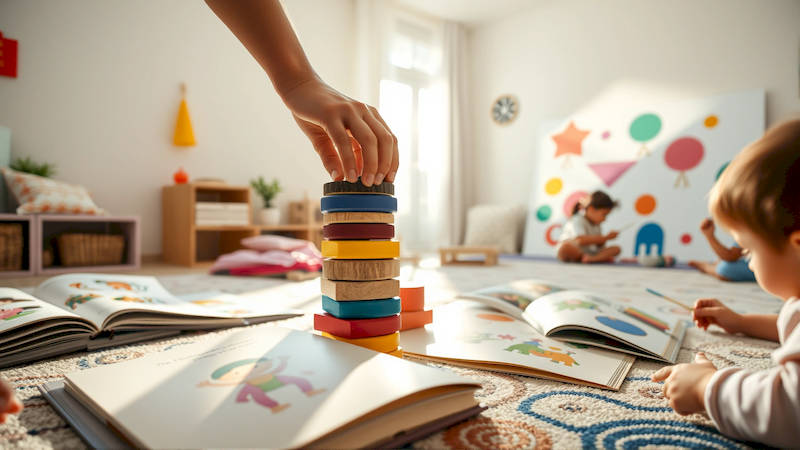
When introducing a group activity, clearly define roles and responsibilities. Assigning specific tasks to each student not only promotes accountability but also minimizes competition for resources. For instance, in a building block project, one child could be the "designer," another the "builder," and a third the "material manager." It’s also helpful to establish a time limit for each turn, ensuring that everyone has an equal opportunity to participate. Modeling sharing behavior yourself, whether it's sharing a snack or your own materials, reinforces the importance of the skill.
Establish clear visual cues to support understanding, especially for younger children. A visual timer can help demonstrate how long each turn lasts, and a simple chart illustrating defined roles can minimize confusion. Pre-planning and structuring the activity to minimize opportunities for conflict is key.
Facilitating Sharing During Group Work: Real-Time Guidance
Despite proactive measures, disagreements will inevitably arise during group work. When conflicts do occur, avoid simply imposing a solution ("You have to share!"). Instead, use the situation as a teaching moment. Empathize with both children's perspectives. For example, "I see you’re very excited to use the red marker, and it's frustrating to wait, but Sarah was using it first. We need to take turns so everyone gets a chance."
Facilitate a conversation where children can verbally express their feelings and needs. Encourage them to use "I" statements ("I feel frustrated when…") rather than accusatory language ("You always…"). Guide them towards brainstorming solutions collaboratively. "What could you two do to solve this problem?" If children are struggling to articulate their needs, offer suggestions: "Could you ask for the marker when Sarah is finished? Or could you find another color to use in the meantime?"
Remember to focus on process over outcome. The goal isn't just about completing the task but about how the children work together. Praise collaborative effort and instances of sharing and turn-taking, even if the final product isn’t perfect. Saying, “I noticed how patiently you waited for your turn with the scissors. That was very considerate!” is far more impactful than focusing solely on the finished artwork.
The Power of Collaborative Problem-Solving
Instead of immediately intervening, step back and empower children to resolve conflicts themselves, under your guidance. This fosters autonomy and reinforces the importance of negotiation. Start by asking guiding questions: “What’s the problem here?” “How is everyone feeling?” “What are some possible solutions?”
Encourage children to propose solutions and then help them evaluate the fairness and effectiveness of each option. This process teaches them valuable negotiation skills, such as compromise and perspective-taking. For example, if two children are vying for the same role in a play, you could ask, “Could you share the role? Maybe you could each perform it for a different scene?” Or, “Could you brainstorm other roles that you would both enjoy?”
One helpful technique is the “win-win” approach, where you help children identify solutions that satisfy the needs of everyone involved. This teaches them that resolving conflicts doesn’t require someone to “lose.” A case study involving third-grade students showed a significant increase in conflict resolution skills after just four weeks of targeted training in collaborative problem-solving techniques.
Modeling Positive Behavior: The Role of Adults
Children learn by observing the adults around them. Therefore, it is essential that parents and educators model the behaviors they want to see in children – sharing, turn-taking, empathy, and respectful communication. This includes sharing your own resources, taking turns in conversations, and demonstrating a willingness to compromise.
When you make a mistake (e.g., interrupting someone), openly acknowledge it and apologize. This demonstrates humility and shows children that it's okay to not be perfect. Be mindful of your own emotional reactions during conflicts. Remaining calm and providing a supportive environment creates a safe space for children to practice their social skills.
Actively talk about the importance of collaboration and sharing in your own life. “I was working with a colleague on a project today, and we had to share ideas to find the best solution.” This demonstrates that these skills are valuable not just in the classroom but in all aspects of life.
Addressing Persistent Challenges & Seeking Support
If a child consistently struggles with sharing and turn-taking despite consistent effort, it’s important to consider underlying factors. Observe the child closely to identify any patterns or triggers. Are they more resistant to sharing with certain children? Do they struggle more with specific types of resources?
Consult with the child’s teacher or a school counselor to gain additional insights. They may be able to provide strategies tailored to the child’s specific needs and the classroom environment. If you suspect an underlying developmental or emotional issue, consider seeking professional support from a child psychologist or therapist. Early intervention can be incredibly beneficial in addressing these challenges.
Remember that progress may be gradual. Celebrate small victories and focus on the effort, not just the outcome. Consistency, patience, and a supportive environment are key to helping children develop these essential social skills.
Conclusion: Building a Foundation for Lifelong Collaboration
Encouraging children to share and take turns during group work is an investment in their future success. These skills are not merely about polite behavior; they are fundamental to fostering collaboration, building positive relationships, and navigating the complexities of social interactions. By understanding child development, proactively setting expectations, facilitating constructive conversations, and modeling positive behavior, parents and educators can empower children to become confident and cooperative learners.
Key takeaways include the importance of recognizing developmental stages, emphasizing the ‘why’ behind sharing, and prioritizing the process of collaboration over the final product. Actionable next steps include consciously modeling sharing behavior in your own interactions, implementing visual cues to support learning, and fostering a supportive classroom environment where conflicts are viewed as learning opportunities. By prioritizing these strategies, we can help children develop the essential social skills they need to thrive in a collaborative world.
Deja una respuesta