
How to Use Daily Routines to Teach Time Management Skills to Preschoolers
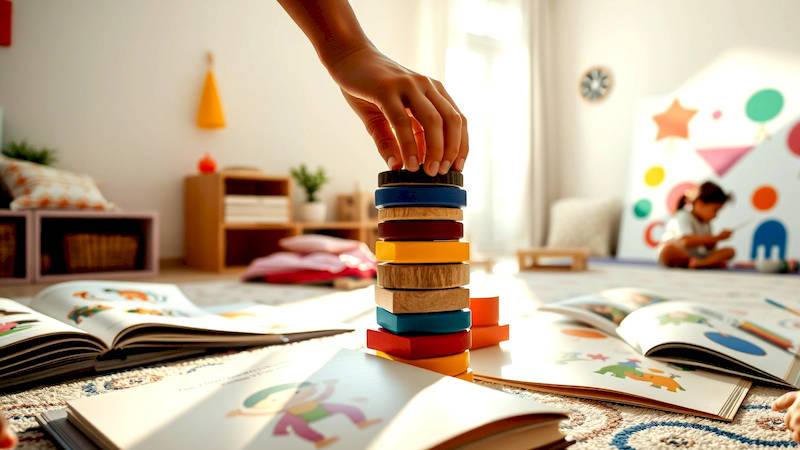
Preschool is a pivotal time for development, and while academic skills like letter and number recognition often take center stage, the foundational skills of organization, planning, and time awareness are equally crucial. These aren’t skills that magically appear; they're learned through consistent modeling and practice. Many parents underestimate the power of daily routines to cultivate these abilities in young children. Integrating time management principles into existing routines – rather than adding another item to a busy schedule – provides a natural and effective way for preschoolers to begin understanding the flow of time, sequencing events, and developing a sense of responsibility. This article will delve into practical strategies for leveraging daily routines to instill time management skills, setting the stage for future academic success and a lifetime of organization.
The benefits extend far beyond simply completing tasks on time. Successfully navigating a predictable, yet adaptable, routine fosters emotional regulation, reduces anxiety, and increases a child's sense of autonomy. When children understand what will happen when, they feel more secure and in control, lessening the potential for meltdowns and power struggles. Moreover, learning to manage their time, even in small ways, builds self-confidence and a sense of competence, contributing positively to their self-esteem. As one expert in early childhood development, Dr. Laura Markham, author of Peaceful Parent, Happy Kids, notes, “Predictability isn’t about controlling children, it’s about creating a safe emotional container within which they can learn and grow.”
This isn’t about turning preschoolers into miniature adults adhering to rigid schedules. Instead, it’s about introducing age-appropriate concepts of time, sequencing, and prioritization within the framework of their everyday lives. It's about fostering a cooperative atmosphere where children actively participate in understanding and managing their time, rather than passively being directed. We'll explore actionable strategies to achieve this, focusing on methods that are playful, engaging, and tailored to the developmental stage of the preschooler.
- Designing Routines with Time in Mind: The Foundation of Time Management
- Integrating Time Concepts into Existing Routines: Small Steps, Big Impact
- Teaching Sequencing and Prioritization: Building Logical Thinking
- Encouraging Independence and Responsibility: Ownership of Time
- Modeling Good Time Management Yourself: The Power of Observation
- Addressing Challenges and Adapting: Every Child is Different
Designing Routines with Time in Mind: The Foundation of Time Management
Creating effective routines requires conscious design with time as a central consideration. The initial step isn’t to simply list activities, but to realistically assess how long each activity typically takes and to buffer in transition time. Preschoolers are notoriously unpredictable; a fifteen-minute block for getting dressed might easily stretch to thirty if a favourite outfit is “too itchy” or a shoe is missing. Understanding this inherent variability is crucial to avoiding frustration and maintaining a smooth flow. Visual schedules are incredibly effective here, allowing children to see the progression of their day. These can be as simple as drawings or printed images depicting each activity, arranged in the order they will occur.
Visual schedules aren't just aesthetically pleasing; they serve a higher purpose. A study published in the Journal of Early Intervention found that children with autism spectrum disorder (and the principles extrapolate to neurotypical development) demonstrated a significant reduction in anxiety and increased independence when using visual supports. For preschoolers, these visuals act as a concrete representation of time, bridging the gap between abstract concepts like “after breakfast” and the actual activity itself. Importantly, involve your child in the creation of the schedule. This fosters ownership and encourages cooperation. Ask questions like, "What do we do after we eat breakfast?" and "Can you help me find the picture for brushing our teeth?"
Finally, remember that flexibility is key. Life happens! A sudden rain shower might disrupt outdoor playtime, or a friend might call unexpectedly. Teach your child that routines can be adjusted, but that the adjusted plan will still be communicated. Acknowledge their feelings if a change occurs (“I know you were really looking forward to playing outside, and it’s disappointing that it’s raining”) while gently guiding them towards the new plan (“But we can build a fort inside instead!”). This builds resilience and shows them that adaptability is a valuable skill.
Integrating Time Concepts into Existing Routines: Small Steps, Big Impact
You don’t need to overhaul your entire day to integrate time management skills. Start small, focusing on routines you already have in place. Bedtime is an excellent example. Instead of a hurried series of commands (“Put on your pajamas! Brush your teeth! Read a story!”), break it down into smaller, time-bound steps: “First, we’ll put on pajamas – that will take about five minutes. Then, we’ll brush teeth for two minutes (use a timer!), and finally, we’ll read one story.”
Using timers is incredibly effective. A visual timer, which displays time as a shrinking segment of colour, is particularly helpful for preschoolers who haven't mastered reading a traditional clock. It provides a concrete representation of time elapsing. During playtime, for example, you could say, "You can play with the building blocks for 15 minutes, and then we'll switch to drawing." When the timer goes off, acknowledge their effort and facilitate a smooth transition. Avoid framing the timer as a punishment ("Time's up, you have to stop!"); instead, present it as a signal for a new activity. Another powerful tool is the “First… Then…” approach. “First, we clean up the toys, then we can read a book.” This demonstrates a clear sequence and reinforces the idea that completing one task unlocks access to another.
Consider utilizing transition cues like songs or rhymes. A simple cleanup song can signal that it’s time to tidy up, transforming a potentially dreaded task into a fun, engaging activity. This keeps the tone positive and encourages cooperation, building a sense of flow and predictability.
Teaching Sequencing and Prioritization: Building Logical Thinking
Preschoolers are beginning to grasp the concept of sequencing – understanding that events happen in a specific order. Routines provide a natural context for reinforcing this skill. During mealtimes, encourage your child to describe the steps involved: "First, we wash our hands. Then, we get a plate. Next, we put food on the plate…" This simple exercise not only strengthens their language skills but also reinforces their understanding of sequence. Play games that involve sequencing, such as arranging pictures in the correct order to tell a story.
Introducing the concept of prioritization can be more challenging, but it’s not impossible. Start with simple choices that allow your child to experience the consequences of their decisions. For instance, “We have time to read one book before bath time. Do you want to read the dinosaur book or the truck book?” This teaches them that they can't have everything immediately and that choices must be made. More complex prioritization can be introduced gradually as they mature.
Expanding on this, “Now we need to get ready to leave for the park. What’s the first thing we need to do?” and offering prompts if needed. This subtly encourages them to think about the order of operations. Frame these activities as collaborative problem-solving exercises rather than directives. Avoid dictating the correct answer; instead, guide them to discover it themselves through thoughtful questioning.
Encouraging Independence and Responsibility: Ownership of Time
A critical component of time management is taking ownership of one’s activities. Encourage your preschooler to participate in routines by assigning them age-appropriate tasks with clear time expectations. For instance, "Today, you're in charge of setting the napkins on the table. Can you do that before I start getting the food ready?” This not only gives them a sense of responsibility but also teaches them to anticipate and prepare for upcoming events.
Expand this by asking them to estimate how long a task will take. “Do you think it will take 2 minutes or 5 minutes to put your shoes away?” This encourages them to develop a sense of time estimation, a skill that is crucial for effective time management. Praise their efforts, even if their estimate is inaccurate. Focus on the process of thinking about time rather than the accuracy of the prediction. Celebrate their successes, highlighting their increasing independence: "You did a great job getting ready on time today! That meant we had plenty of time to play at the park!"
Avoid rescuing them from situations where they can learn from their mistakes. If they get distracted and run out of time to finish a task, gently remind them of the schedule and help them brainstorm ways to manage their time more effectively next time. Resist the urge to step in and complete the task for them; allow them to experience the natural consequences of their actions (within safe limits).
Modeling Good Time Management Yourself: The Power of Observation
Preschoolers are incredibly observant and learn primarily through imitation. Your own time management skills – or lack thereof – will have a significant impact on their development. Be mindful of how you talk about time, how you prioritize tasks, and how you manage your own schedule. Avoid constantly rushing around and complaining about being “too busy.” Instead, demonstrate calm, organized behaviour.
Narrate your own actions and thought processes. “I need to get this laundry done before we go to the grocery store. Let me check the clock to see how much time we have.” This provides a valuable insight into your decision-making process. Create a family calendar or whiteboard where you visually represent upcoming events. Involve your child in adding and tracking activities. This shows them that time management is a family value and that everyone contributes to maintaining a smooth and organized household.
Finally, prioritize dedicated one-on-one time with your child. This demonstrates the importance of valuing time and creating space for meaningful connections. It's not just about managing time; it's about using your time wisely to nurture relationships and create lasting memories.
Addressing Challenges and Adapting: Every Child is Different
While these strategies are generally effective, it’s important to acknowledge that every child is unique and will respond differently. Some preschoolers may thrive on strict routines, while others may become resistant and anxious. Be patient and willing to adapt your approach. If your child is struggling, consider breaking down routines into even smaller steps or providing more visual support.
Don't be afraid to seek guidance from educators or child development professionals if you encounter significant challenges. They can offer personalized strategies tailored to your child's specific needs and temperament. Remember that setbacks are normal and part of the learning process. Focus on celebrating small victories and fostering a positive attitude towards time management. If a child is consistently resistant to routines, consider exploring the underlying reasons. Are they feeling overwhelmed? Do they need more autonomy? Identifying and addressing these root causes is crucial for long-term success.
In conclusion, teaching time management skills to preschoolers isn't about forcing conformity or creating miniature adults. It’s about nurturing a foundational skillset that will empower them throughout their lives. By thoughtfully designing routines, integrating time concepts into existing activities, encouraging independence, modelling good behaviour, and adapting to their individual needs, you can help your child develop a sense of control, responsibility and confidence. Remember to focus on creating a positive and supportive learning environment, where time is seen not as a constraint, but as a valuable resource to be managed and enjoyed. The investment you make now will yield significant returns in their academic performance, emotional well-being and overall success for years to come. Start small, be patient, and celebrate every milestone along the way – you're cultivating little timekeepers, one routine at a time.
Deja una respuesta