Parental Tips for Supporting Children Who Learn Best Through Movement
For many children, learning isn’t confined to rows on a page or a teacher’s lecture. It's a full-body experience. These children, often referred to as kinesthetic learners, learn best through movement, doing, and experiencing. In a school system often geared towards visual and auditory learning styles, understanding and supporting a kinesthetic learner is crucial for nurturing their potential. Ignoring these needs can lead to frustration, disengagement, and a feeling of falling behind, despite their intelligence and capabilities. This guide will equip parents with the knowledge and practical strategies to foster a thriving learning environment for their children who learn through movement, helping them unlock their full academic and personal achievements. It's about recognizing that how a child learns is just as important as what they learn.
Traditionally, educational methods have favored visual and auditory approaches. However, research suggests that a significant percentage of the population – estimates range from 40% to 70% – benefit most from kinesthetic learning. Understanding this preference isn't about labeling a child; it’s about recognizing a neurological predisposition and adapting strategies to maximize their engagement and comprehension. Acknowledging and catering to this learning style isn't merely a 'nice to have’ – it's a fundamental component of inclusive and effective parenting for optimal child development.
This article will delve into the specifics of kinesthetic learning, providing parents with concrete techniques to support their children at home and advocate for their needs at school, paving the way for a successful and enjoyable educational journey.
- Understanding the Kinesthetic Learner: Beyond "Wiggles"
- Creating a Movement-Rich Home Learning Environment
- Advocating for Your Child at School: Partnering with Educators
- Incorporating Games and Activities for Enhanced Learning
- Addressing Potential Challenges: Focus and Frustration
- The Long-Term Benefits: Cultivating Lifelong Learners
Understanding the Kinesthetic Learner: Beyond "Wiggles"
The term "kinesthetic learner" often conjures images of fidgety children who can't sit still. While restlessness can be a characteristic, it’s a surface-level observation that misses the core of this learning style. Kinesthetic learners process information by physically experiencing it. They are tactile, and learn through hands-on activities, movement, and a sense of spatial awareness. Simply put, they need to move to learn effectively. This isn’t a behavioral issue; it is a fundamental difference in how their brains process information.
This learning style taps into the connection between the brain and the body. When a kinesthetic learner actively engages with the material – building, acting, creating – neural pathways are strengthened, resulting in deeper understanding and improved retention. This is linked to embodied cognition, the theory that our cognitive processes are deeply rooted in our physical interactions with the world. They aren’t just hearing or seeing information, they are feeling it and internalizing it through their movements and actions.
Recognizing the subtle signs of a kinesthetic learner is critical. These children may excel in activities like sports, dance, or building with LEGOs. They might have excellent coordination and a natural ability to understand how things work. However, in a traditional classroom setting, they might struggle with sitting still, appear distracted, or express boredom if lessons are solely lecture-based. Often, they’ll subconsciously tap their feet, doodle, or play with objects to help them process information.
Creating a Movement-Rich Home Learning Environment
Transforming your home into a learning space that welcomes movement is more achievable than you might think. It doesn't require extensive renovations or expensive equipment; it’s about incorporating activities that naturally engage the body. This can range from simple changes in routine to dedicated learning stations designed for active exploration. The goal is to make learning an integral part of everyday life, blending academics with physical activity.
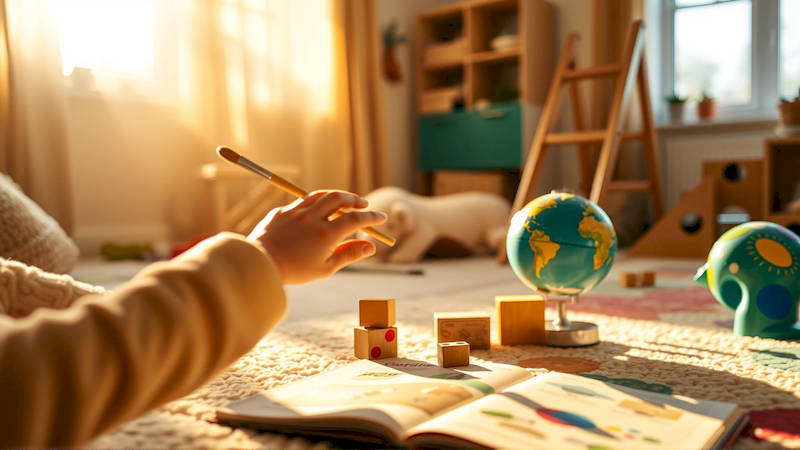
Start by allowing for movement breaks during homework. Instead of insisting on uninterrupted study sessions, allow your child to stand up and stretch, walk around the room, or do a few jumping jacks every 20-30 minutes. Incorporate physical activities into review sessions. For example, write math problems on index cards and have your child physically move cards into correct or incorrect piles. Reading comprehension can be improved by having children act out scenes from a story or create a physical representation of the plot.
Furthermore, consider utilizing everyday household items for hands-on learning. Building letters with playdough, using LEGOs to solve math problems, or creating a miniature diorama for a history project are all excellent ways to engage a kinesthetic learner. Don’t underestimate the power of outdoor learning; take lessons outside whenever possible, utilizing nature itself as a teaching tool.
Advocating for Your Child at School: Partnering with Educators
While you can significantly support your child’s learning at home, collaboration with their teachers is crucial for maximizing their success at school. Many teachers are receptive to tailoring their approach to meet diverse learning needs, but they need to be informed about your child’s learning style. Open communication and a collaborative spirit will be instrumental in creating a supportive educational environment.
Begin by scheduling a meeting with your child’s teacher to discuss their kinesthetic learning preferences. Explain how your child learns best through movement and hands-on activities. Share examples of strategies that have been successful at home and inquire about the possibility of incorporating similar approaches in the classroom. Suggest modifications that could benefit your child, such as allowing them to stand while working, use a fidget toy, or participate in learning activities that involve movement.
Going beyond individual teacher communication, be proactive in understanding school policies regarding learning accommodations. Familiarize yourself with the process for requesting assessments or individualized education programs (IEPs) if you suspect your child may require more extensive support. Remember, advocating for your child isn’t about demanding special treatment; it’s about ensuring they have the opportunity to learn in a way that aligns with their neurological needs.
Incorporating Games and Activities for Enhanced Learning
Games and activities aren’t merely fun distractions; they’re powerful tools for engaging kinesthetic learners and reinforcing academic concepts. The key is to choose activities that actively involve the body and encourage hands-on exploration. The interactive nature of games provides a sense of accomplishment and intrinsic motivation, making learning more enjoyable and effective.
Think beyond traditional board games. Consider scavenger hunts to practice spelling or math facts, charades to reinforce vocabulary, or building challenges that require problem-solving skills. Utilize active learning games like "Simon Says" to review concepts or create obstacle courses that incorporate academic challenges. For example, a child might have to solve a math problem before proceeding through a tunnel or spell a word correctly before jumping over an obstacle.
Online resources also offer a wealth of interactive learning games designed for kinesthetic learners. Many educational websites and apps incorporate movement-based challenges and activities, providing a digital alternative for reinforcing academic skills. The important aspect is to ensure these activities are engaging and actively involve the child’s physical participation, rather than passive screen time.
Addressing Potential Challenges: Focus and Frustration
While catering to a kinesthetic learning style is highly beneficial, it’s important to acknowledge and address potential challenges. One common issue is maintaining focus, as kinesthetic learners can easily become distracted if activities are too slow-paced or lack physical engagement. Another is frustration stemming from traditional classroom settings where movement is often discouraged.
To address focus challenges, break down tasks into smaller, manageable chunks with frequent movement breaks in between. Provide opportunities for active note-taking, such as using colored markers, drawing diagrams, or creating mind maps. For tasks that require sitting still, provide fidget tools like stress balls, textured objects, or wiggle cushions. The aim isn’t to eliminate movement entirely, but to channel it in a productive way.
When frustration arises, validate your child’s feelings and remind them of their strengths. Help them understand that learning styles differ, and it’s okay to learn differently than their peers. Work with their teacher to develop strategies for managing challenging situations and fostering a positive learning attitude. It's vital to create a supportive and encouraging environment where your child feels empowered to advocate for their needs and embrace their unique learning style.
The Long-Term Benefits: Cultivating Lifelong Learners
Supporting a kinesthetic learner isn’t just about improving academic performance; it’s about cultivating a lifelong love of learning. By recognizing and nurturing their inherent strengths, you’re empowering them to approach challenges with confidence, creativity, and a willingness to explore. This approach also fosters critical thinking skills and develops adaptability, essential qualities for success in the 21st century.
When children feel understood and supported, their self-esteem blossoms, and they are more likely to embrace learning as an exciting and fulfilling journey. By incorporating movement into their learning experiences, you’re not only enhancing their comprehension but also promoting their physical health and well-being.
Ultimately, supporting a kinesthetic learner is about recognizing that every child learns differently and deserves an educational experience tailored to their individual needs. It requires patience, advocacy, and a willingness to embrace unconventional approaches, but the rewards – a confident, engaged, and thriving learner – are immeasurable.
In conclusion, understanding and nurturing the needs of kinesthetic learners is paramount to their academic and personal success. By creating a movement-rich environment, proactively partnering with educators, and embracing activities that engage the body, parents can unlock their child’s full potential. Remember to be patient, advocate for your child’s needs, and celebrate their unique strengths. Embrace the power of movement, and you’ll empower your child to become a lifelong, enthusiastic learner. The journey may require adjustments and collaboration, but the result—a confident, engaged, and thriving individual—is well worth the effort.
Deja una respuesta