Gamifying Math Practice for Visual and Kinesthetic Learners
Math can be a source of anxiety for many students, often stemming from abstract concepts and traditional teaching methods that don’t cater to diverse learning styles. While auditory learners might thrive with lectures and rote memorization, visual and kinesthetic learners require a more engaging, hands-on approach. Luckily, the principles of game design offer a powerful solution: gamification. This isn’t about turning math class into a video game, but rather incorporating game-like elements—points, badges, levels, challenges, and narratives—to increase motivation, boost understanding, and make learning fun. Recognizing that approximately 65% of the population identifies as visual learners and a significant portion as kinesthetic learners (according to studies in educational psychology), leveraging these techniques isn't just beneficial; it’s crucial for reaching a larger student demographic.
This article delves into how parents and educators can effectively gamify math practice specifically for visual and kinesthetic learners. We’ll explore practical strategies, digital tools, and real-world examples to transform math from a dreaded subject into an engaging and rewarding experience. Ultimately, the goal is to foster a deeper, more intuitive understanding of mathematical concepts by tapping into the strengths of these unique learning styles.
- Understanding Visual and Kinesthetic Learning in Math
- Building a Gamified Math Environment: Core Principles
- Gamified Activities for Visual Learners
- Gamified Activities for Kinesthetic Learners
- Leveraging Technology: Digital Tools and Apps
- Addressing Challenges and Adapting Strategies
- Beyond the Numbers: Fostering a Positive Math Mindset
Understanding Visual and Kinesthetic Learning in Math
Visual learners grasp information best through seeing – diagrams, charts, colors, and demonstrations are particularly effective. They benefit from visualizing problems rather than simply hearing about them. They may struggle with abstract concepts if not presented with visual aids. For example, a child learning multiplication might benefit more from seeing an array of objects than just memorizing times tables. Conversely, kinesthetic learners learn best through doing – hands-on activities, movement, and tangible experiences solidify their understanding. Sitting still and listening can be difficult for them. They excel when they can manipulate objects, build models, or actively participate in the learning process.
These learning styles aren’t mutually exclusive; many students benefit from a combination. However, placing a heavy emphasis on auditory-based instruction often disadvantages visual and kinesthetic learners. A common misconception is that "hands-on learning" equals "crafts." While crafts can be helpful, beneficial kinesthetic math activities are deliberately designed to reinforce mathematical concepts, like using building blocks to illustrate fractions or measuring ingredients while baking to practice fractions and ratios. The crucial element is the direct link between the activity and the mathematical principle being taught.
Dr. Maria Montessori emphasized the importance of sensory learning, stating, "The child’s work is to build himself through a process of self-directed activity." This philosophy aligns perfectly with the needs of kinesthetic learners and provides a strong foundation for incorporating gamified, hands-on math experiences.
Building a Gamified Math Environment: Core Principles
Successful gamification isn’t simply about awarding points for correct answers. It's about constructing a learning environment that promotes intrinsic motivation – the desire to learn for the sake of learning, rather than for external rewards. This starts with clear goals and progression. Break down complex concepts into smaller, manageable steps, each representing a level or challenge. Implement a point system that rewards effort, participation, and improvement, not just correct answers. Badges recognizing specific skills or achievements (e.g., "Fraction Master," "Geometry Guru") provide visual validation and motivation.
Narrative plays a surprisingly important role. Framing math problems within a story or quest can dramatically increase engagement. Instead of "solve these addition problems," present a challenge like "help the astronaut calculate the fuel needed to reach Mars." This context transforms the task from a dry exercise into a compelling adventure. Keep the rewards age-appropriate and not overly focused on material possessions. Praise, privilege (e.g., choosing the next activity), and opportunities for leadership or mentorship are powerful motivators. Critically, feedback should be immediate and constructive. Students need to know why an answer is wrong and how to improve, rather than just being told it’s incorrect.
Gamified Activities for Visual Learners
Visual learners thrive on colorful, graphic-rich experiences. Mapping out geometric shapes with colored building blocks or using different colored markers to identify patterns in data sets can be extremely impactful. Consider using online platforms like Khan Academy Kids or Prodigy, which are designed with visually stimulating interfaces and incorporate game mechanics. Creating visual "math maps" – concept maps illustrating the relationships between different mathematical ideas – can help students see the bigger picture and connect concepts.
Another effective strategy is using virtual manipulatives. These digital tools allow students to manipulate objects on the screen, providing a visual representation of abstract concepts. For example, virtual fraction bars can help students visualize the relative sizes of fractions. TikTok videos demonstrating math concepts with creative visuals are gaining traction as well – leverage the platforms your kids already use. Furthermore, encourage students to create their own visual representations of math problems. Asking them to draw a picture to explain how they solved a problem not only assesses their understanding but also reinforces it through the act of visualization.
Gamified Activities for Kinesthetic Learners
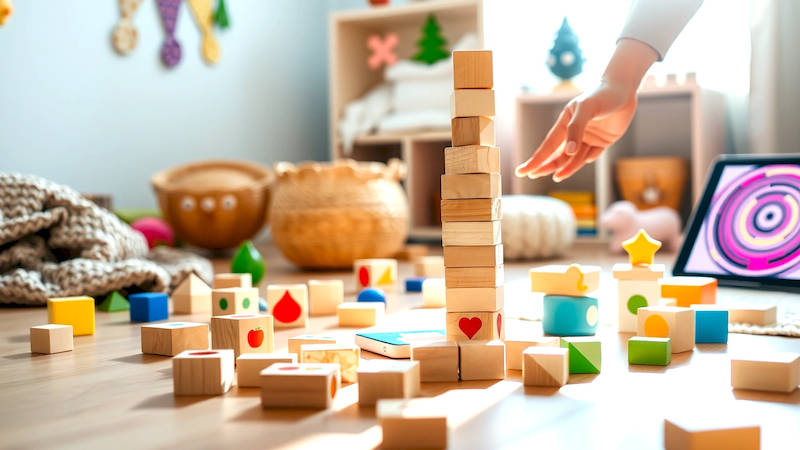
Kinesthetic learners need to move and do to learn effectively. Utilizing building blocks, LEGOs, or other construction materials to represent numbers, fractions, or geometric shapes offers a tactile learning experience. "Math obstacle courses" where students solve problems to unlock the next challenge are energetically engaging. A simple game of “Math Hopscotch” where they jump to solutions or use physical movements to demonstrate concepts like angles or symmetry is surprisingly effective.
Board games with a mathematical element, like Monopoly (money management) or Set (pattern recognition), are also valuable. Utilizing playdough to sculpt 3D shapes, or creating different patterns encourages tactile learning and improves spatial reasoning. Don't underestimate the power of incorporating movement into problem-solving. Have students act out mathematical scenarios, such as physically representing a line graph with their bodies or using hand gestures to demonstrate the direction of operations. Remember that kinesthetic activities should be directly tied to the mathematical concept being taught, and not just random physical tasks.
Leveraging Technology: Digital Tools and Apps
Numerous digital tools and apps can enhance gamified math practice. Prodigy Math is a popular choice, offering a fantasy-based role-playing game where students answer math questions to progress. Khan Academy offers a structured curriculum with points, badges, and personalized learning paths. DragonBox Numbers and DragonBox Algebra are particularly effective for building foundational math skills through intuitive, game-like interfaces.
Beyond dedicated math apps, consider using tools like Minecraft: Education Edition, where students can use math concepts—geometry, measurement, resource management—to build and explore virtual worlds. Online quizzes and games like Kahoot! or Quizizz provide a dynamic and competitive learning environment. The key is to select tools that align with your child’s specific learning needs and interests, and to use them as a supplement to, not a replacement for, hands-on activities. Be mindful of screen time and balance digital learning with offline activities.
Addressing Challenges and Adapting Strategies
Gamification isn't a one-size-fits-all solution. Some students may be overly focused on the rewards and lose sight of the actual learning. Others may find the competitive aspect discouraging. It’s crucial to monitor student engagement and adjust the strategies accordingly. If a student is too focused on winning, emphasize the importance of effort and improvement rather than just correct answers.
Consider offering different levels of challenge to cater to varying skill levels. Also, be prepared to adapt the activities based on your child's specific learning needs and interests. What motivates one child might not motivate another. Regularly solicit feedback from your child to identify what aspects of the gamified approach are working well and what needs improvement. Remember that the goal is to create a learning environment that is both engaging and effective, and that requires flexibility and a willingness to experiment.
Beyond the Numbers: Fostering a Positive Math Mindset
Gamification is a powerful tool, but it's most effective when combined with a positive math mindset. Encourage students to see mistakes as opportunities for learning. Emphasize the relevance of math to real-world situations. Share stories of successful people who use math in their careers. Avoid negative self-talk about math. Instead of saying "I'm just not a math person," encourage a growth mindset – the belief that abilities can be developed through dedication and hard work.
Creating a supportive and encouraging learning environment is just as important as the specific strategies used. Celebrate effort, perseverance, and creativity. Help your child see the beauty and logic of mathematics, and empower them to approach challenges with confidence and curiosity. Cultivating a genuine love for learning will ultimately be far more valuable than any game or reward.
In conclusion, gamifying math practice for visual and kinesthetic learners is a proven strategy for boosting engagement and fostering deeper understanding. By leveraging visual aids, hands-on activities, and the power of game mechanics, we can transform math from a source of anxiety into an exciting and rewarding experience. Remember to focus on intrinsic motivation, personalize the activities to your child’s unique needs, and cultivate a positive math mindset. The key takeaways are to prioritize understanding over rote memorization, embrace a multi-sensory approach, and consistently adapt strategies based on student feedback. Start small, experiment with different techniques, and, most importantly, make learning fun!
Deja una respuesta