
Teaching Kids About Circuits with Safe and Easy Electronics Kits
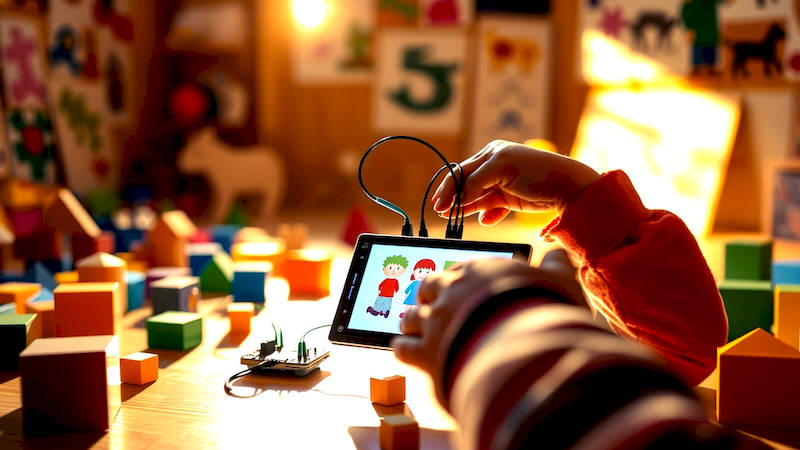
The 21st century is undeniably driven by technology. From the smartphones in our pockets to the complex systems powering our cities, understanding the basics of electronics is becoming increasingly vital. Yet, traditional education often postpones these fundamental concepts to higher grades, leaving children digitally native but functionally unaware of how the technology around them works. Integrating STEM (Science, Technology, Engineering, and Mathematics) education early, and making it fun, is crucial. A fantastic entry point lies in exploring electrical circuits. Introducing children to circuits isn’t just about preparing future engineers; it's about fostering problem-solving skills, logical thinking, and a deeper understanding of the world around them.
This isn’t about expecting every child to become an electrical engineer. It’s about demystifying technology. When children understand the simple principles of how electricity flows, how components interact, and how to build basic circuits, they gain a powerful sense of agency. They move from being passive consumers of technology to active creators, capable of tinkering, innovating, and solving real-world problems. Moreover, hands-on learning with circuits reinforces abstract concepts taught in science classes, making education more engaging and effective.
Fortunately, a wealth of safe and accessible electronics kits designed specifically for kids are readily available. These kits carefully curate components, provide clear instructions, and prioritize safety, allowing parents and educators to confidently introduce the fascinating world of circuits to young learners. This article will delve into the benefits of using these kits, explore different types available, and provide guidance on how to effectively incorporate circuit learning into a child’s educational journey.
- Why Start with Circuits? The Foundational Benefits
- Navigating the Landscape: Types of Electronics Kits for Kids
- Safety First: Ensuring a Secure Learning Environment
- From Theory to Practice: Step-by-Step Circuit Building
- Beyond the Basics: Extending the Learning Experience
- Conclusion: Empowering the Next Generation of Innovators
Why Start with Circuits? The Foundational Benefits
The benefits of introducing children to the world of circuits extend far beyond a potential career in STEM. While sparking an interest in engineering is a welcomed outcome, the core skills developed – critical thinking, problem-solving, and logical reasoning – are universally valuable. Building a simple circuit requires a child to map out a pathway for electricity, troubleshoot issues when things don’t work as expected (and they often won’t!), and understand the relationship between cause and effect. These are fundamental cognitive skills that are applicable to any field of study or life challenge.
Furthermore, circuit building encourages patience and persistence. A circuit won’t magically work on the first attempt. Children invariably encounter errors – a loose connection, a reversed polarity, a wrong component. Overcoming these challenges fosters resilience and a growth mindset, teaching children that failure is a learning opportunity, not a deterrent. This process also intimately connects abstract scientific principles with concrete, visible outcomes. They see the result of their efforts when a lightbulb illuminates or a motor spins. This tangible connection is far more impactful than simply reading about it in a textbook.
A study by the National Research Council highlighted the importance of hands-on STEM activities in elementary school, noting that “children’s understanding of scientific and technological concepts is enhanced when they have opportunities to engage directly with materials and phenomena.” Circuits provide that direct engagement, allowing children to experiment, observe, and learn through doing. It's about building confidence through accomplishment.
Navigating the Landscape: Types of Electronics Kits for Kids
The market for electronics kits for kids has exploded in recent years, offering a diverse range of options tailored to different age groups and learning styles. The key is to choose a kit appropriate for your child’s developmental stage and interests. Kits generally fall into a few broad categories: snap circuits, component kits, programmable kits, and robotics kits. Snap Circuits, like those produced by Elenco, are a popular starting point for younger children (ages 5-8). They utilize plastic components that snap together, eliminating the need for soldering and minimizing the risk of electrical shock. These kits focus on building pre-defined circuits, teaching basic concepts like series and parallel circuits.
Component kits, geared toward older children (ages 8+), provide individual electronic components – resistors, LEDs, buttons, wires, and breadboards – allowing for greater flexibility and customization. These kits, while requiring more precision and problem-solving, encourage children to design and build their own circuits from scratch. Breadboards are particularly useful, acting as solderless prototyping tools where components can be easily connected and rearranged. Finally, programmable kits, like those based on Arduino or Raspberry Pi Pico, introduce children to the world of coding and embedded systems. These kits allow them to control circuits with software, opening up a world of possibilities for creating interactive projects. Robotics kits often combine circuit building with mechanical engineering, allowing children to build and program robots.
When selecting a kit, consider the instructions. Are they clear, concise, and age-appropriate? Does the kit include enough components to build a variety of projects? Does it offer support resources, such as online tutorials or troubleshooting guides? "The best kits prioritize clarity and gradual progression," says Dr. Emily Carter, a STEM education specialist at MIT. "Start with simple circuits and gradually increase complexity as the child gains confidence and understanding."
Safety First: Ensuring a Secure Learning Environment
While these kits are designed with safety in mind, adult supervision is crucial, especially with younger children. Always read and understand the kit’s safety guidelines before beginning any project. Emphasize the importance of not directly connecting power sources to household outlets. Most kits operate on low-voltage batteries (usually 9V or AA), which are relatively safe but should still be handled with care. Explain to children that water and electricity do not mix. Also, ensure they understand the proper way to connect and disconnect components to avoid damaging them or causing a short circuit.
A helpful practice is to establish a designated workspace for circuit building, free from clutter and distractions. This designated area helps maintain focus and minimize the risk of accidents. Additionally, teach children how to identify the different components and their functions. Many kits include a diagram or legend that explains the purpose of each component. Discourage them from modifying or disassembling components unless specifically instructed to do so. Remember, the goal is to learn, not to take things apart without understanding how they work.
Addressing potential burns is essential: even low voltage can create a slight warming effect from resistors, so caution should be exercised while the circuit is powered on. Explaining voltage, current and resistance in simple terms can help them understand why respecting the power source is vital.
From Theory to Practice: Step-by-Step Circuit Building
Let's illustrate a simple circuit building project: lighting an LED. You’ll need a battery (e.g., 9V), a battery connector, a resistor (e.g., 220 ohms – this limits the current to protect the LED), an LED (Light Emitting Diode), and connecting wires. First, connect the battery connector to the 9V battery. Next, connect one end of the resistor to the positive wire from the battery connector. Then, connect the other end of the resistor to the longer leg of the LED (the anode, or positive side). Connect the shorter leg of the LED (the cathode, or negative side) to the negative wire from the battery connector.
If the LED doesn't light up, systematically troubleshoot the circuit. Is the battery dead? Are all the connections secure? Is the LED connected with the correct polarity? (LEDs are diodes, meaning electricity only flows in one direction). This process of troubleshooting is a valuable learning experience in itself. As children become more comfortable, introduce more complex circuits, such as adding a switch to control the LED or connecting multiple LEDs in series or parallel. Online resources, like Science Buddies and Instructables, offer a plethora of circuit project ideas with detailed instructions. Encourage creativity. Once they understand the basic principles, challenge them to design their own circuits and solve real-world problems. Can they build a circuit to detect light? Control a small motor?
Beyond the Basics: Extending the Learning Experience
Once your child has grasped the fundamentals of circuitry, there are numerous ways to extend their learning. Consider incorporating circuit building activities into other STEM projects. For example, they can build a circuit to power a small robot they’ve designed, or create a light-sensitive alarm system. Explore the integration of coding by using programmable kits to control circuits. This allows them to create interactive projects that respond to their environment. Another avenue is to connect circuit building to real-world applications. Discuss how circuits are used in everyday devices, from smartphones to cars.
Participate in science fairs or maker events. These events provide an opportunity for children to showcase their projects and learn from others. Consider joining a local STEM club or online forum where they can connect with like-minded peers and mentors. One excellent example is the FIRST robotics competition, which provides a hands-on design and robotics challenge for students of all ages. Regularly encourage exploration and experimentation. The most important thing is to foster a love of learning and a spirit of inquiry.
Conclusion: Empowering the Next Generation of Innovators
Teaching kids about circuits with safe and easy electronics kits isn’t just about imparting technical knowledge; it’s about fostering a mindset of curiosity, problem-solving, and innovation. By introducing these concepts early and making learning fun and engaging, we can empower the next generation to become creators and innovators, not just consumers, of technology. The benefits extend far beyond potential careers in STEM, equipping children with valuable cognitive skills and a deeper understanding of the world around them.
Remember the key takeaways: start with age-appropriate kits, prioritize safety, emphasize hands-on learning, and encourage experimentation. The available resources are plentiful, from beginner-friendly snap circuits to sophisticated programmable platforms. By investing in their STEM education, we’re investing in their future and the future of innovation. Don't hesitate – spark that curiosity today! The world needs more confident, capable, and creative problem-solvers, and a simple electronics kit could be the catalyst for a lifetime of learning and discovery.
Deja una respuesta